
 English
 русский
 简体中文
简体中文


Home / News / Industry News / What is an Aluminum Pull-Ring Cap?
What is an Aluminum Pull-Ring Cap?
2026.05.08
Content
- 1 Construction and How It Works
- 2 Tamper Evidence: Why Complete Cap Removal Matters
- 3 Ease of Opening and Accessibility
- 4 Hygienic Opening and Clean Removal Engineering
- 5 Sealing Performance and Chemical Compatibility
- 6 Key Specifications and Available Configurations
- 7 Primary Applications Across Industries
- 8 Aluminum Pull-Ring Cap vs. Alternative Closure Systems
- 9 Capping Equipment and Production Compatibility
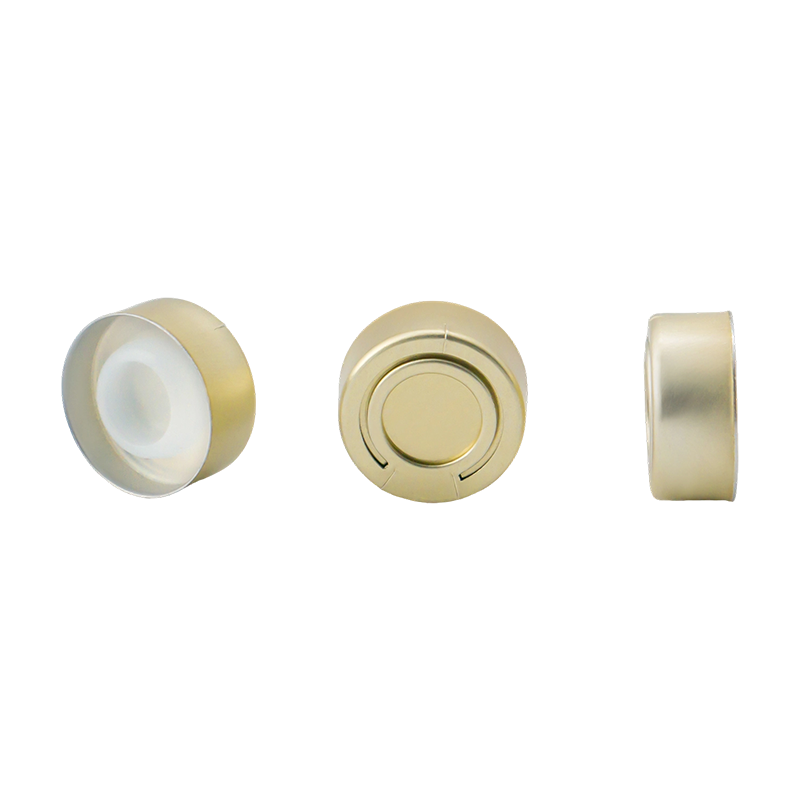
An aluminum pull-ring cap is a single-piece aluminum closure with an integrated pull-ring that allows the entire cap to be removed in one motion, exposing the bottle opening fully and providing irreversible tamper evidence. It is most widely used on pharmaceutical oral liquid bottles — syrups, suspensions, and drops — as well as nutritional supplement containers where hygiene, product integrity, and ease of opening are all critical requirements. Standard diameters begin at 15 mm, matching the narrow neck finishes common on oral liquid packaging.
Construction and How It Works
The aluminum pull-ring cap is manufactured from a single stamped and formed piece of aluminum alloy — most commonly 1000 or 8011 series aluminum — which provides the ductility needed for clean deformation during cap application and smooth tearing during opening. The one-piece construction eliminates the assembly tolerances and potential weak points that arise in multi-component closures.
The cap has three functional zones that work together:
- Top disc: The flat upper surface that covers the bottle mouth. It typically incorporates a compressible liner — most often LDPE, EPE foam, or a composite liner — that is seated against the bottle rim to form a leak-resistant seal under the crimping force applied during capping.
- Skirt with score line: The cylindrical side wall crimped tightly around the bottle neck finish. A precisely engineered score line — a controlled-depth groove cut into the aluminum — runs circumferentially around the skirt at a defined height. This score line determines where the cap tears cleanly when the pull-ring is activated.
- Integrated pull-ring: A formed aluminum loop attached to the top disc or connected to a tear strip that runs from the pull-ring down to the score line. Lifting the ring and pulling upward or outward propagates a tear along the score line, detaching the entire cap cleanly from the bottle neck.
The score line depth is a critical manufacturing parameter. If the score is too shallow, the opening force required becomes excessive, risking hand injury or incomplete removal. If the score is too deep, the cap may fail prematurely during transport or crimping. Quality manufacturers control score depth to tolerances of ±0.02 mm to ensure consistent, predictable opening performance across production batches.
Tamper Evidence: Why Complete Cap Removal Matters
Tamper evidence is one of the most important regulatory and commercial requirements for pharmaceutical and nutraceutical packaging. The aluminum pull-ring cap provides what is classified as definitive tamper evidence — the strongest category — because the entire aluminum closure is physically removed and cannot be replaced or reattached once opened.
This is a meaningful distinction from other tamper-evident systems:
- Breakable plastic bands on screw caps can sometimes be reattached or concealed, leaving ambiguous evidence of tampering.
- Foil induction seals under screw caps provide a secondary seal but can be carefully removed and re-applied with the right equipment.
- Aluminum pull-ring caps leave the bottle neck bare after opening — there is no cap remaining and no possibility of disguising access to the contents. Any patient, caregiver, or pharmacist can confirm at a glance whether a bottle has been opened.
This characteristic is specifically valued in pediatric and geriatric liquid formulations, where the end user or caregiver must be able to verify product integrity simply and quickly, without interpreting subtle signs of disturbance.
Ease of Opening and Accessibility
The pull-ring mechanism is engineered specifically for one-step, tool-free opening that requires no twisting, cutting, or auxiliary implements. This design priority addresses a real usability problem: oral liquid medications are disproportionately prescribed to elderly patients and young children — exactly the populations with the most limited grip strength and manual dexterity.
Comparative usability studies on pharmaceutical closure systems have consistently shown that pull-ring aluminum caps require significantly lower peak force to open than equivalent child-resistant screw caps, which typically require simultaneous downward pressure and rotation forces that many elderly patients cannot reliably generate. For oral liquid products that do not require child-resistant packaging by regulation, the pull-ring cap's accessibility advantage is a compelling reason for its selection over alternative closures.
The ring geometry itself is designed to accommodate a finger comfortably and provide adequate mechanical advantage. Standard ring dimensions allow the opening force to be distributed across the finger rather than concentrated at a small contact point, reducing discomfort during opening — an important consideration for patients who may be opening multiple bottles daily as part of a medication regimen.
Hygienic Opening and Clean Removal Engineering
For oral pharmaceutical products, the opening process itself must not introduce contamination risk. A poorly designed aluminum closure that tears irregularly can shed aluminum particles or leave sharp metal fragments at the bottle rim — directly in the path of a dispensing tip, dropper, or the patient's mouth.
Aluminum pull-ring caps engineered for pharmaceutical applications address this through:
- Precisely positioned score lines that guide the tear path away from the bottle mouth, so that the separation point is at the neck finish rather than directly above the opening.
- Controlled aluminum temper (annealing) that ensures the material tears cleanly without generating burrs, flakes, or fine metallic debris at the fracture edge.
- Lacquer or epoxy interior coating on the cap surfaces that contact the liner and bottle rim, providing a barrier between the aluminum and the product and preventing any metallic taste transfer into the liquid contents.
Pharmaceutical packaging regulations in the EU (under Directive 2001/83/EC) and the US (under 21 CFR Part 211) require that all primary packaging components — including closures — do not adversely affect product quality. Clean removal engineering in pull-ring caps is a direct compliance requirement, not merely a convenience feature.
Sealing Performance and Chemical Compatibility
The primary seal is formed between the liner inside the cap and the sealing surface of the bottle neck finish. The integrity of this seal determines whether the product remains uncontaminated and at specification throughout its shelf life.
Liner Selection by Product Type
Liner material selection is matched to the chemical nature of the contained liquid:
- LDPE (low-density polyethylene) liners: Suitable for aqueous solutions, syrups, and most pharmaceutical suspensions; good moisture barrier and inert to a wide range of active pharmaceutical ingredients.
- EPE (expanded polyethylene) foam liners: Provide excellent conformability to minor neck finish variations, ensuring a reliable seal even on glass bottles with slight surface irregularities; widely used for oral drops and high-value liquid formulations.
- Composite liners (foil-foam or foil-PE): Incorporate an aluminum foil barrier layer for products sensitive to oxygen or moisture permeation; suitable for vitamin supplements and unstable liquid formulations with limited shelf life.
Leak Resistance Under Transport Conditions
Properly crimped aluminum pull-ring caps on glass oral liquid bottles maintain leak-free performance under standard pharmaceutical transport testing conditions, including pressure differential testing at 27 kPa vacuum (per USP <671> container permeation standards) and drop testing representative of distribution handling. The crimped aluminum skirt provides a mechanically stable, non-loosening seal that does not require re-torquing — unlike screw cap closures that can loosen under vibration during transport.
Key Specifications and Available Configurations
| Specification | Typical Range / Options | Notes |
|---|---|---|
| Cap diameter | 15 mm, 20 mm, 28 mm | 15 mm most common for oral liquid vials; larger sizes for supplement bottles |
| Aluminum alloy | 1050, 1100, 8011 | 8011 preferred for pharmaceutical use due to high ductility and clean tear behavior |
| Aluminum thickness | 0.20–0.35 mm | Thicker gauge for larger diameters; thinner for small-diameter vial caps |
| Interior coating | Epoxy lacquer, plain | Epoxy coating required for products sensitive to metallic contact |
| Liner material | LDPE, EPE foam, foil-PE composite | Matched to product compatibility and moisture/oxygen barrier requirements |
| Exterior finish | Plain aluminum, lacquered color, printed | Color coding used for dosage strength differentiation in pharmaceutical products |
| Compatible bottle types | Glass (Type I, II, III), HDPE, PET | Most common with Type II and III glass oral liquid bottles |
Primary Applications Across Industries
The aluminum pull-ring cap's combination of tamper evidence, hygienic opening, and accessibility makes it the closure of choice across several specific product categories:
Pharmaceutical Oral Liquids
Syrups, oral suspensions, and liquid drops represent the core application. These products are typically filled into glass bottles of 5–120 mL volume with narrow neck finishes of 15–20 mm diameter. The pull-ring cap provides the tamper evidence required by pharmacopoeial standards and regulatory agencies, while the one-step opening allows patients — including those with conditions that impair hand function — to access their medication without assistance.
Nutritional and Vitamin Supplements
Liquid vitamin formulations, mineral supplements, and functional nutrition products packaged in glass or HDPE bottles use pull-ring caps to communicate premium quality and product integrity to consumers. The visible aluminum closure signals pharmaceutical-grade packaging in a category where consumer trust in product purity is a significant purchase driver.
Pediatric and Geriatric Formulations
Children's liquid medications and formulations designed for elderly patients are precisely the products where opening ease and unambiguous tamper evidence carry the most weight. Caregivers administering pediatric syrups need to confirm immediately that a bottle has not been accessed, and they need to open it quickly and cleanly — often while managing a child simultaneously. The pull-ring cap satisfies both requirements with a single, intuitive action.
Aluminum Pull-Ring Cap vs. Alternative Closure Systems
| Closure Type | Tamper Evidence | Opening Ease | Reclosable | Typical Use |
|---|---|---|---|---|
| Aluminum pull-ring cap | Definitive (entire cap removed) | Excellent (one-step pull) | No | Single-use oral liquid vials |
| Plastic screw cap with band | Moderate (band breaks) | Moderate (twist required) | Yes | Multi-dose bottles, household products |
| Child-resistant screw cap | Moderate (band breaks) | Poor for elderly users | Yes | Regulated pharmaceutical products |
| Aluminum crimp cap (no ring) | High (visible deformation) | Poor (requires tool) | No | Injectable vials, infusion bottles |
| Induction foil seal only | Good (secondary seal) | Moderate (peel or pierce) | Via outer cap | Supplement bottles, OTC products |
Capping Equipment and Production Compatibility
Aluminum pull-ring caps are applied using automatic or semi-automatic aluminum cap crimping machines that grip the cap over the bottle neck and apply a controlled radial crimping force to form the skirt tightly around the neck finish. This is a well-established process used in pharmaceutical filling lines worldwide, compatible with high-speed production at rates of 50–300 bottles per minute depending on line configuration.
Key production considerations include:
- Bottle neck finish tolerance: The outer diameter of the neck finish must be consistent within ±0.1 mm to ensure uniform crimp quality across the batch; excessive neck diameter variation leads to under-crimped or over-crimped caps.
- Cap orientation feeding: Automated vibratory bowl feeders orient caps correctly before they are transferred to the crimping head; cap geometry must be compatible with the feeder design used in the specific filling line.
- Post-crimp leak testing: In-line leak detection — typically by vacuum decay or high-voltage spark testing — is integrated into pharmaceutical lines to verify seal integrity of every unit before packaging.
Related products
-
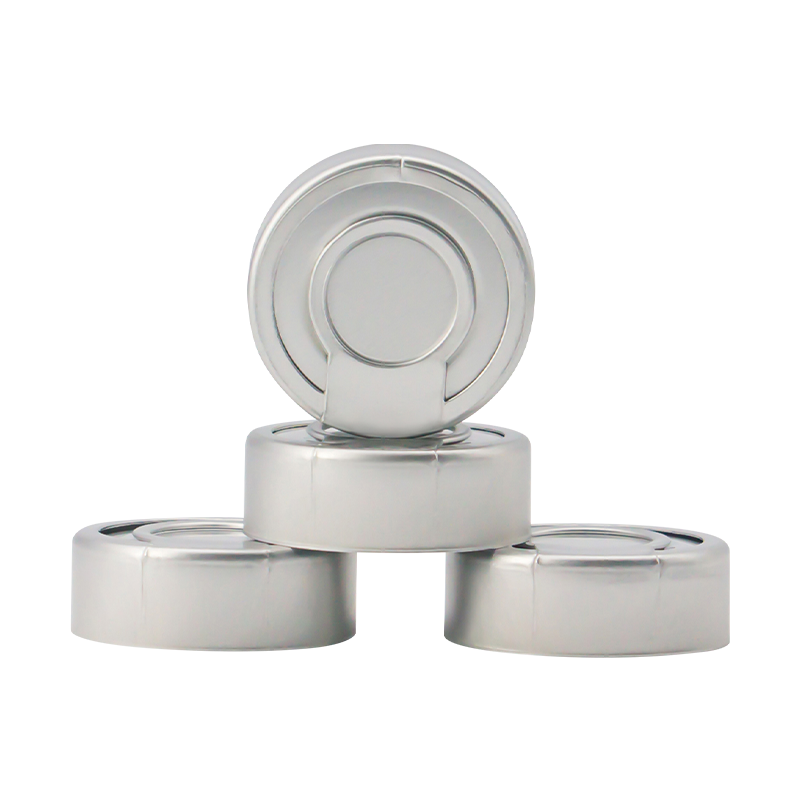
A practical aluminum seal for large-volume infusion bottles. It features an integrated pull-ring that allows the entire aluminum cap to be removed quickly and completely, providing full, unobstructed ...
View More -
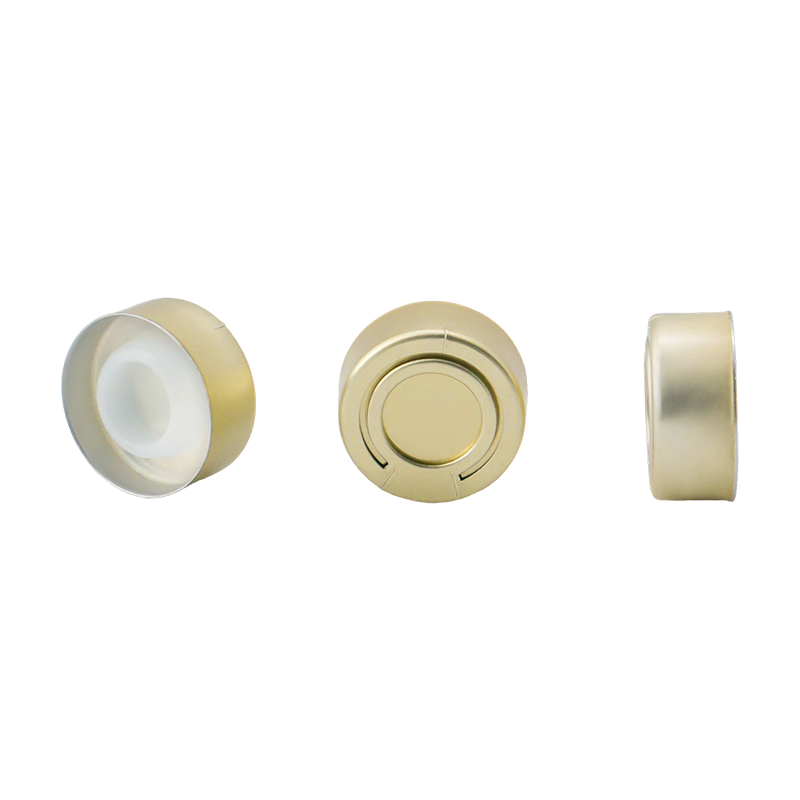
A secure and user-friendly sealing solution for oral liquid bottles. Made from a single piece of aluminum with an integral pull-ring, it is designed for easy, one-step opening by completely removing t...
View More -
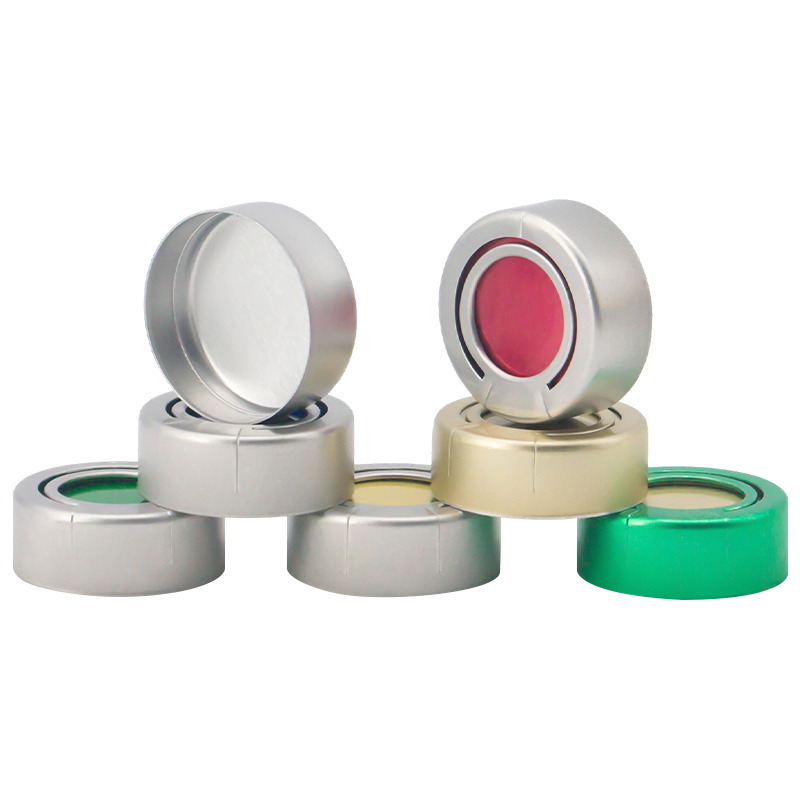
A tamper-evident aluminum seal designed for injection vials. It features an integrated pull-ring that, when pulled, removes the entire aluminum cap cleanly from the vial neck, leaving the rubber stopp...
View More -
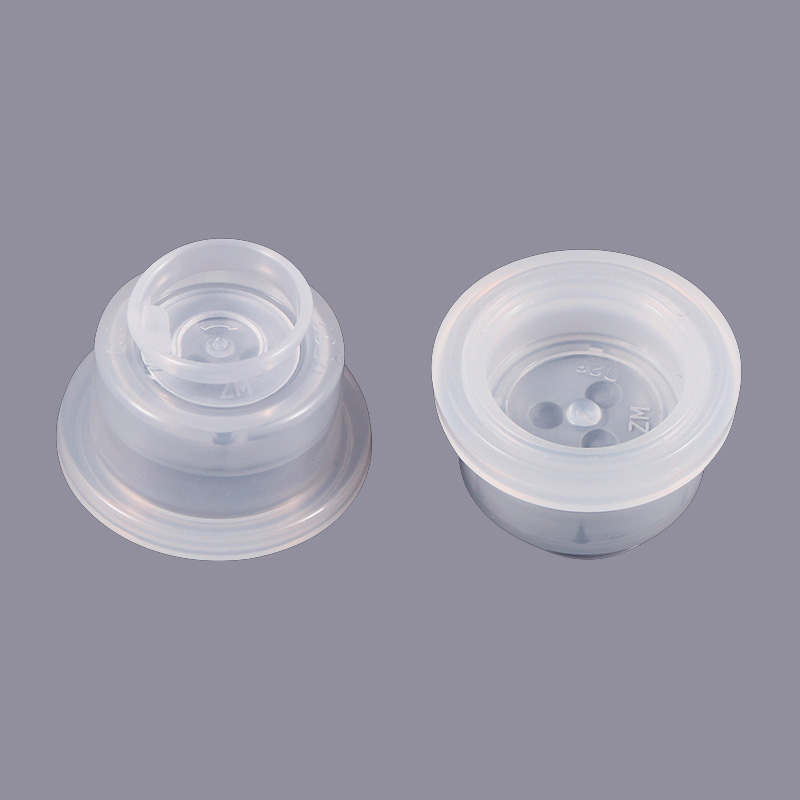
A standardized pull-ring polypropylene cap designed for infusion and solution bottles. This tamper-evident solution ensures reliable closure and provides an integrated pull-ring for safe, tool-free ac...
View More -
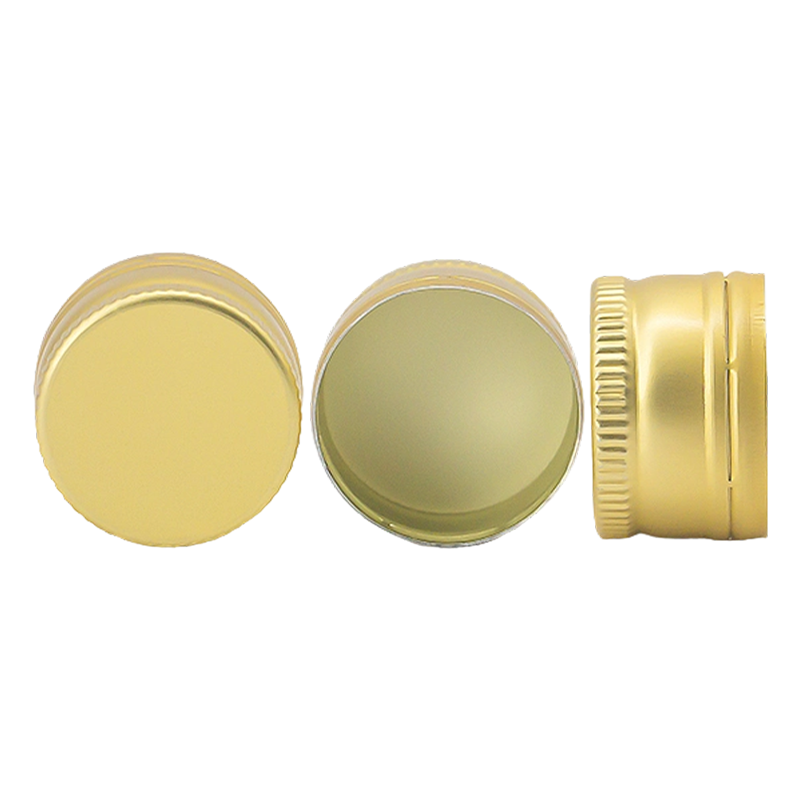
A cost-effective and durable sealing solution designed for oral liquid bottles. Made from a single piece of aluminum, it forms a secure thread by crimping onto the bottle neck, providing reliable tamp...
View More -
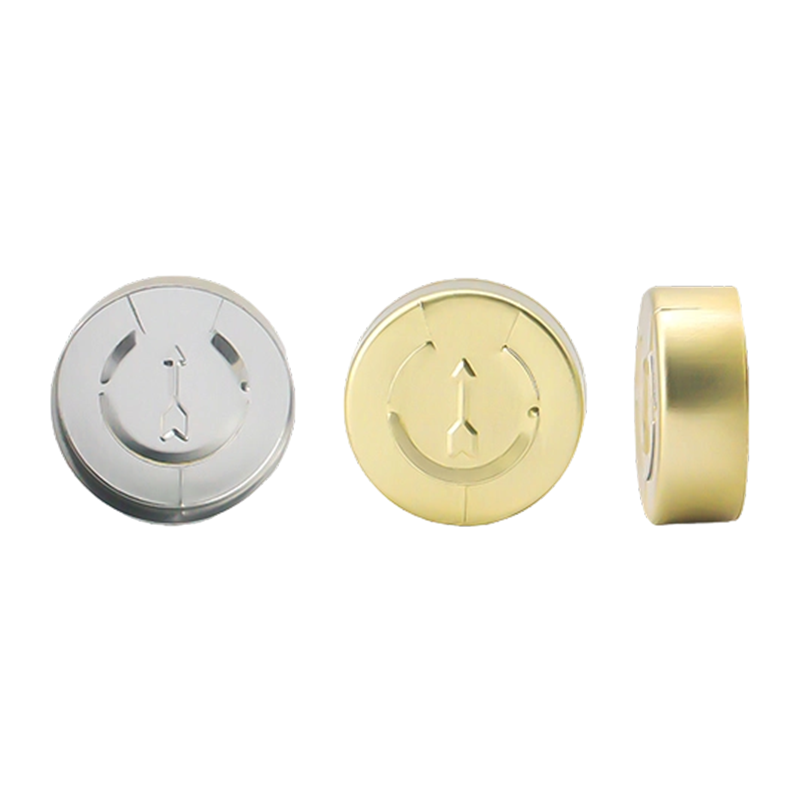
A tamper-evident aluminum seal for complete removal. It features a pre-scored tear-off line for easy opening: simply pull the tab to tear the entire cap off cleanly along the scored line, allowing for...
View More
-
Get In Touch
 +86 511 8813 2922
 +86 139 5290 2286
 lilian@changjianglids.com
 No. 1 Mingzhu Road, Youfang Industrial Park, Yangzhong City, Zhenjiang, Jiangsu, China
The information provided on this website is intended for use only in countries and jurisdictions outside of the People's Republic of China.
No. 1 Mingzhu Road, Youfang Industrial Park, Yangzhong City, Zhenjiang, Jiangsu, China
The information provided on this website is intended for use only in countries and jurisdictions outside of the People's Republic of China. -
Product
Aluminum-Plastic Caps Aluminum Caps Euro PP Caps PP Containers for Contact Lens with Foil Seal Plastic Hanger for Infusion Bottle Plastic Jerry Can -
WhatsApp
Chris

-
WeChat
Lilian

Copyright © 2025 Jiangsu Changjiang Lids Co., Ltd. All Rights Reserved.
OEM Pharmaceutical Packaging Manufacturer
Pharmaceutical Cap Supplier
