
 English
 русский
 简体中文
简体中文


Home / News / Industry News / Child Resistant Closures: How They Work, How They Are Tested and How to Specify Them
Child Resistant Closures: How They Work, How They Are Tested and How to Specify Them
2026.09.25
Content
- 1 What Child Resistant Actually Means in Packaging Standards
- 2 How the Main Closure Mechanisms Work
- 3 What the Five Minute Test Looks Like in Practice
- 4 Keeping the Closure Usable for Older Adults
- 5 Matching a Closure to the Bottle, the Product and the Filling Line
- 6 Where a Closure Manufacturer Fits Into a Child Resistant Project
A bottle of oral liquid sits on a kitchen counter at seven in the morning. A grandmother with stiff hands needs it open before breakfast, and a three year old who has just learned to climb needs it to stay shut. A child resistant closure exists because both of those requirements have to be met by the same small piece of plastic and aluminium.
The conclusion first: child resistance is a test result, not a shape. A closure earns the description only after a panel of young children fails to open it and a panel of older adults succeeds. Teeth inside the cap, alignment arrows, liners and neck finishes are engineering in service of that result, and none of them can be claimed from a drawing alone.
What Child Resistant Actually Means in Packaging Standards
Regulators rarely describe a closure as safe. They describe it as passing a protocol. For reclosable containers the reference document in most markets is ISO 8317, adopted in Europe as EN ISO 8317 and mirrored in the United States by the testing procedure in 16 CFR 1700.20 under the Poison Prevention Packaging Act. Non-reclosable formats such as blisters follow ISO 14375, and package type classification is normally referenced back to ASTM D3475.
The shape of the test is what matters commercially. A panel of children aged 42 to 51 months is given five minutes with the package; broadly, at least 85 percent of them must fail to open it in that window, and at least 80 percent must still fail after being shown how it works. A second panel of adults aged 50 to 70 must then reach roughly 90 percent success in opening and properly resealing the container.
| Standard | Region | Scope | What it demands |
|---|---|---|---|
| ISO 8317 | International, adopted as EN ISO 8317 | Reclosable child resistant packaging | Child panel aged 42 to 51 months plus adult panel aged 50 to 70; opening and resealing must both be shown |
| 16 CFR 1700.20 | United States | Special packaging, reclosable and non-reclosable | Child and senior adult testing referenced by the Poison Prevention Packaging Act |
| ISO 14375 | International | Non-reclosable packaging such as blisters | Child panel only, because there is no resealing step to evaluate |
| ASTM D3475 | United States | Classification of child resistant package types | Supplies the type categories used in specifications and supplier documents |
Two consequences follow. The certificate belongs to the finished package rather than to the cap on its own, so a cap tested on one bottle may not transfer to a bottle with a different neck finish or liner. And a package that fails the senior panel is also non-compliant, which is why the design problem is never simply to make opening harder.
How the Main Closure Mechanisms Work
Almost every child resistant closure on a pharmaceutical bottle uses one of a small number of mechanical ideas, and each idea trades a different kind of effort against a different kind of dexterity.
- Push and turn: the cap must be pressed down against a spring and rotated while the pressure is held, so two sets of teeth engage only when the cap is fully depressed.
- Squeeze and turn: opposing tabs on the skirt have to be squeezed inward before the cap will rotate freely.
- Align and lift: arrows on cap and bottle must be lined up before the cap unlocks, which calls for visual attention as well as grip strength.
- Drop down or trigger designs: a hinged section must be pressed or lifted in one movement while the cap turns.
- Unit dose and tear formats: there is no reclosing mechanism, so child resistance comes from the format itself rather than from the closure.
The mechanism is only half of the design. The other half is the interface with the bottle: neck finish diameter, thread pitch, the liner that provides the seal, and the torque the capping head applies on the filling line. A push and turn cap fitted to a neck finish it was not designed for will either refuse to engage or open without the push, and both failures show up in panel testing rather than on the drawing board.
Illustrative opening rates in a child panel during the first five minutes
The chart puts five closure formats side by side on a single measure: how often a child in a panel opens the container during the first five minutes. These are illustrative planning values rather than laboratory results, but the pattern matches what testing laboratories see in practice. The three genuine child resistant mechanisms cluster between roughly nine and fourteen percent, comfortably under the ceiling the standards allow, while a plain screw cap sits far above it and stays there no matter how firmly the filling line applies it. The spread among the child resistant designs is small compared with the gap between any of them and the standard cap, so the choice between push and turn and squeeze and turn should follow the patient population and the capping equipment rather than a preference for one mechanism. What finally decides acceptance is not an average but the behaviour of the last few children in the panel, which is why protocol design watches the closing minutes as closely as the opening ones.
What the Five Minute Test Looks Like in Practice
Panel testing is not a single measurement. It runs in phases: silent opening, a demonstration, and a second attempt, with timing recorded throughout. Understanding how openings accumulate over those five minutes tells a packaging engineer far more than a pass or fail stamp.
Cumulative share of children opening the container over five minutes (illustrative)
Child resistant closure, push and turn Standard screw cap
Plotting cumulative openings over time shows why the first five minutes are treated as one block instead of a series of checkpoints. The child resistant curve stays almost flat in the first minute and then creeps upward as children discover that pressing while turning works better than turning alone. The plain screw cap curve rises steeply from the very first minute, which is exactly the behaviour the regulations are written to catch. The dashed line marks an illustrative ceiling near fifteen percent, leaving a design that finishes below it some room to absorb the slightly higher opening rates permitted after the demonstration step. The shape of the curve is also useful production feedback, because a sudden steepening late in minute four usually points to a weakened spring or teeth that no longer engage fully rather than to a fault in the original design.
Keeping the Closure Usable for Older Adults
The senior panel exists because a package that only a strong adult can open is a package that patients quietly leave unsealed, or transfer into a different container. Designers therefore work inside a narrow band: enough resistance to defeat a four year old, little enough effort for a seventy year old with reduced grip strength.
Senior panel success rate by closure type (illustrative, adults aged 50 to 70)
92%
88%
85%
78%
97%
Push and turn Squeeze and turn Align and lift Drop down trigger Standard screw cap
The chart compares senior panel success rates across the same five formats, using illustrative figures for adults aged fifty to seventy. Push and turn designs sit highest because the required motion is a single downward press followed by a rotation that most hands can manage. Drop down and trigger designs fall below the ninety percent level that the standards broadly expect, largely because they demand a pinch or a lever movement that stiff fingers find awkward. Arrow alignment is comfortable for adults but can lose a few points when the marking is low contrast or the bottle is small. The gap of roughly fourteen points between the best and the weakest child resistant format is the real design budget, and it is normally spent on details such as knurling depth, tab width, spring force and the height of the cap skirt.
Matching a Closure to the Bottle, the Product and the Filling Line
Once a mechanism has been chosen, the remaining work is dimensional. The neck finish, the thread specification, the liner material and the capping torque all influence whether the same cap behaves identically in month one and month twelve. Inconsistent liner compression is one of the most common reasons a package performs well in a laboratory and then fails on a stability batch.
For an oral liquid bottle, the threaded aluminium screw cap is the format most often paired with a locking band or a two piece liner, because the existing thread already provides the mechanical engagement a child resistant feature needs.
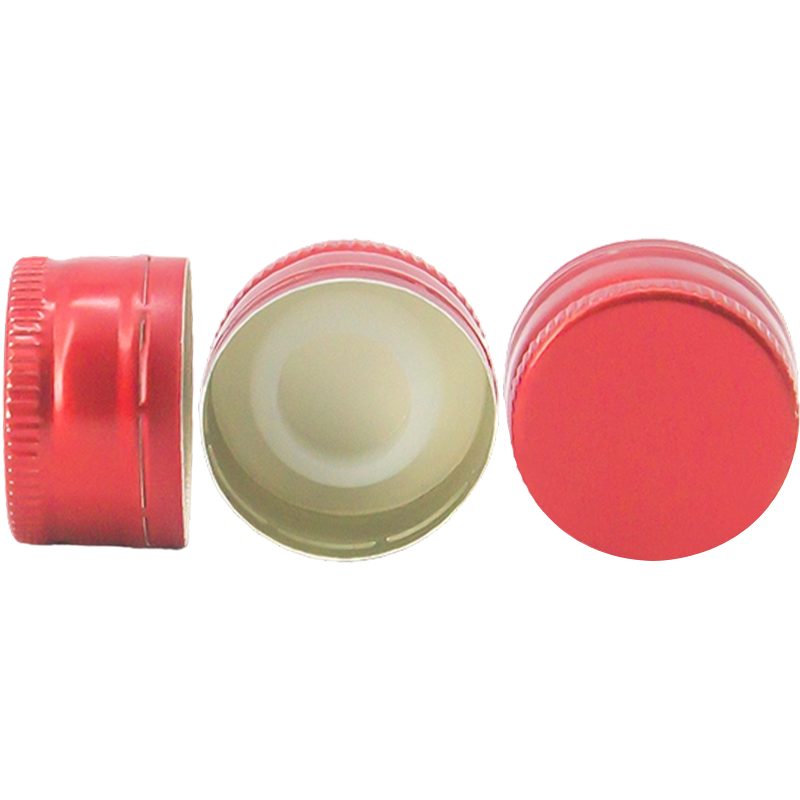 Aluminum Screw CapA cost-effective and durable sealing solution designed for oral liquid bottles. Made from a single piece of aluminum, it forms a secure thread by crimping onto the bot...View Product →
Product viscosity and surface tension matter too. A thin syrup can creep into the thread and dry into a sticky film that changes the torque needed to open the bottle, which is why closure and product are best reviewed together rather than sequentially.
Closure formats compared across five selection criteria (illustrative scoring)
Aluminium screw cap with locking liner Moulded push and turn cap Aluminium-plastic tear-off cap
The radar chart scores three closure formats against five criteria that appear in almost every specification meeting. Child resistance and senior accessibility pull in opposite directions, and the aluminium screw cap with a locking liner is the format that balances them most evenly for oral liquid bottles. A moulded push and turn cap buys a small advantage in child resistance but gives some of it back in senior accessibility and in cost, because it needs an extra component and tighter moulding tolerances. The aluminium-plastic tear-off cap scores poorly on child resistance by design, since it opens with one upward pull, which makes it fast for nurses and unsuitable as a stand-alone barrier for hazardous liquids. Tamper evidence and line speed are the criteria most often overlooked during selection, yet they decide whether a capping head can run at production speed without crushing the cap or leaving it loose.
Where a Closure Manufacturer Fits Into a Child Resistant Project
Child resistance is normally specified by the company that owns the drug product, because the certificate covers the filled package and its test panels. The closure manufacturer contributes dimensional consistency, material control and documented process discipline, since a cap that varies by a few tenths of a millimetre between batches can push a validated package across the acceptance line.
Jiangsu Changjiang Lids Co., Ltd. has produced pharmaceutical primary packaging in Yangzhong, Jiangsu, since March 2000 and works to a stated principle of crafted for precision, dedicated to health. The site covers 20,000 square metres, runs quality systems based on GMP and ISO 9001, and includes a C+A class cleanroom for production. The company reports annual capacity of 3 billion aluminium and aluminium-plastic caps together with 800 million polypropylene caps, and it offers OEM manufacturing alongside its catalogue lines.
The catalogue relevant to oral liquid projects includes aluminium screw caps, aluminium pull ring caps and aluminium-plastic tear-off caps for oral liquid bottles, alongside pull ring, bridge type, middle hole and tear-off formats for injection and infusion containers, Euro PP caps for infusion containers, foil sealed PP containers for contact lenses, plastic hangers for infusion bottles and portable plastic jerry cans.
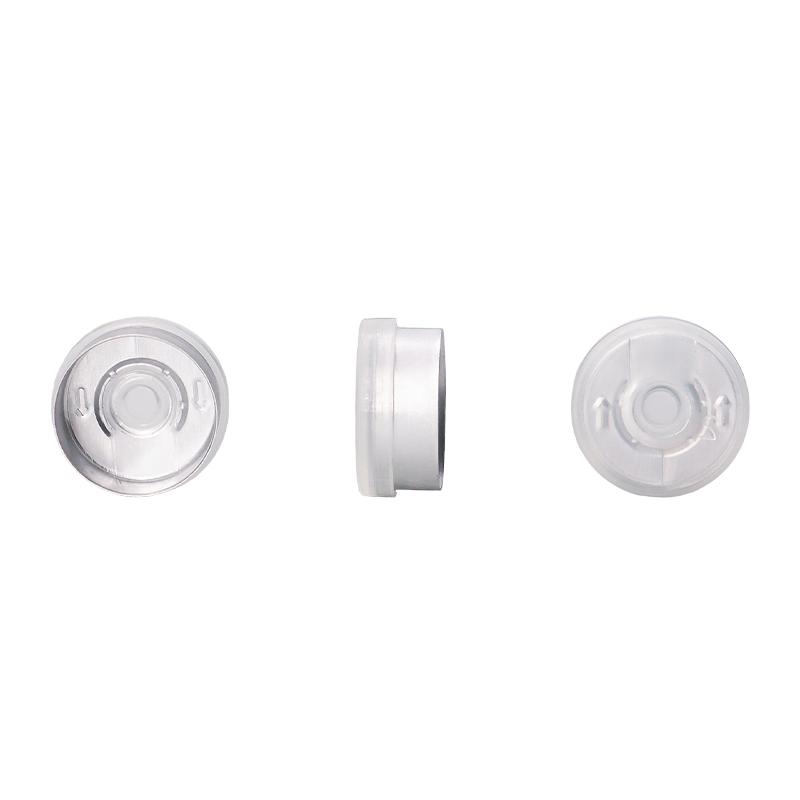 Tear Off Aluminum-Plastic CapA specialized sealing cap designed for oral liquids. It features an easy-tear design on the aluminum cap, allowing users to open it quickly and reliably, with a near 1...View Product →
Buyers working on vial and bottle projects often need the dimensional background before they can specify anything: closure families, thread types and where each one is used are set out in this guide to aluminium cap types for pharmaceutical vials, which is a useful starting point for a technical discussion.
None of this has to be guesswork. Before an order is placed, a packaging team should be able to confirm four things: the exact neck finish and liner combination, the torque range the capping head will hold in production, whether the design has been tested as a complete filled package, and which documents will accompany the shipment.
- Confirm that the closure and the bottle were tested together, not separately.
- Agree a torque window with upper and lower limits, and audit it on the line.
- Check compatibility between the liner and the drug product over the intended shelf life.
- Ask how batch to batch dimensional variation is measured and recorded.
If you are weighing a closure format for a new oral liquid or vial project, it is worth bringing the bottle, the product and the filling equipment into the same conversation early. Our team can walk through neck finishes, liners and available formats, and confirm which options fit your capping line before tooling is discussed.
Talk to our team directly about your next packaging project.
Related products
-
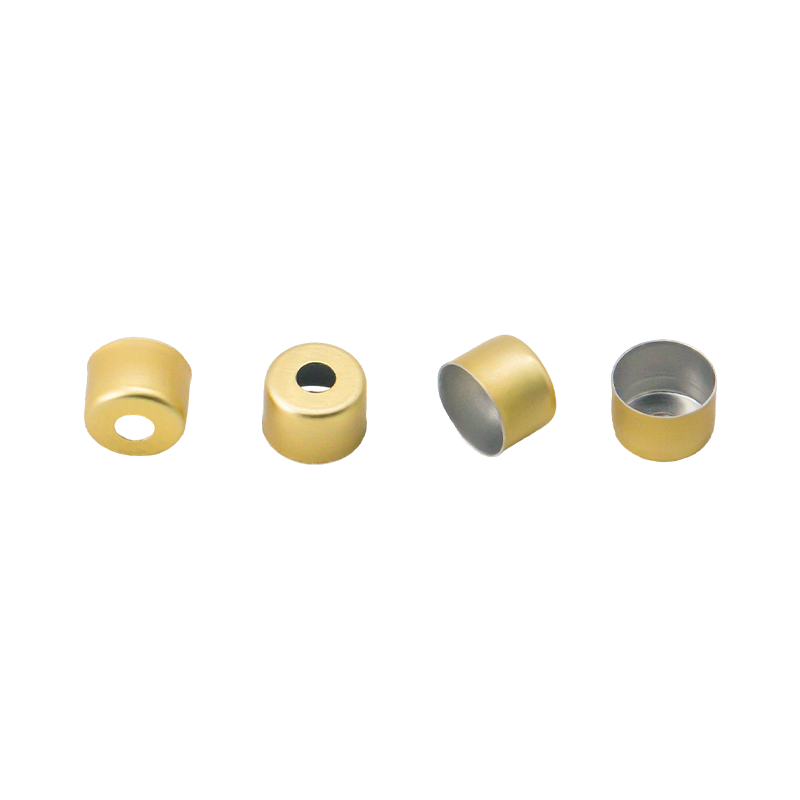
A precision sealing solution designed for cartridge-based drug delivery systems, such as pre-filled syringes and pen injectors. It ensures sterile integrity and safe, reliable needle access for inject...
View More
-
Get In Touch
 +86 511 8813 2922
 +86 139 5290 2286
 lilian@changjianglids.com
 No. 1 Mingzhu Road, Youfang Industrial Park, Yangzhong City, Zhenjiang, Jiangsu, China
The information provided on this website is intended for use only in countries and jurisdictions outside of the People's Republic of China.
No. 1 Mingzhu Road, Youfang Industrial Park, Yangzhong City, Zhenjiang, Jiangsu, China
The information provided on this website is intended for use only in countries and jurisdictions outside of the People's Republic of China. -
Product
Aluminum-Plastic Caps Aluminum Caps Euro PP Caps PP Containers for Contact Lens with Foil Seal Plastic Hanger for Infusion Bottle Plastic Jerry Can -
WhatsApp
Chris

-
WeChat
Lilian

Copyright © 2025 Jiangsu Changjiang Lids Co., Ltd. All Rights Reserved.
OEM Pharmaceutical Packaging Manufacturer
Pharmaceutical Cap Supplier
