
 English
 русский
 简体中文



Home / News / Industry News / Prescription Medicine Bottle Closures: Types, Standards, and Sourcing Guide
Prescription Medicine Bottle Closures: Types, Standards, and Sourcing Guide
2026.10.23
Content
Three thousand bottles of oral suspension come off the fill line, and the torque tester flags one cap that turns a quarter turn too easily. Nothing about the bottle looks wrong. The fill volume is correct, the label is correct, the glass is intact. The fault sits in the closure, and it is the kind of fault that only becomes visible eight months later inside a stability chamber. On a prescription medicine bottle, the cap is not a finishing detail. It is the part that decides whether the container closure system holds.
That is why experienced buyers rarely treat the bottle and the cap as two separate purchases. They specify a container closure system, test it as one unit, and then lock the specification so every later batch is measured against the same numbers.
Start with the bottle format, not the cap
Prescription medicine bottles cover a wider range than most people outside the industry expect. A 100 ml amber glass syrup bottle, a 10 ml borosilicate injection vial, and a 500 ml infusion bottle all belong to the same family, and each one places a different demand on the closure. The table below is the fastest way to see where the risks concentrate.
| Bottle format | Body material | Closure options usually specified | What goes wrong when the closure is wrong |
|---|---|---|---|
| Oral liquid bottle, 30 to 500 ml | Amber glass or HDPE | Aluminium screw cap, aluminium plastic cap, aluminium pull ring cap | Liner compression drops after first opening, leakage in transit, oxidation of the product |
| Small volume injection vial, 2 to 100 ml | Borosilicate glass | Aluminium tear off cap, bridge type aluminium cap, tear off aluminium plastic cap | Incomplete crimp, loss of sterility, exposed septum, loose metal fragments |
| Infusion bottle, 100 to 1000 ml | Glass or polypropylene | Aluminium pull ring cap, Euro PP pull ring cap, Euro PP twin port cap | Seal failure under pressure, fragments in the fluid path, poor fit with the hanger |
| Cartridge for pen injectors | Glass | Crimped aluminium cap for cartridges with an elastomer disc | Leak at the cap or plunger, drifting dose accuracy |
The pattern in that table is worth pausing on. Every failure mode is a sealing or an opening failure. Colour, printing, and surface finish matter for inspection and for brand recognition, but they do not decide whether the product survives its shelf life.
Closure types and the job each one does
The names on a specification sheet look technical, but each one describes a physical behaviour that someone has to live with at the bedside or on the line.
- Pull ring cap. The user lifts a ring, the central disc comes away, and the rubber septum stays in place for needle access. It suits high speed filling lines and wards where the same vial is entered more than once.
- Tear off cap. The whole aluminium top is removed before the first dose. It is light and simple to apply, but it leaves the septum fully exposed, which matters when a vial travels between departments.
- Bridge type cap. Two or three narrow metal bridges remain after opening, so the disc cannot be dropped or lost. It is common on injection vials and infusion bottles, where a loose metal disc in a clean area is a genuine hazard.
- Middle hole cap. An opening in the centre of the aluminium shell exposes the septum while the metal rim keeps the rubber compressed. It reduces the force needed to insert a spike or a needle.
- Screw cap. Used on oral liquid bottles because the patient opens and closes the bottle many times. The shell carries a rolled thread and a liner that must keep compression across the whole shelf life.
- Aluminium plastic cap. An aluminium shell with a moulded plastic top, supplied in bridge, flower, and tear off versions. The plastic top protects fingers from sharp metal edges and can carry colour coding for different strengths.
- Euro PP cap. A polypropylene closure, available as pull ring or twin port, for infusion containers. It removes metal from the fluid path entirely and is often chosen where fragment risk is the leading concern.
None of these is better in general. The right question is how the dose will be accessed, how many times, and by whom.
The specifications that decide a pass or a fail
Most disputes over prescription medicine bottle closures come down to numbers that were never written down clearly enough in the first place. These are the ones worth agreeing in writing before a purchase order is issued.
- Cap diameter and height tolerance, stated in millimetres with an upper and lower band rather than a single target.
- Aluminium thickness and temper, because a thinner shell deforms during crimping and a harder temper cracks at the bridge.
- Liner or elastomer disc properties, including hardness on the Shore A scale, thickness, and whether the surface is siliconised.
- Crimp dimensions and opening force, so that the filling line and the nurse both get a workable result.
- Torque for screw caps, measured in Ncm on a defined sample size, together with a reclosure test after repeated opening.
- Container closure integrity, checked by dye ingress, vacuum decay, or helium leak methods depending on the product.
- Cleanliness, covering particulate and bioburden limits and the cleanroom class in which the caps are produced and packed.
Reference standards give both sides a common language. ISO 8362-3 covers aluminium caps for injection vials, ISO 8536-3 covers aluminium caps for infusion bottles, and the USP container performance testing chapter describes how a filled container is challenged. Add the sterile manufacturing expectations of GMP and a quality management system such as ISO 9001, and the paperwork stops being a formality and starts being the specification.
Matching the cap to the bottle
Oral liquid bottles
Syrups and suspensions are the pharmacy shelf classic. The patient may open the bottle twice a day for a week, so the closure has to survive repeated cycles without the liner losing its compression. A rolled thread aluminium screw cap with a defined torque window is usually the practical answer, especially when the same bottle is filled on a line that also runs different neck finishes.
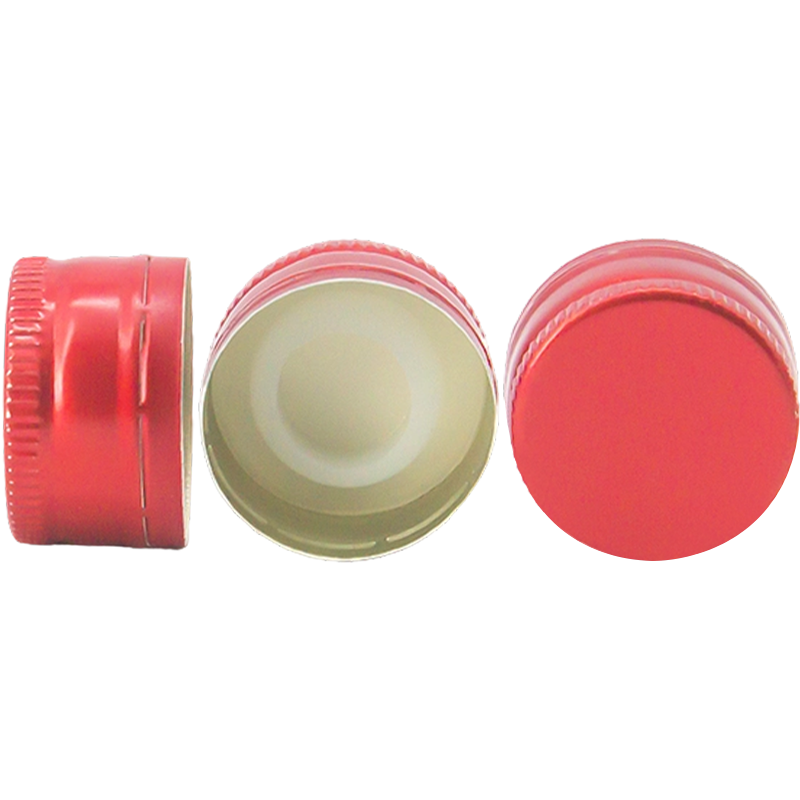 Aluminum Screw Caps for Oral Liquid BottlesFor oral liquid bottles, this aluminum screw cap offers tamper evidence and resealable, leak-resistant closure, suitable for syrups and suspensions.View Product →
Injection vials
Here the priorities change. Sterility, particulate control, and clean access matter more than reclosure. A tear off cap is straightforward to apply and easy to disinfect before the septum is punctured, which is why it remains a common choice for small volume parenterals.
 Aluminum Tear-Off Caps for Injection VialsFor small-volume parenterals, this tear-off aluminum cap provides tamper evidence and clean access to the stopper while helping maintain sterility before puncture.View Product →
Infusion bottles
Infusion containers are handled under time pressure and often hung from a stand, so the cap has to open cleanly in one motion and leave no fragments behind. A pull ring aluminium cap with a consistent opening force is the standard solution, and it pairs well with a matching plastic hanger so the bottle does not swing awkwardly during administration.
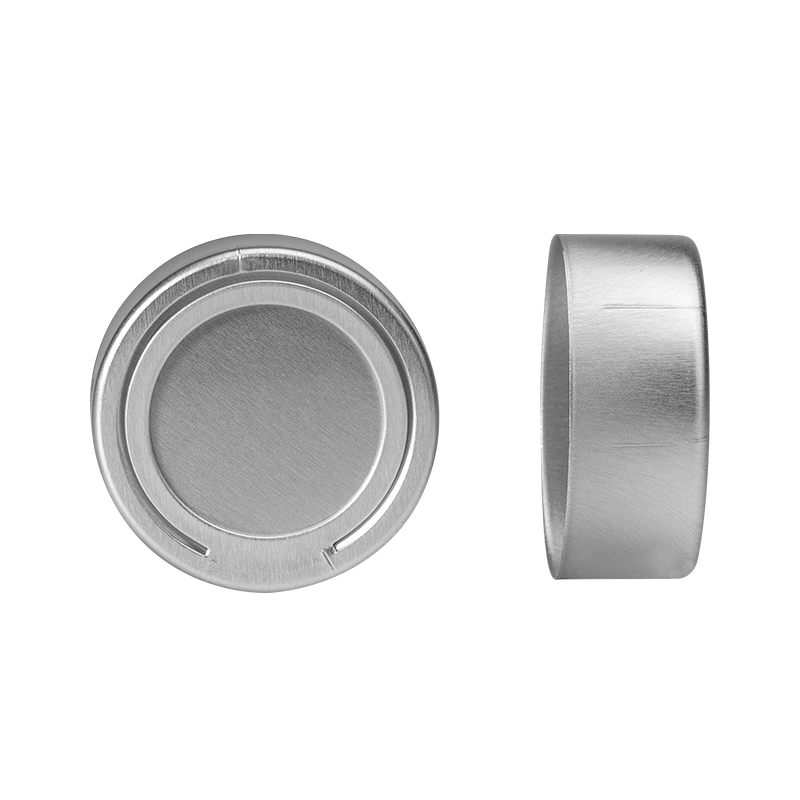 Aluminum Pull-Ring Caps for Large-Volume Infusion BottlesDesigned for large-volume infusion bottles, this pull-ring aluminum cap opens in one motion and gives clear tamper evidence with full stopper access.View Product →
What to verify before you approve a batch
A short checklist saves a long argument later. Ask for these items with every shipment of caps for a prescription medicine bottle.
- Dimensional report against the agreed drawing, with the sample size stated.
- Liner hardness and thickness certificates from the current production lot.
- Crimp or torque data from a trial run on your own filling equipment, not from the supplier line alone.
- Container closure integrity results from a filled and sterilised sample where the product is sterile.
- Cleanroom class and particulate monitoring records for the packing area.
- A retained reference sample, so a future complaint can be compared against the approved standard.
If you want a deeper look at how the different aluminium closures compare, our guide to aluminium cap types for pharmaceutical vials walks through the variations in more detail. When you are ready to check a specific neck finish, send us your bottle drawing and we will confirm the matching cap and crimp dimensions.
Why production conditions belong in the conversation
A closure is primary packaging, which means it is never cleaner than the room it was packed in. We build caps for prescription medicine bottles in a C+A grade cleanroom and work to GMP and ISO 9001 requirements, with in house laboratory instruments for dimensional and liner checks rather than relying on visual inspection alone. Capacity runs to roughly three billion aluminium and aluminium plastic caps a year, plus eight hundred million polypropylene caps, which gives OEM customers room to scale without changing the specification mid project. Twenty years in pharmaceutical packaging has also taught us something less technical: the buyers who get the best results are the ones who bring the filling line into the conversation early, and who treat the cap and the bottle as one system from the first trial run.
The short version is straightforward. Decide the bottle format first, choose the closure based on how the dose is accessed, agree the tolerances and test methods in writing, and then verify them on your own equipment. A cap that costs a few cents less per thousand is not a saving if it fails integrity testing, and the difference between a good and a poor prescription medicine bottle closure is rarely visible until the batch has already been released.
Related products
-

A secure and low-profile support solution designed to safely hold infusion containers in clinical and care settings. Its flat design ensures stable wall-mounted suspension and easy access for intraven...
View More -

A secure and ergonomic support solution designed to safely hold infusion containers in clinical and care settings. Its racket design with an integrated handle ensures stable, portable suspension and e...
View More
-
Get In Touch
 +86 511 8813 2922
 +86 139 5290 2286
 lilian@changjianglids.com
 No. 1 Mingzhu Road, Youfang Industrial Park, Yangzhong City, Zhenjiang, Jiangsu, China
The information provided on this website is intended for use only in countries and jurisdictions outside of the People's Republic of China.
-
Product
Aluminum-Plastic Caps Aluminum Caps Euro PP Caps PP Containers for Contact Lens with Foil Seal Plastic Hanger for Infusion Bottle Plastic Jerry Can -
WhatsApp
Chris

-
WeChat
Lilian

Copyright © 2025 Jiangsu Changjiang Lids Co., Ltd. All Rights Reserved.
OEM Pharmaceutical Packaging Manufacturer
Pharmaceutical Cap Supplier
