
 English
 русский
 简体中文



Home / News / Industry News / Tamper Evident Closures for Pharmaceutical Vials: What Buyers Should Check
Tamper Evident Closures for Pharmaceutical Vials: What Buyers Should Check
2026.11.06
Content
- 1 What a Tamper Evident Closure Proves
- 2 The Main Closure Types Used on Pharmaceutical Vials
- 3 Where the Evidence Is Built Into the Cap
- 4 A Buyer Checklist for Tamper Evident Closures
- 5 Failure Modes That Show Up on the Line
- 6 Matching the Closure to Fill-Finish and Inspection
- 7 Sourcing Notes and Next Steps
A fill-finish line crimps the last vial of a batch. The cap sits square, the skirt looks smooth, and the color matches the approved sample. Months later a nurse lifts the tear tab and finds a split running up one side of the ring. Nothing else on the vial looks wrong, but the vial is now suspect.
That split is the entire job of a tamper evident closure. It does not stop someone from opening a vial. It makes the opening visible, so the next person can decide what to do. The practical conclusion is simple: treat the closure as a functional component with measurable behavior. Specify it by container finish, material, tear behavior and inspection criteria, and verify it after crimping as well as at goods-in.
What a Tamper Evident Closure Proves
Regulators describe a tamper evident feature as an indicator or barrier that, when breached or missing, gives visible evidence that tampering has occurred. The definition is deliberately narrow. It does not promise sterility, and it does not resist a determined attack. It records that the package has been disturbed.
In a pharmaceutical vial, three parts share the work. The glass or plastic vial holds the product. The elastomer stopper closes the opening. The aluminium or aluminium-plastic cap holds the stopper in place and carries the visual feature. Container closure integrity belongs to the stopper and the crimp; tamper evidence belongs to the cap geometry.
Buyers mix these up more often than expected, and the mistake has a cost. A cap that opens cleanly but leaks is a sterility risk. A cap that seals well but breaks before the clinician touches it is a false alarm that can lead to rejected batches, complaints and, in the worst case, an unnecessary recall. Both properties need their own specification and their own test.
The Main Closure Types Used on Pharmaceutical Vials
Selection normally starts with the container finish and the way the product will be opened. Four families cover most vial and bottle applications.
| Closure family | Typical containers | How the evidence appears | What to verify at goods-in |
|---|---|---|---|
| Aluminium tear-off cap | 13 mm and 20 mm injection vials | A scored tear tab lifts, the center disc separates, and the ring stays on the neck | Tab flat and unbroken, score depth even, ring continuous after crimping |
| Aluminium pull-ring cap | Injection vials and infusion bottles | A ring pulls the center out and leaves a visible open ring | Pull force within range, no cracks at the bridge points |
| Aluminium-plastic cap, including bridge, flower ZB and tear-off styles | Injection vials, infusion bottles and oral liquid bottles | A plastic disc or band separates from the aluminium shell, and the torn band remains visible | Disc fit, break point, color match between plastic and aluminium |
| Euro PP cap, pull-ring or twin-port | Infusion containers | A plastic pull-ring or port seal breaks cleanly on first use | Port seal integrity, ring travel, fit to the container neck |
Where the Evidence Is Built Into the Cap
Tear-off and pull-ring aluminium caps
On an aluminium cap the evidence is mechanical and depends on controlled scoring. The score must be deep enough to guide the tear and shallow enough to survive crimping and transport. Alloy, temper and thickness matter. The drawing usually fixes them, often in a 0.18 mm to 0.25 mm thickness range for vial caps, and the supplier should not change them without notice.
Two dimensions deserve attention at goods-in. The first is the skirt diameter, which must fit the finish without forcing. The second is the tear tab geometry, including the bridge width and the position of the score relative to the ring. A tab that looks correct can still fail if the bridge is a fraction of a millimetre off.
 Aluminum Tear-Off Caps for 13 mm and 20 mm Injection VialsTamper-evident aluminum seal with a pre-scored tear-off tab; check skirt diameter and tab geometry for 13 mm and 20 mm vials.View Product →
International standards help frame the purchase. ISO 8362-3 covers aluminium caps for injection vials, and ISO 8362-6 covers aluminium-plastic combination caps. Buyers should confirm the current edition and the exact finish dimensions for 13 mm and 20 mm vials. This guide to aluminum caps for pharmaceutical vials explains how the main families differ in everyday use.
For infusion bottles, a pull-ring cap must open with a consistent force after steam sterilization, and the remaining ring must stay attached to the neck. A cap that spins or separates completely leaves no evidence, which defeats the purpose.
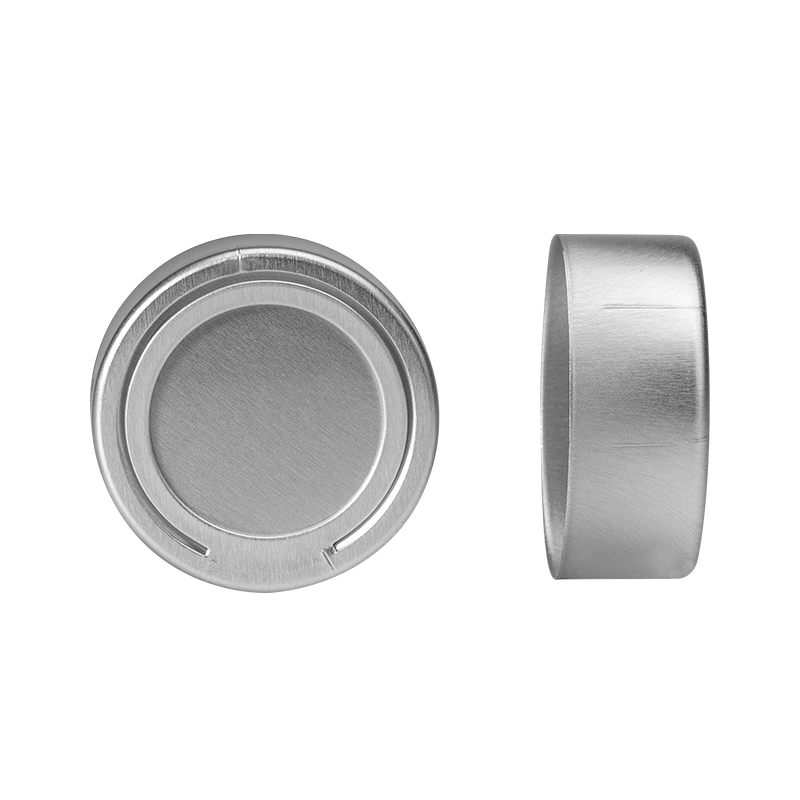 Aluminum Pull-Ring Caps for 26 mm and 32 mm Infusion BottlesIntegrated pull-ring seals for large-volume infusion bottles in 26 mm and 32 mm, designed for complete removal and clear tamper evidence.View Product →
Aluminium-plastic combination caps
Combination caps add a plastic part over the aluminium shell. The plastic disc or band gives the user a larger grip and a cleaner break, and the torn band remains as the visible record. The risk sits at the interface. If the plastic and aluminium are not matched, the disc can lift before use or the band can break in the wrong place.
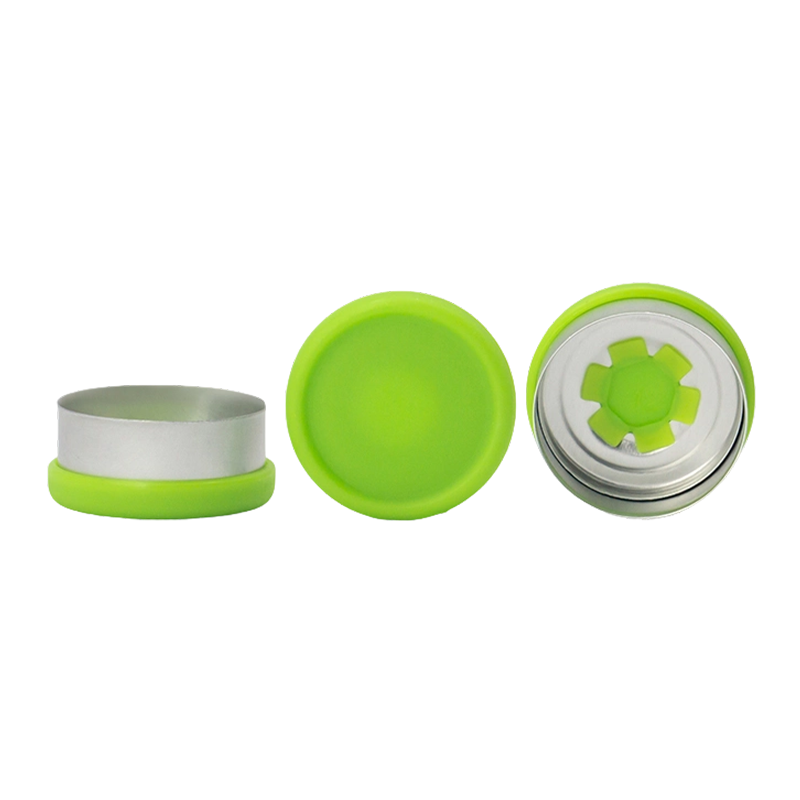 20 mm Tear-Off Aluminum-Plastic Caps for Injection VialsEasy-tear aluminum-plastic caps for 20 mm injection vials, suited to antibiotic, vaccine, lyophilized powder, and diagnostic reagent applications.View Product →
Color and surface finish are not only cosmetic. A color change between lots makes visual inspection harder, and a glossy surface can hide small cracks under inspection lighting. Set a color tolerance against a retained reference sample and check it under the same lamp each time.
Euro PP caps for infusion
Euro PP caps use a plastic pull-ring or twin-port design. They are common on infusion containers where the port must stay sealed until the moment of use. The evidence is the intact ring and the clean break line. The inspection point is whether the ring travels fully and leaves a smooth edge rather than a jagged one.
A Buyer Checklist for Tamper Evident Closures
A workable specification covers more than a part number. The following points are a practical starting list for a new project or a supplier change.
- Finish and dimensions: confirm 13 mm, 20 mm, 28 mm or 32 mm as applicable, and check against the vial or bottle drawing.
- Material and temper: record alloy, temper and thickness on the specification, and require written approval for any change.
- Evidence behavior: set a tear or pull force range, a test angle and a test speed, and keep a sample from each lot.
- Crimp compatibility: test the cap with the actual stopper, vial and capping machine, not with a generic set.
- Cleanliness: confirm the cleanroom class, GMP and ISO 9001 scope, and ask for the latest audit or certificate.
- Sterilization: check performance after steam or ethylene oxide exposure if the product requires it.
- Traceability and change control: lot coding, retained samples and a notification period for material or process changes.
- Capacity and support: annual output, OEM capability and lead time for tooling or color changes.
Failure Modes That Show Up on the Line
Most tamper evidence problems are visible before the vial reaches the market. The common ones are:
- Pre-broken bridge: the tab is already split at goods-in, usually from handling or a score that is too deep.
- Skirt cracks after crimping: the aluminium is too hard or the crimp setting is too aggressive.
- Loose tab: the score is too shallow or the temper is too soft, so the tab stretches instead of tearing.
- Plastic and aluminium separation: the two parts are not matched, or the assembly pressure is wrong.
- Color mismatch between lots: pigment or anodizing control is weak, and visual inspection becomes unreliable.
- Ring not retained after opening: the design or the crimp lets the ring slip off, leaving no evidence.
Each failure has a countermeasure, but the cheapest one is detection. Add a post-crimp check to the line: open a defined sample, record the force, photograph the break, and compare it with the approved standard. A check that only looks at the closed cap will miss most of these problems.
Matching the Closure to Fill-Finish and Inspection
A cap that passes goods-in can still fail after capping. Crimp height, crimp diameter and the condition of the crimping jaws all change the way the skirt grips the finish. Run a setup trial with the production stopper and vial, then keep the settings under change control.
Automated lines need more than a dimensional check. Bowl feeding can scuff the aluminium, and a scored tab can catch on guides. Vision systems can check the presence of the tab and the ring, but they cannot judge tear force, so keep a manual opening test in the release routine.
For terminal sterilization, test the closure after the cycle, not before. Steam and pressure can relax the aluminium or distort a plastic part, and the evidence feature is often the first place this shows.
Sourcing Notes and Next Steps
A closure supplier should be able to show the drawing, the material certificate, the inspection standard, the cleanroom class and a retained sample from each lot. Capacity matters when a product scales. Published figures from Jiangsu Changjiang Lids, for example, state annual output of 3 billion aluminium and aluminium-plastic caps and 800 million polypropylene caps, produced under GMP and ISO 9001 in a C+A cleanroom. Those numbers are a useful starting point for a capacity conversation, not a substitute for a trial.
Ask for samples from at least three lots, run them on your own line with your own stopper, and open twenty vials by hand. Record the force, the break pattern and the condition of the ring. If the results hold, move to a validation batch. If they vary, the specification is not tight enough yet.
The team can review your finish drawing and opening requirements. Contact the team with the vial size, stopper type and annual volume. A short trial usually answers more than a long catalogue.
Related products
-
A protective and sterile packaging solution designed for contact lens storage. The polypropylene (PP) container with an integrated foil seal ensures product integrity, moisture retention, and contamin...
View More -
A protective and sterile packaging solution designed for contact lens storage. The polypropylene (PP) container with an integrated foil seal ensures product integrity, moisture retention, and contamin...
View More -

A secure and low-profile support solution designed to safely hold infusion containers in clinical and care settings. Its flat design ensures stable wall-mounted suspension and easy access for intraven...
View More -

A secure and ergonomic support solution designed to safely hold infusion containers in clinical and care settings. Its racket design with an integrated handle ensures stable, portable suspension and e...
View More -
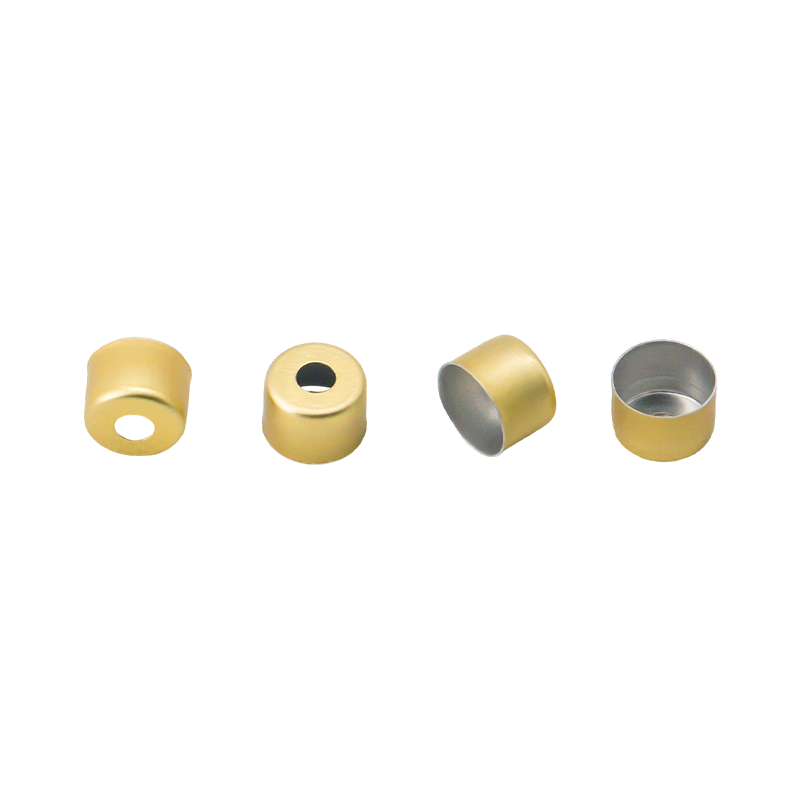
A precision sealing solution designed for cartridge-based drug delivery systems, such as pre-filled syringes and pen injectors. It ensures sterile integrity and safe, reliable needle access for inject...
View More
-
Get In Touch
 +86 511 8813 2922
 +86 139 5290 2286
 lilian@changjianglids.com
 No. 1 Mingzhu Road, Youfang Industrial Park, Yangzhong City, Zhenjiang, Jiangsu, China
The information provided on this website is intended for use only in countries and jurisdictions outside of the People's Republic of China.
-
Product
Aluminum-Plastic Caps Aluminum Caps Euro PP Caps PP Containers for Contact Lens with Foil Seal Plastic Hanger for Infusion Bottle Plastic Jerry Can -
WhatsApp
Chris

-
WeChat
Lilian

Copyright © 2025 Jiangsu Changjiang Lids Co., Ltd. All Rights Reserved.
OEM Pharmaceutical Packaging Manufacturer
Pharmaceutical Cap Supplier
