
 English
 русский
 简体中文
简体中文


Home / News / Industry News / What are aluminum-plastic caps for infusion bottles?
What are aluminum-plastic caps for infusion bottles?
2026.05.15
Content
- 1 The Structure of an Aluminum-Plastic Cap: Layer by Layer
- 2 Types of Aluminum-Plastic Caps Used on Infusion Bottles
- 3 Why Aluminum and Plastic Are Combined: Functional Rationale
- 4 Regulatory Standards and Quality Requirements
- 5 Dimensional Specifications: Standard Cap Sizes for Infusion Bottles
- 6 The Manufacturing Process for Aluminum-Plastic Infusion Caps
- 7 Material Safety: Extractables, Leachables, and Biocompatibility
- 8 How Aluminum-Plastic Caps Are Applied on the Filling Line
- 9 Comparison with Alternative Infusion Bottle Closure Systems
- 10 Clinical Use: How Healthcare Workers Interact with Aluminum-Plastic Caps
- 11 Sustainability and Environmental Considerations
Aluminum-plastic caps for infusion bottles are composite closure components used to seal glass or plastic intravenous (IV) infusion bottles. Each cap consists of an outer aluminum shell crimped tightly around the bottle neck and an inner plastic (typically polypropylene) insert that sits directly above the rubber stopper. Together, these two materials serve a precisely defined purpose: the aluminum provides the mechanical clamping force and tamper-evidence, while the plastic insert protects the rubber stopper from direct metal contact and enables clean, safe needle or spike access during clinical use.
These caps are a critical — though often overlooked — component in parenteral drug packaging. They are used on infusion bottles containing saline solutions, glucose, Ringer's solution, antibiotics, nutritional solutions, and a wide range of other intravenously administered drugs. Their design must simultaneously satisfy demanding requirements for sterility maintenance, chemical compatibility, mechanical integrity, and ease of use under clinical conditions.
The Structure of an Aluminum-Plastic Cap: Layer by Layer
Understanding the function of each component layer explains why the aluminum-plastic combination became the pharmaceutical industry standard for infusion bottle sealing:
Outer Aluminum Shell
The outer shell is formed from pharmaceutical-grade aluminum — typically alloy 8011 or 1050 series — with a thickness of 0.20–0.25 mm for standard infusion caps. This thin yet ductile material is drawn and formed into a cap shape that fits precisely over the bottle neck finish. During sealing, the lower skirt of the aluminum shell is mechanically crimped under the bottle's neck bead, creating a permanent, tamper-evident seal that cannot be removed without visible deformation of the aluminum. The outer surface is available with protective coatings, lacquers, or printed identification colors to support product differentiation and safety labeling.
Inner Plastic (Polypropylene) Disc or Insert
Directly beneath the aluminum top plate sits a molded plastic component — almost universally made from pharmaceutical-grade polypropylene (PP) or, in some designs, polyethylene (PE). This insert serves several critical functions:
- It prevents the aluminum metal from directly contacting the rubber stopper, eliminating the risk of metal ions migrating into the rubber and potentially leaching into the drug solution.
- It provides the tear-off or flip-off feature that allows the clinical user to expose the rubber stopper's needle-access zone cleanly, without cutting or touching the rubber surface with fingers.
- It maintains a precisely defined compression on the rubber stopper, contributing to the seal integrity of the overall closure system.
Rubber Stopper (Underlying Component)
While the rubber stopper is technically a separate component from the aluminum-plastic cap, it functions as part of the integrated closure system. Made from bromobutyl or chlorobutyl rubber treated with a fluoropolymer or siliconized surface, the stopper provides the resealable needle-penetration zone and the primary hermetic seal against the glass bottle neck. The aluminum-plastic cap holds the stopper in place and maintains the compression required for sterility throughout the product's shelf life — typically 2–3 years for most IV infusion products.
Types of Aluminum-Plastic Caps Used on Infusion Bottles
Several distinct cap designs have been developed to meet varying clinical, manufacturing, and regulatory requirements. The main types in current use are:
| Cap Type | Opening Mechanism | Primary Feature | Typical Application |
|---|---|---|---|
| Tear-Off Cap (Pull-Ring Type) | Pull ring removes aluminum top disc | Full stopper exposure; high tamper evidence | Standard IV bags and bottles, antibiotics |
| Flip-Off Cap (Flip-Top Type) | Plastic disc flips open; aluminum skirt remains | One-handed operation; clean stopper access | Vials, reconstitution bottles, lyophilized products |
| Standard Crimp Cap (Non-Tear) | Needle or spike punctures through plastic center | Simplest design; lowest cost | Large-volume parenterals, saline, glucose |
| Double-Port Cap | Two separate access zones (additive + administration) | Simultaneous drug addition and infusion | Nutritional solutions, combination therapies |
| Colored / Coded Cap | Any of the above mechanisms | Color-coded for drug type or concentration identification | High-alert medications, pediatric formulations |
Tear-Off (Pull-Ring) Caps
The tear-off cap is the most widely used design for large-volume infusion bottles worldwide. A stamped aluminum ring or tab is integrated into the top of the aluminum disc. When the user pulls the ring, the aluminum top section tears along a pre-scored line, completely exposing the rubber stopper for spike insertion. The key advantage is that the entire aluminum disc is removed in one clean action, leaving an unobstructed access to the stopper. This design is particularly suited to gravity infusion sets and IV administration spikes, which require a large, unobstructed stopper area.
Flip-Off Caps
Flip-off caps are dominant in vial and reconstitution bottle applications. The plastic disc at the top of the cap is hinged or snap-fitted in such a way that pressing it from one side causes it to flip off, revealing the rubber stopper center without disturbing the aluminum skirt that remains crimped to the bottle. This allows one-handed operation — critical in fast-paced clinical environments — and provides a clearly defined, pre-cleaned access zone to the stopper. Flip-off caps are specified in the United States Pharmacopeia (USP) for many injectable product packages.
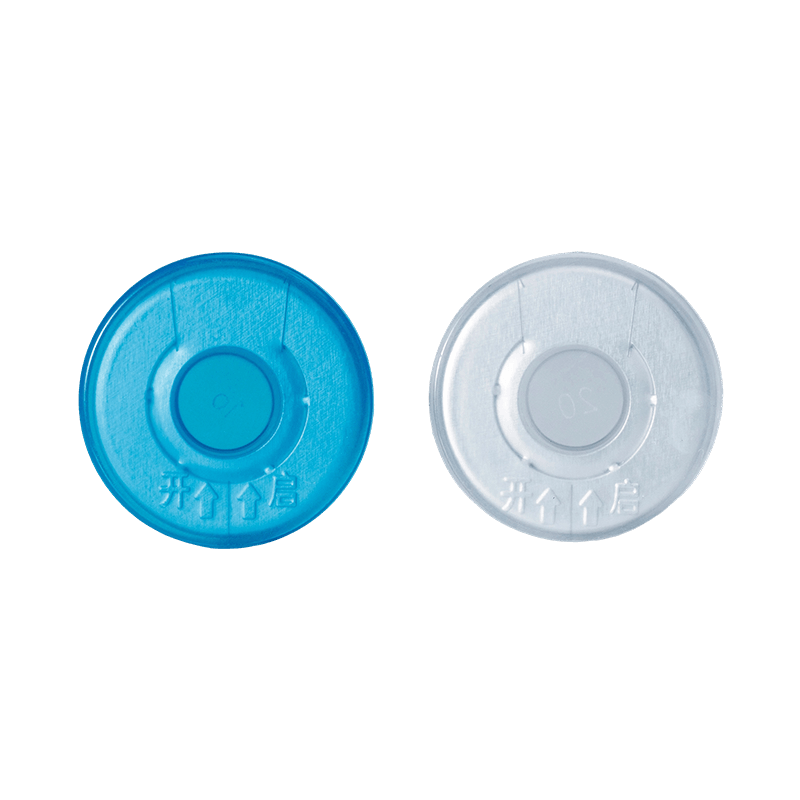
Why Aluminum and Plastic Are Combined: Functional Rationale
The pairing of aluminum and polypropylene in a single cap is not arbitrary — it reflects a carefully optimized balance of properties that neither material could achieve alone:
| Property Required | Provided by Aluminum | Provided by Polypropylene |
|---|---|---|
| Mechanical clamping of stopper | Yes — crimp holds stopper under compression | No — plastic alone cannot maintain crimp force |
| Tamper evidence | Yes — aluminum deforms permanently if disturbed | Partial — plastic ring may not show tampering reliably |
| Isolation of metal from rubber | No — direct metal contact is undesirable | Yes — PP insert acts as chemical barrier |
| Clean stopper access for needles/spikes | Partial — aluminum can leave sharp edges | Yes — smooth PP surface protects stopper and user |
| Autoclave / sterilization compatibility | Yes — stable at 121°C steam sterilization | Yes — PP retains properties at 121°C (softening point ~160°C) |
| Printability / color coding | Limited — lacquering or anodizing possible | Yes — PP easily pigmented or printed |
| Corrosion resistance | Good (natural oxide layer) | Excellent — PP is fully inert to most drug solutions |
A pure aluminum cap without a plastic insert would risk metal-rubber interaction and leave sharp aluminum edges exposed when opened — unacceptable in a clinical setting. A pure plastic cap lacks the mechanical strength to maintain the precise stopper compression required for sterility over a multi-year shelf life. The composite design solves both problems simultaneously.
Regulatory Standards and Quality Requirements
Aluminum-plastic caps for infusion bottles are classified as pharmaceutical primary packaging components — meaning they are in direct functional contact with the drug product or its primary container. This classification subjects them to stringent regulatory oversight in every major market.
Pharmacopeial Standards
The key pharmacopeial references governing infusion bottle closures and their associated caps include:
- USP <660> Containers — Glass and USP <661> Plastic Packaging Systems: Set chemical resistance and extractables requirements for containers and closure materials in contact with injectable products.
- USP <381> Elastomeric Closures for Injections: While primarily addressing the rubber stopper, this chapter sets functional requirements for the complete closure system, which includes the cap's role in maintaining stopper compression and seal integrity.
- European Pharmacopoeia (Ph. Eur.) 3.1.6 — Polypropylene for Containers and Closures: Specifies material composition and extractables limits for polypropylene components used in pharmaceutical packaging, directly applicable to the PP insert in aluminum-plastic caps.
- Chinese Pharmacopoeia (ChP) YBB Standards: China's national drug packaging standards (Pharmaceutical Packaging Material Standards) include specific requirements for aluminum-plastic combination caps under the YBB series, which are directly enforced by the National Medical Products Administration (NMPA).
- ISO 15747: Addresses plastic containers for intravenous injections and includes requirements relevant to closure compatibility testing.
Quality Tests Required for Pharmaceutical Caps
Manufacturers of aluminum-plastic infusion caps must conduct and document a comprehensive battery of quality tests before commercial release and as part of ongoing production quality control:
| Test Category | Specific Test | Acceptance Criterion |
|---|---|---|
| Dimensional | Cap diameter, height, skirt length | Within ±0.1 mm of specified dimensions |
| Seal Integrity | Helium leak test / dye ingress / microbial challenge | No detectable leakage; sterility maintained |
| Mechanical | Crimp force, pull-off force, tear-off force | Within defined force range (typically 30–80 N for pull-off) |
| Chemical | Extractables / leachables in simulated drug solvents | Below pharmacopeial and ICH Q3D elemental limits |
| Sterilization Compatibility | Post-autoclave dimensional and functional check | No deformation, color change, or seal loss at 121°C / 15 min |
| Particulate | Visible and sub-visible particles generated on insertion | Meets USP <787> / <788> particulate limits |
| Visual / Cosmetic | Surface defects, color uniformity, print quality | Zero critical defects; AQL sampling per ISO 2859 |
| Biocompatibility | Cytotoxicity, systemic toxicity (ISO 10993 series) | Non-cytotoxic; no acute systemic toxicity |
Dimensional Specifications: Standard Cap Sizes for Infusion Bottles
Aluminum-plastic infusion caps are manufactured to standardized diameters that correspond to the neck finish dimensions of infusion bottles. The most widely used global standards are defined by ISO 8536 (infusion equipment for medical use) and regional pharmacopeial references. Common cap diameters include:
| Cap Outer Diameter | Neck Finish Standard | Typical Bottle Volume | Common Applications |
|---|---|---|---|
| 20 mm | ISO 8536-1 / USP Type I | 10–100 mL vials | Antibiotics, lyophilized drugs, reconstitution vials |
| 28 mm | Regional standard (China / Asia) | 100–250 mL infusion bottles | Saline, glucose, electrolyte solutions |
| 32 mm | ISO 8536 / European standard | 250–500 mL infusion bottles | Large-volume parenterals, nutritional solutions |
| 38 mm | ISO 8536 | 500–1,000 mL infusion bottles | High-volume saline, irrigation solutions, TPN |
Dimensional precision is critical: a cap that is even 0.3–0.5 mm oversize may not crimp correctly, resulting in an inadequate seal, while an undersize cap may not engage the bottle neck bead reliably, risking cap loosening during transport or autoclave processing.
The Manufacturing Process for Aluminum-Plastic Infusion Caps
Production of aluminum-plastic caps for pharmaceutical use involves multiple precision manufacturing steps, each subject to in-process quality control:
- Aluminum sheet preparation: Pharmaceutical-grade aluminum coil (alloy 8011, temper H14 or H16) is inspected for thickness uniformity and surface defects. The sheet is cleaned and, if required, coated with a food-grade or pharmaceutical-grade lacquer to enhance corrosion resistance and printability.
- Stamping and drawing: The aluminum sheet is fed through a progressive die press that stamps out disc blanks and simultaneously deep-draws them into the cup shape of the cap shell. The skirt geometry, bead engagement profile, and top disc thickness are all defined at this stage. Tolerance control is maintained to ±0.05–0.10 mm on critical dimensions.
- Score line formation (for tear-off types): A precisely controlled score line is pressed or laser-cut into the aluminum top disc to define the tear path. The score depth is critical — too shallow and the cap is difficult to open; too deep and the cap may tear prematurely during autoclave or transport.
- Polypropylene insert molding: The PP disc or flip-off component is injection molded from pharmaceutical-grade resin meeting Ph. Eur. 3.1.6 specifications. Mold cavity temperatures, injection pressures, and cooling times are controlled to ensure dimensional consistency and absence of molding defects such as flash, sink marks, or weld lines in load-bearing areas.
- Assembly: The PP insert is assembled into the aluminum shell by automated press-fitting equipment. Assembly force and insertion depth are monitored to confirm correct seating. In some designs, the insert is snapped, crimped, or ultrasonically welded into the aluminum shell.
- Washing and cleaning: Assembled caps are washed in purified water (meeting USP or Ph. Eur. specifications) and dried in a controlled environment to remove particulate contamination from the manufacturing process. This step is performed in a classified cleanroom environment — typically ISO Class 7 or 8.
- Inspection and packaging: Caps pass through automated vision inspection systems that check for dimensional deviations, surface defects, missing inserts, and incorrect assembly. Passed units are packaged in sealed, clean bags or trays and labeled with batch number, quantity, manufacturing date, and quality release status.
The entire process is conducted under a pharmaceutical quality management system certified to ISO 15378 (primary packaging materials for medicinal products), which requires full documentation of material traceability, process validation, change control, and batch release testing.
Material Safety: Extractables, Leachables, and Biocompatibility
For any primary pharmaceutical packaging component, the most critical safety question is: do any substances from the packaging material migrate into the drug product? For aluminum-plastic caps, this extractables and leachables (E&L) assessment covers both material layers.
Aluminum Extractables
Pharmaceutical-grade aluminum alloys used in infusion caps have a naturally occurring oxide layer (Al₂O₃) that forms a chemically inert barrier against further oxidation or ion release. Under normal conditions, aluminum migration from the cap shell into the drug product is negligible — the cap does not contact the drug solution directly, and the PP insert provides an additional barrier. ICH Q3D guideline sets the permitted daily exposure (PDE) for aluminum in parenteral products at 100 µg/day, a limit that well-designed aluminum-plastic caps comfortably satisfy.
Polypropylene Extractables
Pharmaceutical-grade polypropylene is one of the most chemically inert polymers available. However, PP can contain processing additives — antioxidants, slip agents, clarifiers — that may leach into drug solutions under specific conditions. Ph. Eur. 3.1.6 defines limits for UV-absorbing extractables, heavy metal content, and other chemical indicators. Properly compounded pharmaceutical-grade PP inserts routinely pass these tests with a wide safety margin. Colorant pigments used in color-coded caps must also be assessed for extractability; inorganic pigments (iron oxides, titanium dioxide) are generally preferred over organic dyes for their lower leaching potential.
Biocompatibility Assessment
Comprehensive biocompatibility testing per ISO 10993 is required for all pharmaceutical closure components. For aluminum-plastic caps, relevant tests include:
- Cytotoxicity (ISO 10993-5): Confirms the material extract does not kill or inhibit mammalian cell growth.
- Acute systemic toxicity (ISO 10993-11): Animal model test confirming no toxic systemic response to material extracts at clinically relevant doses.
- Intracutaneous reactivity (ISO 10993-10): Skin injection test confirming no local irritation from material extracts.
- Hemolysis: Confirms the material does not cause red blood cell destruction — critical for components adjacent to intravenously administered products.
How Aluminum-Plastic Caps Are Applied on the Filling Line
In pharmaceutical manufacturing, aluminum-plastic caps are applied to filled infusion bottles using automated capping and crimping machines integrated into the filling line. The process is highly controlled and validated:
- Stopper insertion: Before capping, the rubber stopper is placed and pressed into the bottle neck to a defined depth and compression, typically by an automated stopper insertion head using controlled force (50–150 N depending on stopper size).
- Cap placement: The aluminum-plastic cap is placed over the rubber stopper by a pick-and-place or vibratory feed mechanism, centered on the bottle neck.
- Crimping: A rotary crimping head engages the aluminum skirt and rolls it under the bottle neck bead in a single pass, applying a defined and validated crimping force — typically 200–600 N depending on cap size and material thickness. Crimping speed, force, and head geometry are validated to ensure consistent seal quality across all bottle neck dimensions.
- In-line inspection: Camera or force-monitoring systems check crimp quality, cap presence, and cap orientation immediately after capping. Bottles with out-of-specification crimps are rejected automatically.
- Post-capping sterility assurance: For terminally sterilized products, capped bottles proceed directly to autoclave. The cap-stopper-bottle system must maintain seal integrity through the sterilization cycle, which subjects the closure to thermal expansion, pressure differentials, and steam penetration — all validated as part of the sterilization cycle development.
Modern high-speed infusion filling lines operate at 100–300 bottles per minute, requiring aluminum-plastic caps with extremely consistent dimensions and physical properties to maintain capping reliability at production speeds without jamming or misfeed events.
Comparison with Alternative Infusion Bottle Closure Systems
Aluminum-plastic caps represent one of several available closure technologies for infusion bottles. Understanding how they compare to alternatives helps explain their continuing dominance in glass bottle applications:
| Closure Type | Container Type | Key Advantage | Key Limitation |
|---|---|---|---|
| Aluminum-plastic cap + rubber stopper | Glass infusion bottles, vials | Excellent seal integrity; tamper evidence; re-sealable after needle withdrawal | Requires crimping equipment; aluminum waste stream |
| Screw cap + membrane | Plastic infusion bottles | Easy to apply; no crimping needed; fully plastic recyclable stream | Lower tamper evidence; less suitable for glass bottles |
| Heat-sealed port (IV bag) | Flexible polyolefin IV bags | Fully integrated; no separate cap component; lowest particulate risk | Not compatible with glass containers; higher bag manufacturing complexity |
| Luer-lock / needle-free connector | Pre-filled syringes, specialized bags | Needleless access; reduced sharps risk; precise dosing | Higher cost; not suitable for large-volume containers |
For glass infusion bottles — which remain the container of choice in many markets due to their chemical inertness, transparency, and compatibility with a wide range of drug formulations — the aluminum-plastic cap with rubber stopper remains the optimal closure system in terms of seal reliability, regulatory acceptance, and manufacturing compatibility. In markets where plastic bottles and flexible IV bags have largely replaced glass (as in much of Western Europe and North America), the aluminum-plastic cap is used primarily on vials and smaller-volume injectables rather than large-volume infusion containers.
Clinical Use: How Healthcare Workers Interact with Aluminum-Plastic Caps
From a clinical perspective, the aluminum-plastic cap is the first component a nurse, pharmacist, or clinician interacts with when preparing an infusion. The cap's design directly affects clinical efficiency and patient safety:
- Tamper verification: Before opening, the clinician visually inspects the aluminum cap for any signs of deformation, discoloration, or pre-removal. An intact, undamaged aluminum cap is the primary visual indicator that the product has not been tampered with or compromised.
- Tear-off or flip-off opening: The tear-off ring or flip-off plastic disc is removed cleanly, exposing the rubber stopper's needle-access zone. This action must be performed without touching the exposed rubber surface to maintain aseptic conditions.
- Stopper disinfection: The exposed rubber stopper is swabbed with 70% isopropyl alcohol and allowed to dry for at least 30 seconds before needle or spike insertion, per standard aseptic technique guidelines.
- Spike or needle insertion: The administration set spike or drug addition needle is inserted through the rubber stopper. The resealable nature of the rubber means the stopper re-closes around the spike or needle, maintaining the sterile barrier for the duration of infusion.
- Color-code recognition: In hospitals using color-coded infusion protocols, the color of the plastic insert provides an immediate visual confirmation of the product type before opening — an important safety feature that reduces the risk of medication errors at the bedside or pharmacy preparation bench.
Sustainability and Environmental Considerations
As pharmaceutical companies face increasing pressure to reduce the environmental footprint of their packaging, aluminum-plastic composite caps present both challenges and opportunities:
Recyclability of Aluminum
Aluminum is infinitely recyclable without loss of material properties, and recycling aluminum requires only about 5% of the energy needed to produce primary aluminum from bauxite. The aluminum component of infusion caps can in principle be recovered and recycled. However, in practice, the small size of individual caps and the mixed-material construction (aluminum bonded with PP) make cap-level recycling impractical in most hospital and clinical settings, where pharmaceutical waste streams are typically incinerated for infection control reasons rather than sorted for material recovery.
Industry Developments Toward Greener Closures
Several directions are being pursued across the pharmaceutical packaging industry to reduce the environmental impact of infusion closures:
- Thinner aluminum gauges: Reducing aluminum sheet thickness from 0.25 mm to 0.20 mm or less reduces material consumption per cap by up to 20% while maintaining seal performance — a significant reduction at the scale of billions of caps produced annually worldwide.
- Bio-based polypropylene: PP inserts produced from bio-based feedstocks (sugarcane-derived propylene) carry a lower carbon footprint than petroleum-derived PP while offering identical material properties. Regulatory acceptance of bio-based pharmaceutical packaging materials is advancing.
- All-plastic closure systems: For plastic infusion containers, fully polypropylene or polyolefin closure systems eliminate the aluminum component entirely, simplifying the material stream and enabling monolithic plastic recycling at the container level.
- Solvent-free coatings: Replacing solvent-based lacquers on aluminum caps with water-based or UV-cured coatings reduces volatile organic compound (VOC) emissions during manufacturing.
While these improvements are meaningful, the primary driver in pharmaceutical packaging remains and will remain patient safety. Any change to cap materials, dimensions, or design must be validated through the full regulatory change control process before implementation, which means sustainability improvements are implemented more slowly in pharmaceutical packaging than in consumer goods. Nevertheless, the direction of travel is clear, and aluminum-plastic infusion caps will continue to evolve toward lower material use and reduced environmental impact over the coming decade.
Related products
-
A protective and sterile packaging solution designed for contact lens storage. The polypropylene (PP) container with an integrated foil seal ensures product integrity, moisture retention, and contamin...
View More -
A protective and sterile packaging solution designed for contact lens storage. The polypropylene (PP) container with an integrated foil seal ensures product integrity, moisture retention, and contamin...
View More -

A secure and low-profile support solution designed to safely hold infusion containers in clinical and care settings. Its flat design ensures stable wall-mounted suspension and easy access for intraven...
View More -

A secure and ergonomic support solution designed to safely hold infusion containers in clinical and care settings. Its racket design with an integrated handle ensures stable, portable suspension and e...
View More -
A precision sealing solution designed for cartridge-based drug delivery systems, such as pre-filled syringes and pen injectors. It ensures sterile integrity and safe, reliable needle access for inject...
View More -
A durable and portable liquid storage solution designed for safe transportation and handling of non-hazardous to semi-hazardous fluids. It ensures secure containment, easy pouring, and reliable perfor...
View More
-
Get In Touch
 +86 511 8813 2922
 +86 139 5290 2286
 lilian@changjianglids.com
 No. 1 Mingzhu Road, Youfang Industrial Park, Yangzhong City, Zhenjiang, Jiangsu, China
The information provided on this website is intended for use only in countries and jurisdictions outside of the People's Republic of China.
No. 1 Mingzhu Road, Youfang Industrial Park, Yangzhong City, Zhenjiang, Jiangsu, China
The information provided on this website is intended for use only in countries and jurisdictions outside of the People's Republic of China. -
Product
Aluminum-Plastic Caps Aluminum Caps Euro PP Caps PP Containers for Contact Lens with Foil Seal Plastic Hanger for Infusion Bottle Plastic Jerry Can -
WhatsApp
Chris

-
WeChat
Lilian

Copyright © 2025 Jiangsu Changjiang Lids Co., Ltd. All Rights Reserved.
OEM Pharmaceutical Packaging Manufacturer
Pharmaceutical Cap Supplier
