
 English
 русский
 简体中文
简体中文


Home / News / Industry News / What Is a Flip Off Cap Used For?
What Is a Flip Off Cap Used For?
2026.06.19
Content
- 1 The Fundamental Role of a Flip Off Cap in Pharmaceutical Packaging
- 2 Physical Construction: How the Cap Is Built to Perform Its Functions
- 3 Primary Use: Injectable Drug Vials Across All Parenteral Drug Categories
- 4 Tamper Evidence: Why Healthcare Systems Depend on the Cap
- 5 Color Coding: Medication Safety Through Visual Differentiation
- 6 Regulatory and Quality Standards Governing Flip Off Cap Use
- 7 Container Closure Integrity: How the Cap Contributes to Sterility Maintenance
- 8 Specialized Variants: Caps Designed for Specific Applications
- 9 Manufacturing and Quality at Scale: What a Qualified Supplier Provides
A flip off cap is used to seal and protect injectable drug vials, lyophilized product containers, and other sterile pharmaceutical preparations -- providing a tamper-evident, hermetically secure closure that allows single-use access to the vial contents by flipping away the plastic disc to expose the rubber stopper for needle penetration. The cap performs three simultaneous functions: it mechanically locks the rubber stopper onto the vial neck to maintain the sterile seal under storage, transport, and sterilization conditions; it provides a tamper-evident visual indicator that the vial has not been previously accessed; and it protects the sterile needle-penetration zone of the rubber stopper from environmental contamination during the vial's full shelf life. These functions make the flip off cap an indispensable component in pharmaceutical primary packaging for parenteral products worldwide -- found on everything from routine vaccines and insulin preparations to high-value biologic drugs and lyophilized antibiotics.
The Fundamental Role of a Flip Off Cap in Pharmaceutical Packaging
To understand why flip off caps are used, it is necessary to understand the sealing system they are part of. A standard parenteral drug vial is sealed with a rubber stopper pressed into the vial neck and held in place by the flip off cap, which is crimped onto the vial finish. This three-component system -- vial, stopper, and cap -- forms the complete primary container closure system (CCS) for the drug product.
The flip off cap contributes to this system in the following specific ways:
- Stopper retention: The aluminum skirt of the cap is crimped under the vial neck flange, mechanically locking the rubber stopper in place. Without this crimped retention, the stopper could be displaced by internal pressure changes during lyophilization cycles, autoclaving, or altitude variation during air transport -- any of which would compromise the sterile seal.
- Tamper evidence: A correctly crimped flip off cap cannot be removed and replaced without visible evidence of tampering -- the aluminum skirt must be cut or destructively removed to access the stopper. The intact cap therefore provides a visual certification to the healthcare professional or patient that the vial has not been previously accessed since manufacture.
- Stopper zone protection: The plastic disc that flips away before needle penetration covers and protects the needle-penetration zone of the rubber stopper throughout distribution and storage. This protection prevents physical contamination of the stopper surface that could be introduced into the vial contents if the stopper zone were exposed.
- Product identification: The colored plastic disc of the flip off cap is a primary product differentiation tool in pharmaceutical facilities and hospital pharmacy settings, where vials of different concentrations, formulations, or drugs are stored adjacent to each other. Color-coded cap identification reduces medication error risk in multi-drug environments.
The container closure system containing a flip off cap is evaluated by regulatory agencies including the US FDA and the European Medicines Agency (EMA) as part of the drug product's marketing authorization application. The cap specification -- material, dimensions, crimping force, and extractables profile -- becomes part of the approved product specification and cannot be changed without regulatory notification or supplemental filing (source: FDA Guidance for Industry, Container Closure Systems for Packaging Human Drugs and Biologics, 1999; ICH Q1A).
Physical Construction: How the Cap Is Built to Perform Its Functions
A flip off cap is a composite component made from two materials -- aluminum and plastic -- each contributing specific functional properties that the other material alone could not provide.
The Aluminum Shell
The outer shell of a flip off cap is formed from pharmaceutical-grade aluminum alloy -- typically 1050A or 8011 aluminum alloy per ISO 15747 and European Pharmacopoeia standards. These alloys are selected for their combination of formability (allowing the crimping operation to create a secure mechanical lock without cracking), chemical inertness (no reaction with the drug product environment), and resistance to corrosion during typical pharmaceutical storage conditions.
The aluminum shell thickness is typically 0.20 to 0.25 mm for standard flip off caps in the 13 mm to 32 mm diameter range. This gauge is thin enough to be crimped reliably onto the vial neck without requiring excessive crimping force that could damage the vial or stopper, yet thick enough to provide the mechanical strength needed to retain the stopper under the full range of internal pressure and external force conditions encountered across the product's shelf life.
The Plastic Disc
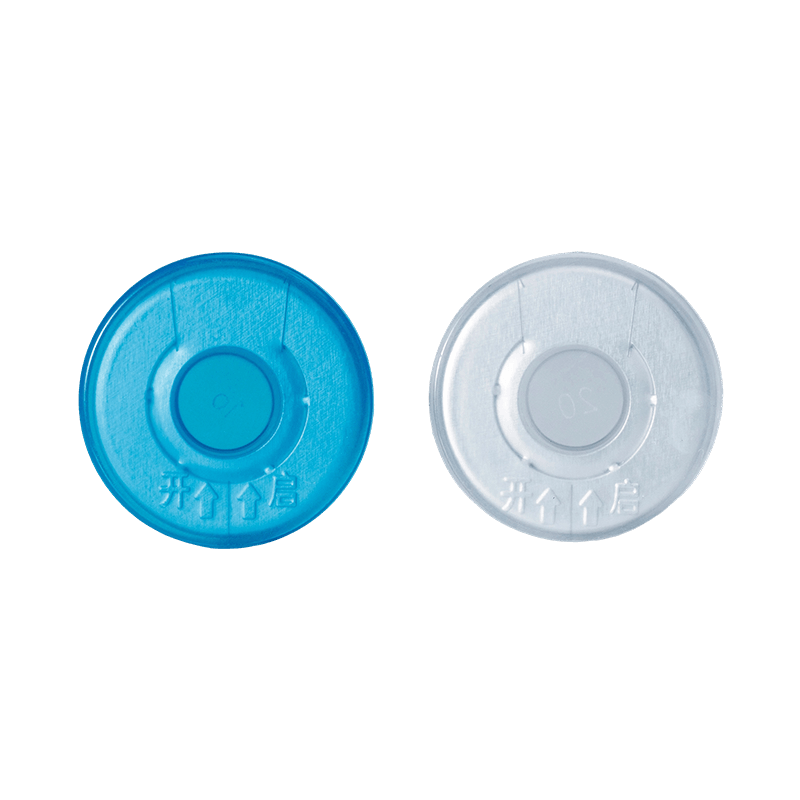
The central plastic disc -- the element that "flips off" to give the cap its name -- is injection-molded from polypropylene (PP), the material of choice for pharmaceutical contact components due to its inertness, autoclave compatibility, and compliance with pharmacopoeial requirements for plastic containers (European Pharmacopoeia 3.1.6, USP chapter 661). The disc is pre-scored or edge-designed to detach cleanly from the aluminum shell under a defined flip force without generating particulate matter -- a critical requirement because any particulate released into the hospital environment near an open vial represents a contamination risk.
The disc is heat-bonded or mechanically locked into the aluminum shell during cap manufacture. The bond strength must be sufficient to prevent the disc from detaching prematurely during handling, crimping, or sterilization, but designed to release cleanly under intentional flip-off force applied by the user. Flip-off force specifications for standard caps typically fall in the range of 8 to 25 N -- enough resistance to prevent accidental removal but low enough for single-hand operation by healthcare professionals wearing surgical gloves (source: ISO 8362-6, Injection containers for injectables -- Part 6: Aluminium caps).
Standard Sizes and Their Applications
| Cap Size (mm) | Vial Neck Finish | Typical Vial Volume | Common Applications |
| 13 mm | 13 mm DIN / ISO finish | 1-10 mL | Vaccines, insulin, hormones, lyophilized products |
| 20 mm | 20 mm DIN / ISO finish | 10-100 mL | Antibiotics, biologics, IV additives, multi-dose vials |
| 28 mm | 28 mm finish | 50-250 mL | Large-volume injectables, reconstitution vials |
| 32 mm | 32 mm finish | 100-500 mL | Plasma-derived products, bulk infusion solutions |
Size data per ISO 8362-6 and DIN 58367. Vial volume ranges are indicative; actual vial-to-cap size combinations depend on manufacturer design specifications.
Primary Use: Injectable Drug Vials Across All Parenteral Drug Categories
The core application of flip off caps is the sealing of parenteral drug vials -- medications delivered by injection or infusion, bypassing the gastrointestinal tract and entering systemic circulation directly. Because parenteral drugs must be sterile and free of particulate matter, every component of the container closure system -- including the flip off cap -- is subject to the same stringent quality and regulatory standards that apply to the drug itself.
Vaccines
Vaccines represent one of the highest-volume flip off cap applications globally. The global vaccine market requires packaging of approximately 5 to 6 billion doses per year, a significant portion of which are packaged in glass vials sealed with flip off caps (source: WHO Immunization Data, World Immunization Report, 2022). Multi-dose vaccine vials -- typically containing 10 or 20 doses of vaccine -- use flip off caps that allow repeated needle penetration of the rubber stopper for dose withdrawal while maintaining the stopper's seal integrity between uses.
Vaccine vial caps are subject to particularly stringent cold-chain integrity requirements because vaccines must maintain potency from manufacturer to patient while being stored and transported at 2 to 8 degrees C or, for some products, at -20 degrees C or below. The flip off cap must maintain its crimped retention and tamper evidence at these low temperatures without embrittlement of the plastic disc or loosening of the aluminum crimp. Specialized low-temperature polypropylene grades are used for vaccine vial caps intended for cold-chain use.
Lyophilized (Freeze-Dried) Products
Lyophilization -- freeze-drying -- is used to stabilize biologic drugs, peptides, and other moisture-sensitive active pharmaceutical ingredients that cannot be stored as aqueous solutions. The lyophilization process imposes extreme conditions on the container closure system: the vial and its stopper are placed in a freeze-dryer where temperature is reduced to -40 to -70 degrees C, followed by primary drying under vacuum and secondary drying at elevated temperature. Throughout this cycle, the rubber stopper must remain in a partially inserted position that allows moisture vapor to escape, then be fully seated into the vial neck at the end of the cycle by the freeze-dryer's stoppering mechanism.
The flip off cap is applied to the fully stopperd lyophilized vial immediately after removal from the freeze-dryer, under the controlled conditions of the filling line. The crimped cap then maintains the vacuum or inert gas atmosphere inside the sealed lyophilized vial for the entire storage and distribution period -- which for many biologics can be 24 to 36 months at 2 to 8 degrees C. The stopper retention force of the crimped cap must be sufficient to prevent stopper displacement even if the vial is subjected to accidental impact or pressure differential during air transport.
Biologics and High-Value Injectable Products
Monoclonal antibodies, cytokines, blood factors, and other biologic drugs are among the highest-value pharmaceutical products by dose cost -- a single vial of a biologic therapy may have a market value of several thousand US dollars. For these products, the flip off cap must satisfy not only functional sealing requirements but also aesthetic and brand-specification requirements: the cap color, surface finish, and labeling must be consistent with the product's brand identity as presented to prescribers and patients.
Biologic drug manufacturers therefore specify flip off caps with tighter dimensional tolerances, higher cosmetic standards (no surface scratches, consistent color within defined spectrophotometric limits), and more comprehensive extractables and leachables testing than standard antibiotic or vaccine vial caps. The flip off cap's material extractables profile -- the chemical compounds that migrate from the cap material into the drug product under storage conditions -- must be characterized and shown to be below toxicological thresholds of concern per ICH Q3D and USP 661 requirements (source: ICH Q3D, Elemental Impurities Guidance, 2019).
Antibiotics and Small-Molecule Injectables
High-volume antibiotic injectables -- beta-lactams, glycopeptides, aminoglycosides -- are the highest-volume single product category for flip off caps by unit count. A global antibiotic manufacturer filling 100 million vials per year requires approximately 100 million flip off caps per year from a qualified supplier with the production capacity, quality systems, and supply chain reliability to support that volume without interruption. The caps for this category are typically specified to standard dimensions per ISO 8362-6, with qualification performed once and maintained across multiple production batches through statistical process control of critical dimensions and visual inspection defect rates.
Tamper Evidence: Why Healthcare Systems Depend on the Cap
The tamper-evident function of a flip off cap is not a secondary feature -- it is a primary safety requirement in modern pharmaceutical supply chains. Drug counterfeiting, diversion, and adulteration are documented threats to patient safety worldwide. The WHO estimates that 10% of medicines in low- and middle-income countries are falsified or substandard, and parenteral products represent a high-value target for counterfeit operations because of their high unit cost and the difficulty patients have in visually verifying their authenticity (source: WHO, A Study on the Public Health and Socioeconomic Impact of Substandard and Falsified Medicines, 2017).
The flip off cap contributes to supply chain security through two mechanisms:
- Physical tamper evidence: The aluminum skirt of a correctly crimped cap cannot be removed without visible distortion, tearing, or cutting of the metal. Any attempt to access the stopper by removing the cap leaves unmistakable physical evidence of tampering that can be identified by visual inspection at any point in the distribution chain -- by pharmacists, nurses, or patients before administration.
- Manufacturing authentication: The precision of the cap's dimensions, the consistency of the crimp profile, and the quality of the aluminum and plastic materials are characteristics that are difficult for counterfeiters to replicate with the same consistency as legitimate pharmaceutical-grade production. Healthcare professionals trained to recognize the appearance of authentic products can use cap quality as one element of product authentication.
Some premium flip off cap specifications now incorporate additional anti-counterfeiting features including laser-engraved serial numbers, holographic foil inserts in the plastic disc, and color-shift ink printed on the disc surface -- features that increase the technical barrier to counterfeiting while maintaining full compliance with pharmacopoeial requirements for the core sealing function.
Color Coding: Medication Safety Through Visual Differentiation
Color-coded flip off caps are a fundamental medication safety tool in hospital pharmacy and clinical settings. When multiple vials of different drugs, different concentrations of the same drug, or different formulations intended for different routes of administration are stored in proximity, the risk of medication selection error is significant and well-documented.
A study published in the American Journal of Health-System Pharmacy found that up to 38% of injectable medication errors in hospital settings involved incorrect drug or concentration selection -- the single most common error category in injectable medication preparation (source: Am J Health-Syst Pharm, 2009;66(12):1124-1133). Color-coded cap systems address this risk by providing an immediate, pre-reading visual cue that allows healthcare professionals to rapidly confirm they have selected the correct vial before preparing a dose.
Standard color coding systems for flip off caps in pharmaceutical manufacturing include:
- Product-specific color assignment: A drug manufacturer assigns a unique cap color to each product in their portfolio, allowing rapid visual identification in hospital formulary environments where multiple products from the same manufacturer are stocked simultaneously.
- Concentration differentiation: Different concentrations of the same drug (e.g., 1 mg/mL versus 10 mg/mL of a drug with a narrow therapeutic index) receive different cap colors, providing a redundant visual check against label reading alone.
- Route differentiation: Some manufacturers use cap color to distinguish products intended for different administration routes -- intravenous versus intramuscular versus intrathecal formulations -- where route confusion would have serious adverse consequences.
The color range available for flip off caps spans the full visible spectrum -- white, blue, red, green, yellow, orange, purple, gray, and combinations -- allowing pharmaceutical manufacturers to build comprehensive and visually distinctive color systems across their full product portfolios without color conflicts. Polypropylene disc color is specified using standard RAL or Pantone color references in the cap procurement specification, and color compliance is verified by spectrophotometric measurement against defined color coordinates (L*, a*, b* values in CIELAB color space) during incoming quality control inspection.
Regulatory and Quality Standards Governing Flip Off Cap Use
Flip off caps used in pharmaceutical packaging are subject to a comprehensive framework of international standards and pharmacopoeial requirements that define their acceptable materials, dimensions, performance properties, and testing methods. Compliance with these standards is a prerequisite for use in any regulated pharmaceutical market.
| Standard / Regulation | Issuing Body | What It Governs |
| ISO 8362-6 | ISO (International Organization for Standardization) | Dimensions, materials, and performance requirements for aluminum caps for injection vials |
| European Pharmacopoeia 3.1.6 | Council of Europe (EDQM) | Polypropylene containers for pharmaceutical use -- material requirements and testing |
| USP Chapter 661 | US Pharmacopeia (USP) | Plastic packaging systems and their materials of construction for pharmaceutical use |
| ICH Q3D | ICH (International Council for Harmonisation) | Elemental impurities -- limits for metal leachables from packaging components into drug products |
| FDA 21 CFR Part 211 | US FDA | Current Good Manufacturing Practice (cGMP) requirements for finished pharmaceuticals, including packaging component quality |
| EU GMP Annex 1 (2022) | European Commission | Manufacture of sterile medicinal products -- requirements for container closure integrity and primary packaging components |
| ISO 15747 | ISO | Plastic containers for intravenous injections -- requirements including materials and packaging performance |
Standards current as of 2024. EU GMP Annex 1 revised version became applicable August 2023. Pharmaceutical manufacturers should verify current version applicability with their regulatory affairs teams.
In practice, a pharmaceutical company qualifying a new flip off cap supplier requires the supplier to provide a Drug Master File (DMF) or equivalent technical dossier containing full characterization data for the cap materials, manufacturing process controls, extractables and leachables test results, and dimensional specifications. The cap qualification process for a new vial-stopper-cap combination typically takes 6 to 18 months including container closure integrity testing, extractables studies, and stability batches, reflecting the stringency with which regulatory agencies treat primary packaging component changes (source: FDA Guidance for Industry, Container Closure Systems for Packaging Human Drugs and Biologics, 1999).
Container Closure Integrity: How the Cap Contributes to Sterility Maintenance
Container closure integrity (CCI) -- the ability of the sealed vial to maintain the sterile barrier throughout its shelf life -- is a regulatory requirement for all parenteral drug products. The flip off cap is a critical contributor to CCI through its role in maintaining the rubber stopper's position and compression against the vial neck.
A rubber stopper in a correctly crimped flip off cap assembly is compressed against the vial neck finish by the mechanical force of the aluminum crimp. This compression creates the primary hermetic seal -- the compressed rubber conforms to any micro-irregularities in the glass vial neck finish, creating a seal that prevents both liquid leakage and microbial ingress. The crimping force applied during vial filling must fall within a defined range -- typically 100 to 200 N total crimping force for a standard 20 mm cap -- to achieve adequate stopper compression without deforming the aluminum shell in ways that would compromise the seal or the visual appearance of the finished vial (source: PDA Technical Report No. 27, Closure Integrity Testing, 2013).
CCI testing methods for flip off cap sealed vials include:
- Vacuum decay testing (ASTM F2338): A deterministic method that detects seal defects by measuring the rate of pressure rise in a sealed test chamber surrounding the vial. Capable of detecting leaks as small as 5 to 10 microns in equivalent hole diameter.
- Helium leak testing: The vial is pressurized with helium and the external environment is monitored for helium egress. Extremely sensitive -- capable of detecting leaks below 1 x 10⁻⁶ mbar.L/s.
- Dye ingress testing: Vials are immersed in a methylene blue dye solution under reduced pressure, and after return to atmospheric pressure any dye ingress indicates a seal failure. A legacy probabilistic method being replaced by deterministic methods per FDA and EU GMP guidance.
- High-voltage leak detection (HVLD): Used for liquid-filled vials; applies high-voltage electrical current and detects conductivity pathways through any liquid in a leak path. Non-destructive and suitable for 100% inspection in filling lines.
Specialized Variants: Caps Designed for Specific Applications
Standard flip off caps cover the majority of pharmaceutical vial sealing applications, but specialized variants have been developed to address specific performance requirements in demanding applications.
Ready-to-Use (RTU) Pre-Sterilized Caps
Traditional flip off caps are supplied non-sterile and washed, depyrogenated, and sterilized by the pharmaceutical manufacturer as part of the filling line preparation process. Ready-to-use pre-sterilized caps are gamma-irradiated or electron-beam sterilized at the cap manufacturer and supplied in sterile barrier packaging, allowing direct use in filling operations without in-house sterilization. RTU caps reduce filling line complexity and contamination risk, particularly valuable for manufacturers operating isolator-based filling systems or low-volume specialty filling operations where in-house cap processing infrastructure is not cost-effective.
Tear-Off Cap Variants
Some flip off cap designs incorporate a tear-off aluminum tab rather than a snap-off plastic disc, allowing the entire aluminum shoulder to be removed to reveal the stopper. These variants are used in applications where the needle penetration force through the stopper is high and the reduced resistance of the fully exposed stopper (without the disc in place) is operationally important, such as in emergency medicine settings or for high-viscosity drug products that require maximum needle access.
Caps With Integrated Needle Protection Features
In some markets and applications, flip off cap designs incorporate a secondary tamper-evident ring below the main disc that provides an additional layer of visual authentication. These dual-security caps are used for controlled substances, narcotic analgesics, and other high-value drugs where the regulatory and security requirements for tamper evidence exceed those applicable to standard pharmaceutical products.
Combination Cap and Label Systems
Flip off caps with pre-applied printed or color-coded labels on the disc surface combine the cap's sealing function with a product identification surface that remains visible when the cap is in place on the filled vial. These integrated cap-label systems reduce labeling operations and can improve label adhesion reliability compared to separately applied adhesive labels in environments where vial surface condensation during cold-chain storage can cause label delamination.
Manufacturing and Quality at Scale: What a Qualified Supplier Provides
The quality and regulatory demands placed on flip off cap manufacturers are substantially greater than those applicable to most other packaging component categories. A cap manufacturer supplying pharmaceutical companies must operate under pharmaceutical supplier quality standards equivalent to those applied to excipient manufacturers -- with documented quality management systems, process validation, change control, and supplier audit acceptance as a baseline expectation.
Jiangsu Changjiang Lids Co., Ltd., founded in 2000 and located in Yangzhong, Jiangsu Province -- in the heart of China's Yangtze River Delta manufacturing region -- has been manufacturing pharmaceutical packaging components including flip off caps since its establishment. With a registered capital of 45.68 million yuan and a production facility covering 20,000 square meters, the company operates as a production-oriented enterprise specializing in high-quality pharmaceutical packaging. The scale and duration of pharmaceutical-specific manufacturing experience at this level means that process controls, tooling consistency, and quality system maturity are developed to the standard required by global pharmaceutical customers and their regulatory submissions.
Key quality parameters that a pharmaceutical-grade flip off cap manufacturer must control include:
- Dimensional control: Cap outer diameter, skirt length, disc thickness, and disc flip-off force must all fall within specified tolerances to ensure consistent crimping performance across all filling machine types and speeds. Standard dimensional tolerances for ISO 8362-6 caps are typically plus or minus 0.1 to 0.2 mm on critical dimensions.
- Visual inspection: Zero-defect visual appearance is expected for pharmaceutical-grade caps. Automated vision systems inspect 100% of caps for surface defects, color deviation, dimensional outliers, and contamination -- with AQL (Acceptable Quality Level) values of 0.65 or lower for critical defects in caps supplied to major pharmaceutical manufacturers.
- Material traceability: Full batch traceability from raw aluminum coil and polypropylene resin to finished cap is required. Each cap production batch must be traceable to its raw material lots and process parameters for investigation purposes if a quality event occurs at the pharmaceutical customer's facility.
- Cleanliness and bioburden: Non-sterile caps supplied for pharmaceutical washing and sterilization must meet defined limits for particulate contamination and bioburden (microbial load) to ensure that the in-house sterilization process reliably achieves sterility assurance level (SAL) of 10-6 or better.
Our flip off cap product range is manufactured to the dimensional and quality standards required for global pharmaceutical vial sealing applications, with full ISO 8362-6 compliance, pharmacopoeial material certification, and comprehensive quality documentation available to support customer regulatory submissions and supplier qualification audits.
Related products
-

A specialized sealing cap designed for pharmaceutical infusion bottles. It features an easy-tear design on the aluminum cap, allowing users to open it quickly and reliably, with a near 100% opening su...
View More -
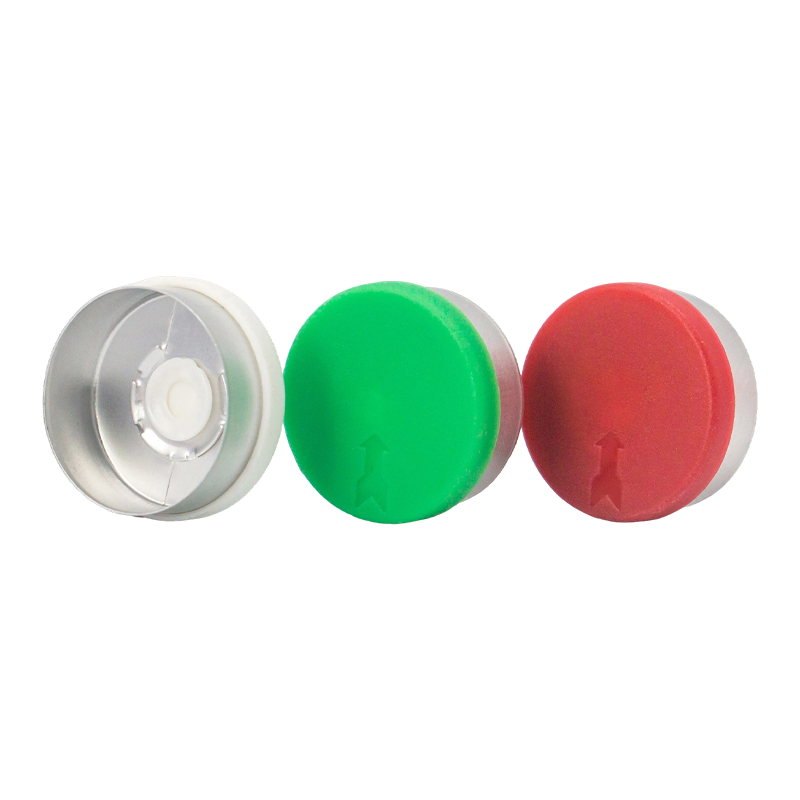
A specialized sealing cap designed for pharmaceutical injection vials. It features an easy-tear design on the aluminum cap, allowing users to open it quickly and reliably, with a near 100% opening suc...
View More -
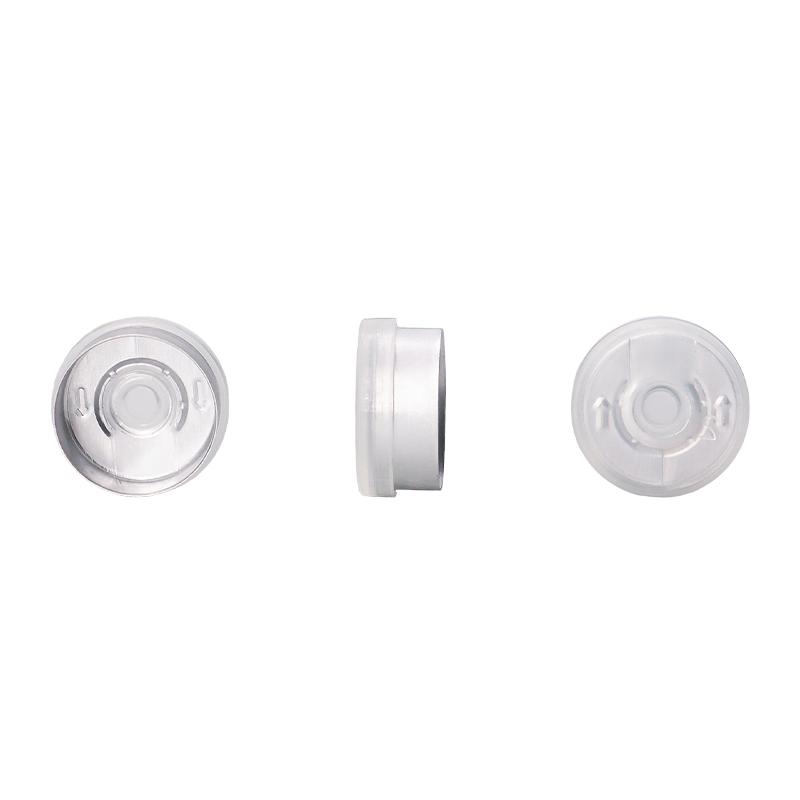
A specialized sealing cap designed for oral liquids. It features an easy-tear design on the aluminum cap, allowing users to open it quickly and reliably, with a near 100% opening success rate. Key App...
View More -
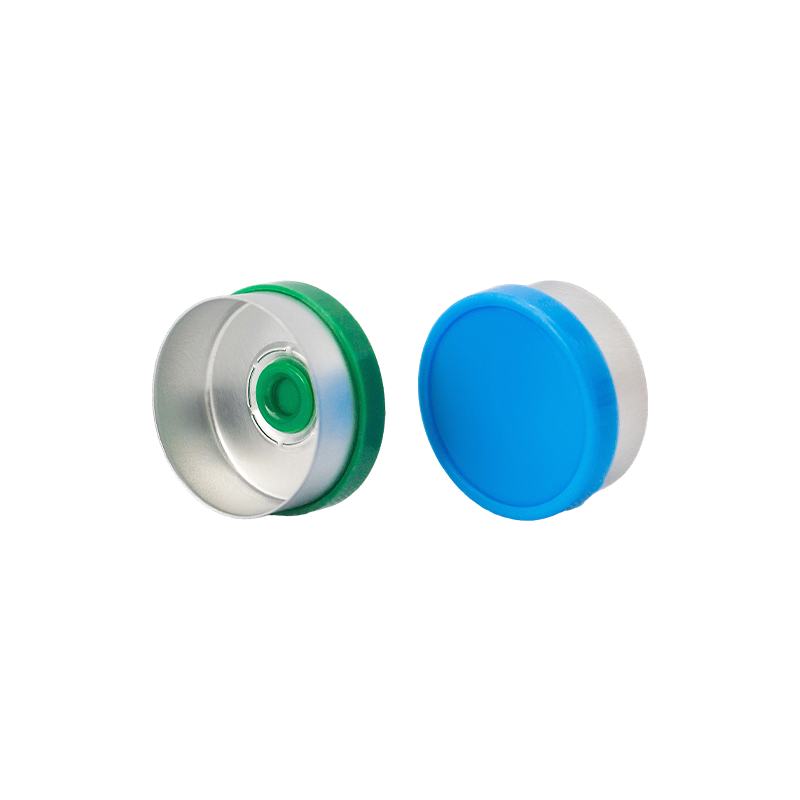
A reliable and tamper-evident sealing solution designed for standard injection vials. It ensures container seal integrity and safe needle access for liquid medications. ZB structural design offers the...
View More -
A precision sealing solution designed for cartridge-based drug delivery systems, such as pre-filled syringes and pen injectors. It ensures sterile integrity and safe, reliable needle access for inject...
View More -
A standardized pull-ring polypropylene cap designed for infusion and solution bottles. This tamper-evident solution ensures reliable closure and provides an integrated pull-ring for safe, tool-free ac...
View More
-
Get In Touch
 +86 511 8813 2922
 +86 139 5290 2286
 lilian@changjianglids.com
 No. 1 Mingzhu Road, Youfang Industrial Park, Yangzhong City, Zhenjiang, Jiangsu, China
The information provided on this website is intended for use only in countries and jurisdictions outside of the People's Republic of China.
No. 1 Mingzhu Road, Youfang Industrial Park, Yangzhong City, Zhenjiang, Jiangsu, China
The information provided on this website is intended for use only in countries and jurisdictions outside of the People's Republic of China. -
Product
Aluminum-Plastic Caps Aluminum Caps Euro PP Caps PP Containers for Contact Lens with Foil Seal Plastic Hanger for Infusion Bottle Plastic Jerry Can -
WhatsApp
Chris

-
WeChat
Lilian

Copyright © 2025 Jiangsu Changjiang Lids Co., Ltd. All Rights Reserved.
OEM Pharmaceutical Packaging Manufacturer
Pharmaceutical Cap Supplier
