
 English
 русский
 简体中文



Home / News / Industry News / 5 ml How Many Drops: Standard Conversion and Real World Examples Explained
5 ml How Many Drops: Standard Conversion and Real World Examples Explained
2026.11.19
Content
- 1 Five Milliliters Is About 100 Drops, and the Arithmetic Is Simple
- 2 Where the 20 Drops per Milliliter Standard Comes From
- 3 Why a Real 5 ml Bottle Often Delivers 85 to 120 Drops
- 4 Approximate Drop Counts for Common 5 ml Liquids
- 5 How Bottle and Cap Design Changes the Drop Count
- 6 How to Measure 5 ml When the Drop Count Has to Be Exact
- 7 5 ml Drop Counts in Real Applications
- 8 What to Remember About 5 ml and Drops
Five milliliters of a water-based liquid comes out to about 100 drops. That is the number worth keeping in your head, and it comes from the 20 drops per milliliter convention that pharmacies, formulators and packaging engineers have relied on for decades. The part that surprises people is what happens next: when you actually count the drops leaving a real bottle, a real dropper or a real dosing cap, the same 5 ml can land anywhere between 85 and 120 drops.
That spread matters. A 15 percent difference on a 5 ml fragrance blend is harmless. The same difference on an eye drop prescription, a pediatric oral solution or a filling line running tens of billions of closures a year is a specification problem. So the honest answer to how many drops are in 5 ml is a range, and the useful work is understanding where inside that range your product sits.
Five Milliliters Is About 100 Drops, and the Arithmetic Is Simple
The whole conversion rests on one anchor value. A single drop of water is conventionally treated as 0.05 ml. Turn that around and you get 20 drops per milliliter. Multiply by five and 5 ml equals roughly 100 drops. No bottle, no dropper and no measuring required, just the arithmetic pharmacy counters have used for generations.
Read that number as a planning figure rather than a description of hardware. It describes a drop that detaches from a round orifice under gravity alone, in a liquid with surface tension and viscosity close to water, at room temperature. Change any one of those four conditions and the count moves, sometimes by 20 percent or more.
Where the 20 Drops per Milliliter Standard Comes From
The 0.05 ml drop survived because it is convenient. One twentieth of a milliliter is easy to hold in your head, easy to write on a label and easy to verify with a graduated cylinder. Standard glass droppers and gravity-fed dropper tips were refined around that figure, so a well-made aqueous product tends to land close to it.
What it is not is a legal definition. Regulators have largely stepped back from treating the drop as a formal unit of measurement, precisely because a drop is a physical event rather than a fixed volume. Two droppers of identical capacity can deliver noticeably different volumes if their tip geometry differs. That is why a medicinal label will normally specify 5 ml or a marked dose line instead of asking the patient to count drops.
In practice the convention is still useful for three things: quick conversions at the bench, sanity checks on filling volumes, and communicating with people who think in drops rather than milliliters.
Why a Real 5 ml Bottle Often Delivers 85 to 120 Drops
Orifice diameter and dropper geometry
A wider tip releases a larger drop. A narrower tip, or one with a long tapered throat and a sharp lip, releases a smaller one. Beyond diameter, the length of the tip, the wall thickness at the opening and whether the tip is molded or drilled all influence where the liquid neck pinches off. Two tips that both measure 2 mm across can differ by several drops per milliliter.
Viscosity of the liquid
Thicker liquids form heavier drops that detach later, so a milliliter holds fewer of them. Glycerin-rich syrups and some essential oils can drop to 12 to 16 per milliliter, turning a 5 ml bottle into a 60 to 80 drop count instead of 100.
Surface tension and formulation aids
Surfactants, alcohol and some preservatives lower surface tension, which makes drops smaller and raises the count. That is why ophthalmic solutions often measure higher than plain water, frequently 22 to 25 drops per milliliter.
Temperature, tilt angle and squeeze force
Warm liquid flows more freely and produces smaller drops. Holding a bottle nearly horizontal, or squeezing a soft container, does the same thing. A controlled vertical drip from a rigid bottle is the reference condition; anything else adds variability.
Approximate Drop Counts for Common 5 ml Liquids
| Liquid type | Approximate drops per ml | Approximate drops in 5 ml |
|---|---|---|
| Water, saline solution | 20 | 100 |
| Water-based oral solution | 19 to 21 | 95 to 105 |
| Ophthalmic solution with surfactants | 22 to 25 | 110 to 125 |
| Essential oil blends | 17 to 20 | 85 to 100 |
| Alcohol-based tincture | 21 to 24 | 105 to 120 |
| Glycerin or thick syrup | 12 to 16 | 60 to 80 |
The gap between the top and bottom rows is roughly double. Anyone who treats 100 drops as a fixed answer is quietly assuming a water-like liquid in a well-behaved container.
How Bottle and Cap Design Changes the Drop Count
Closure design is often the forgotten variable. On an oral liquid bottle, the drop is formed by the bottle mouth, the liner and any dropper insert rather than by a laboratory pipette. A wide-mouth bottle with a loose liner can release a ragged, oversized drop; a bottle fitted with a controlled dropper insert delivers a repeatable one. The primary closure has to seal reliably, but on multi-dose liquid products it also participates in dosing.
Different closure families behave differently. Tear-off and pull-ring designs are opened once and then rely on the bottle neck for dispensing, while screw closures and inserts are reused dose after dose. If dosing accuracy is part of the product requirement, that choice belongs in the specification from the start. A useful background read is this explanation of aluminum-plastic cap construction and where each type is used.
For oral liquid lines, one common option is a
 Aluminum Pull-Ring Cap for Oral Liquid BottlesSingle-piece aluminum pull-ring closure for oral liquid bottles, offering one-step opening and clear tamper evidence for spoon- or cup-measured products.View Product →
which gives a clean single-opening seal for a bottle that will be measured out by spoon or cup afterwards.
Where the bottle is reopened repeatedly, a tamper-evident format such as this
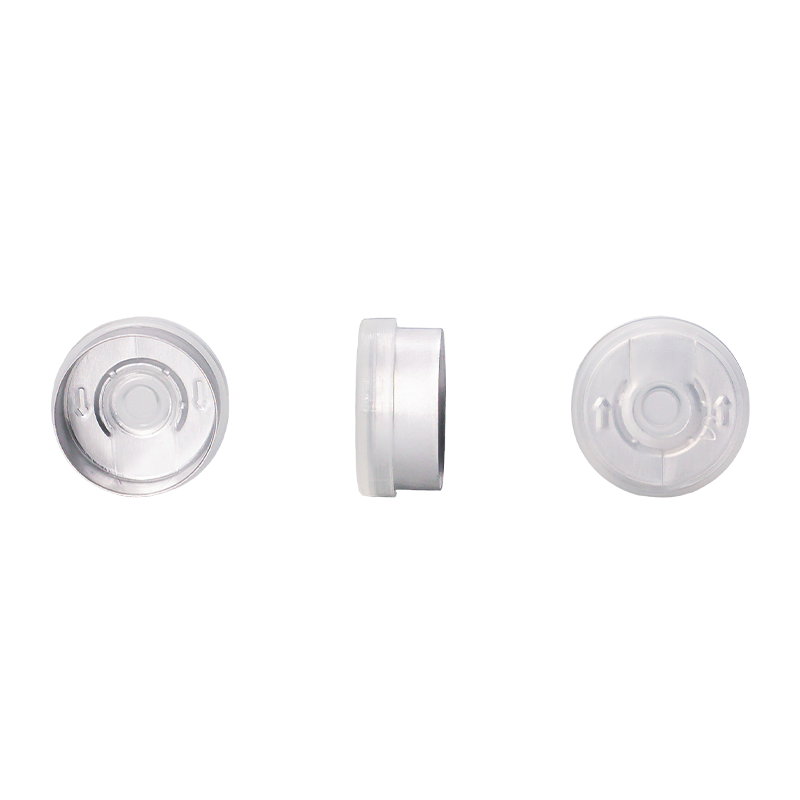 Tear-Off Aluminum-Plastic Cap for Oral LiquidsEasy-tear aluminum-plastic closure for oral liquid bottles, designed to keep the seal intact until first use and support repeated handling in multi-dose packs.View Product →
keeps the seal intact until first use while tolerating the handling that comes with a multi-dose pack.
The practical point is that drop count is a joint property of liquid and package. Changing a liner material or a bottle mouth dimension can shift the delivered dose without anyone touching the formulation.
How to Measure 5 ml When the Drop Count Has to Be Exact
If approximate is good enough, count 100 drops and move on. If it is not, stop counting and measure the volume directly:
- Use a graduated syringe or a calibrated pipette. A 5 ml syringe with 0.2 ml graduations is accurate to well within the tolerance most formulations need.
- Weigh the dose instead of counting it. Five grams of water is 5 ml at room temperature; oils and syrups need their own density factor applied.
- Dispense into a volumetric flask or a graduated cylinder when preparing a batch rather than a single dose.
- If drops must be counted, count a known volume first. Deliver 2 ml into a graduated tube, note the drop count, then calculate your own drops per milliliter for that exact bottle and liquid.
Doing this once per product takes a few minutes and replaces a guess with a number you can put on a batch record. It also gives you a realistic tolerance for the filling line, because the same variability that affects a hand-held dropper affects a filling nozzle.
5 ml Drop Counts in Real Applications
Eye drops
A typical 5 ml ophthalmic bottle holds roughly 100 to 120 drops. Patients rarely get all of them, since a portion of each drop is lost to the bottle tip or the eyelid, which is why preservative-free single-dose formats exist for sensitive users.
Oral liquid medicines
Pediatric and adult oral solutions sit close to the water standard at 95 to 105 drops per 5 ml, but dosing cups and spoons are specified by volume. Counting is a fallback, not a method.
Essential oils and aromatherapy
Blending guides often quote 100 drops per 5 ml bottle, and many blends do land near that. Heavier oils and narrow dropper inserts pull the count down toward 85, which is why a dilution ratio computed on drop counts alone can drift.
What to Remember About 5 ml and Drops
- 5 ml is about 100 drops under the 20 drops per milliliter convention.
- Real bottles and real liquids deliver roughly 85 to 120 drops for the same 5 ml.
- Viscosity, surface tension, tip geometry, temperature and tilt angle all move the number.
- Closure and bottle design are part of the dosing system on multi-dose liquid products.
- When accuracy matters, measure volume or weight rather than counting drops.
Treat 100 drops as the default answer and 85 to 120 as the honest one. If your product depends on the count being repeatable, the fix usually sits in the package as much as in the formulation, and that is a conversation worth having early. You can discuss your closure and dropper specification with the team before the filling trial rather than after it.
Related products
-
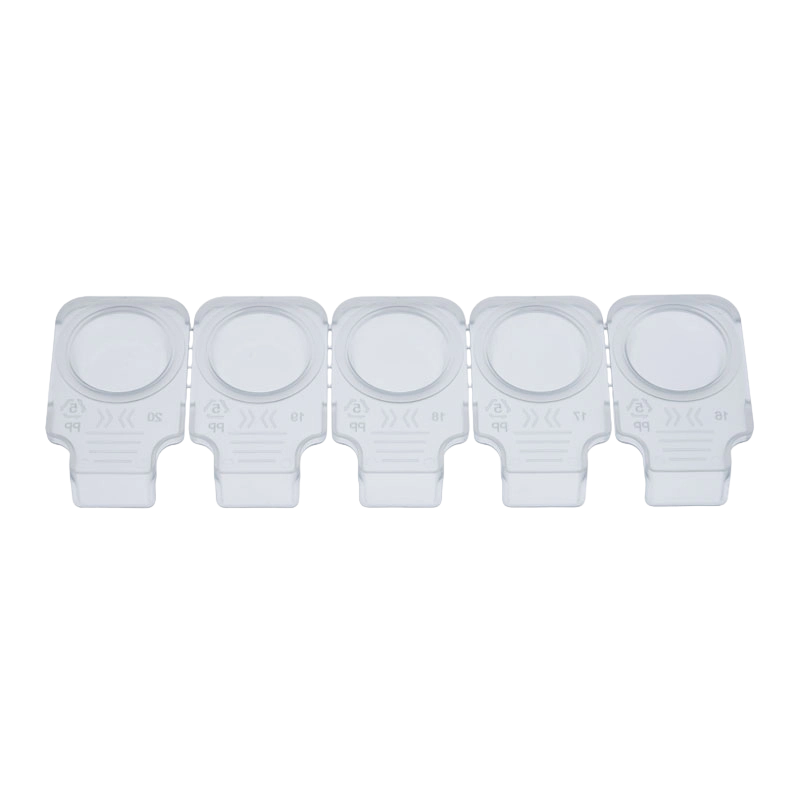
A protective and sterile packaging solution designed for contact lens storage. The polypropylene (PP) container with an integrated foil seal ensures product integrity, moisture retention, and contamin...
View More
-
Get In Touch
 +86 511 8813 2922
 +86 139 5290 2286
 lilian@changjianglids.com
 No. 1 Mingzhu Road, Youfang Industrial Park, Yangzhong City, Zhenjiang, Jiangsu, China
The information provided on this website is intended for use only in countries and jurisdictions outside of the People's Republic of China.
-
Product
Aluminum-Plastic Caps Aluminum Caps Euro PP Caps PP Containers for Contact Lens with Foil Seal Plastic Hanger for Infusion Bottle Plastic Jerry Can -
WhatsApp
Chris

-
WeChat
Lilian

Copyright © 2025 Jiangsu Changjiang Lids Co., Ltd. All Rights Reserved.
OEM Pharmaceutical Packaging Manufacturer
Pharmaceutical Cap Supplier
