
 English
 русский
 简体中文
简体中文


Home / News / Industry News / Bottle Closure Sizes Explained: Neck Finishes, Dimensions, and How to Match Caps
Bottle Closure Sizes Explained: Neck Finishes, Dimensions, and How to Match Caps
2026.09.04
Content
- 1 What the Two Numbers in a Closure Size Actually Mean
- 2 The Five Dimensions That Decide Whether a Cap Fits
- 3 How to Measure a Neck Finish on the Production Floor
- 4 Common Closure Sizes and Their Typical Uses
- 5 Thread Styles: Why the Same Diameter Is Not Enough
- 6 Crimp Closures: The Dimension Nobody Prints on the Cap
- 7 Choosing Between Closure Constructions
- 8 A Practical Checklist Before You Order
Put a 24 mm cap on a 24 mm bottle and the closure can still leak, because the number molded on top of a cap is only half of the specification. The short answer is that a closure size combines a nominal diameter with a finish style, and for crimped pharmaceutical closures the final fit also depends on crimp height and the stopper underneath. When one of those details is wrong, the failures are concrete and expensive: bottles that leak in transit, caps that cross-thread on the filling line, dye penetration tests that fail at release, or containers that patients cannot open cleanly. This article explains how closure size codes work, which five dimensions actually control the fit, how to measure a neck finish correctly, and how the common closure constructions compare for pharmaceutical liquids.
What the Two Numbers in a Closure Size Actually Mean
A code such as 24-410 describes two independent decisions. The first number is the nominal diameter of the neck finish in millimeters, measured across the outside of the threads, which is known as the T dimension. The second number identifies the thread style: the depth of the profile, how many turns it delivers, and how tall the cap skirt must be. A 24-400 and a 24-410 share the same diameter but will not interchange, because the 410 profile carries roughly one and a half thread engagements while the 400 carries one.
Crimped pharmaceutical closures are usually named by a single diameter, such as a 13 mm or 20 mm aluminum cap for injection vials, because there is no screw thread at all. Their fit is defined by the glass flange, the elastomer stopper, and the crimp dimension set on the sealing head. Both systems reward the same habit: treat the size code as an entry point, then confirm every drawing dimension before ordering.
The Five Dimensions That Decide Whether a Cap Fits
Neck finishes are standardized around five lettered dimensions, and suppliers quote tolerances for each of them. The T and I dimensions define the outer and inner fit, S and H control how deep the cap sits and when the threads engage, and E reflects the thread depth formed into the glass itself. The table below summarizes what each letter means in practice.
| Dimension | What it measures | Why it matters when selecting a closure |
|---|---|---|
| T | Outside diameter across the thread crests, the basis of the nominal size | The first number in the size code and the first check when matching cap and bottle |
| E | Outside diameter of the neck at the root of the thread | Reflects thread depth and controls how far the cap skirt drops before engagement |
| I | Inner diameter of the bottle opening | Must clear filling nozzles and position plugs, liners and stoppers correctly |
| S | Distance from the top of the finish down to the start of the thread | Affects cross-threading and how squarely the cap begins to engage |
| H | Overall height of the neck finish | Determines the cap skirt depth needed for full thread engagement |
How to Measure a Neck Finish on the Production Floor
Measurement errors cause most compatibility complaints, so it is worth doing this carefully with a digital caliper and a clean, cooled bottle. The sequence below takes only a few minutes per sample.
- Measure the T dimension across the thread crests at several angles and record the largest and smallest values.
- Measure the I dimension at the bore opening and check that your filling nozzle or dropper clears it.
- Measure S from the top of the finish down to the point where the thread begins.
- Measure H, the full height of the finish, because the cap skirt must cover it completely.
- Count the thread turns and note the profile shape so the finish style can be identified.
- Compare every value with the supplier drawing, including tolerances, rather than with a nominal number.
A tolerance window of a few tenths of a millimeter decides whether a cap seats square, and glass batches vary within that window. Whenever possible, run the actual bottle, closure and stopper combination on the real capper or crimping head before releasing a purchase order.
Common Closure Sizes and Their Typical Uses
Diameter bands map predictably to product types. Finishes around 18 to 20 mm suit droppers, mist sprayers and serums; 24 to 28 mm covers lotions and most liquid medicines; 33 mm and above appears on jars, powders and wide-mouth containers. Pharmaceutical packaging runs on its own conventions: injection vials commonly use 13 mm or 20 mm crimp necks, oral liquid bottles pair small aluminum screw or pull-ring closures with standardized glass, and infusion containers take larger aluminum and aluminum-plastic closures matched to the bottle standard.
The bars rank widely used neck finishes by nominal diameter, from 18 mm up to 53 mm. Narrow finishes below about 20 mm favor precise dosing, which is why dropper assemblies and serum bottles cluster there. The 24 mm to 28 mm band is the volume zone for lotions and liquid medicines because it balances filling speed against controlled dispensing. Diameters of 33 mm and beyond trade dosing precision for wide access, which suits jars and powders. The chart also shows why a single number is never enough, since each bar represents several finish styles with different thread profiles on the same diameter. Pharmaceutical crimp closures follow separate conventions, so the 13 mm and 20 mm vial necks sit outside this chart entirely.
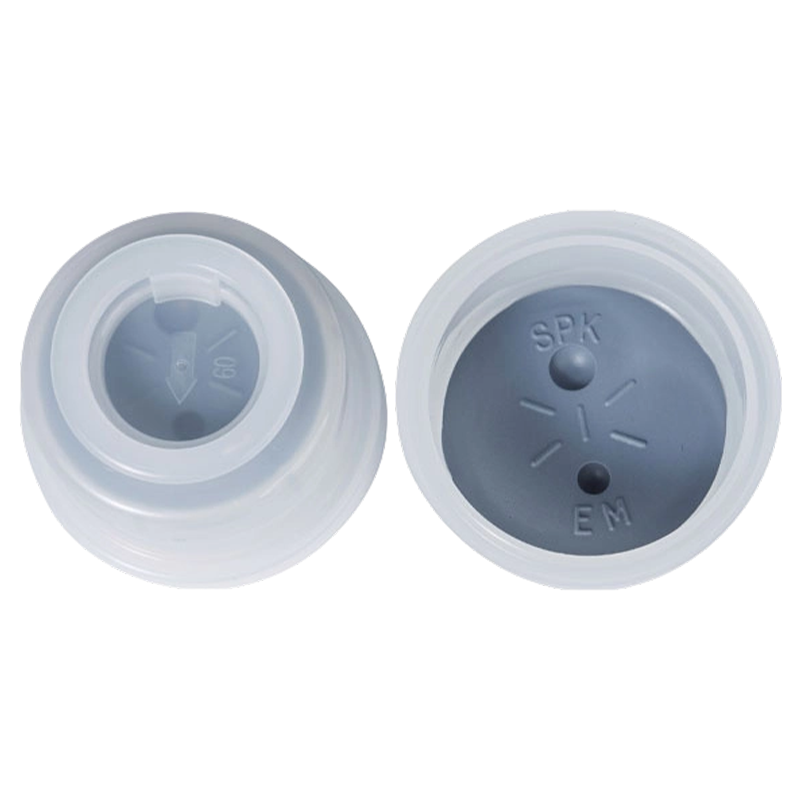 Pull-Ring Type Euro PP Caps for Infusion BottlesA standardized polypropylene closure with an integrated pull-ring for tool-free access and tamper evidence on infusion and solution bottles, relevant here because thread engagement and neck height must survive sterilization and transport.View Product →
Thread Styles: Why the Same Diameter Is Not Enough
The second number in a finish code changes how a cap feels and how securely it stays on. A 400 finish carries about one full turn, a 410 adds a half turn, and 415 and 425 profiles deepen the skirt and roughly double the engagement, which raises removal torque and improves tamper resistance. Deeper profiles also need a taller neck finish, so the H dimension of the bottle must grow with them. Aluminum screw caps for oral liquid bottles show this in pharmaceutical practice: the thread engagement has to hold the cap through sterilization and transport, while a rolled pilfer band signals that the bottle has been opened.
Each column shows the approximate thread engagement delivered by a common finish style. The 400 style is deliberately shallow, which keeps caps quick to remove on high-speed lines. The 410 style adds half a turn and has become the default for lotions and liquid medicines. Deeper 415, 425 and 430 styles trade opening speed for security and a taller skirt. The values are approximate, so the supplier drawing remains the only binding reference. When two candidate caps share a diameter, this chart is the reason to read the second number carefully before choosing.
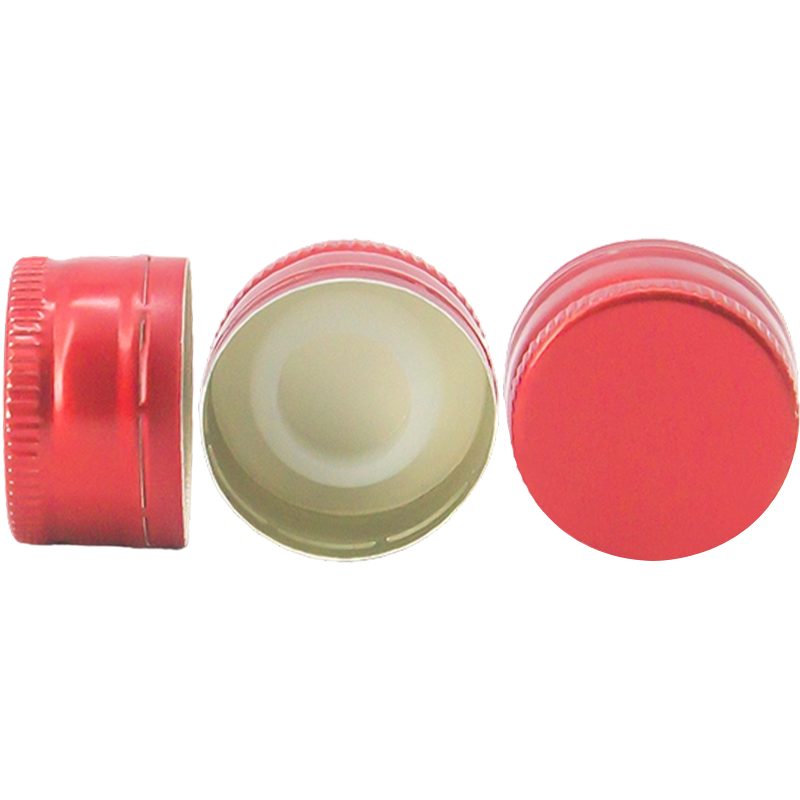 Aluminum Screw Caps for Oral Liquid BottlesA single-piece aluminum cap crimped to form threads on oral liquid bottles, offering tamper evidence and resealability. The finish style chosen determines how many turns engage the bottle neck and how secure the closure stays.View Product →
Crimp Closures: The Dimension Nobody Prints on the Cap
On injection vials the fit is decided off the drawing, on the sealing head. A crimped aluminum cap is specified by the neck flange diameter, typically 13 mm or 20 mm, together with a crimp height that defines how far the aluminum skirt is rolled under the glass flange. Set the crimper too high and the cap stays loose, rotates, or fails dye penetration testing; set it too low and the bridge or the rubber core can be damaged. Engineers describe the outcome with residual seal force, and the relationship is a curve rather than a straight line. For a closer look at cap constructions, see our complete guide to aluminum caps for pharmaceutical vials.
The curve is illustrative, but its shape matches what filling plants observe. On the left, a crimper set too loose leaves flared skirts and leaks that appear only after incubation. In the middle band, the cap grips the flange evenly and the stopper is compressed into its working range. On the right, over-crimping shows up as bridges that crack, dimpled skirts, or stopper cores squeezed out of tolerance. Real specifications come from the cap and vial drawings, not from a chart like this. Verification combines dye penetration, residual seal force measurement and visual inspection on sampled vials from each batch.
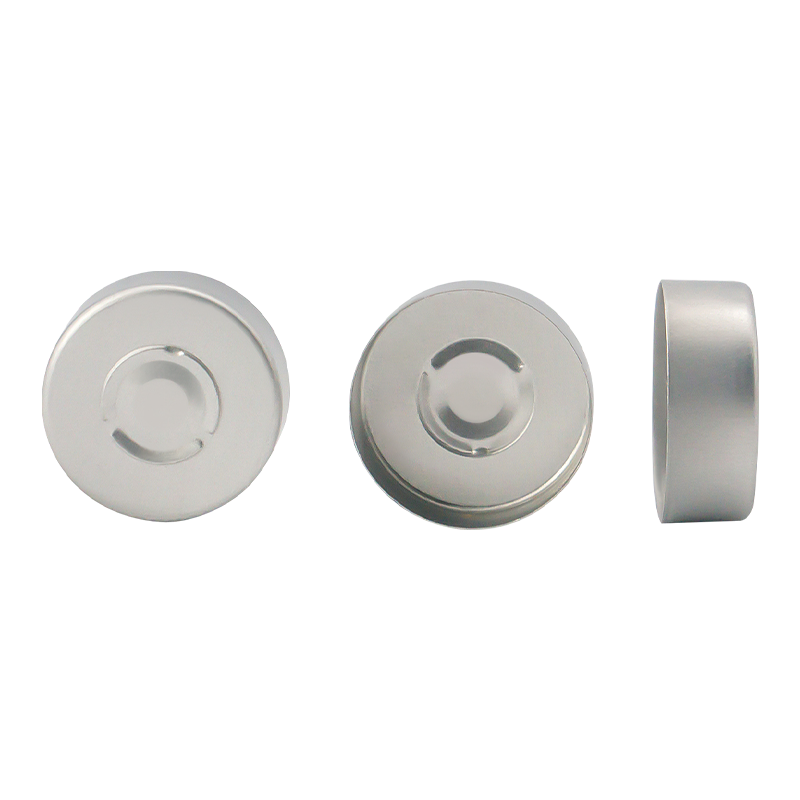 Bridge Type Aluminum Cap for Injectable VialsA pure aluminum seal with pre-scored breakable bridges that provide clear visual proof of first opening, a construction worth comparing against pull-ring and aluminum-plastic caps when tamper evidence for sensitive injectables is the priority.View Product →
Choosing Between Closure Constructions
Diameter and thread style still leave one decision open: the construction of the closure itself. Pull-ring aluminum caps give a clean, audible open with strong tamper evidence; aluminum-plastic caps add a plastic top that improves grip and opening comfort; screw caps favor resealability and simple lines. The radar below compares the three constructions on indicative one to ten scores for a typical pharmaceutical liquid.
The scores are indicative and will shift with your line and product, but the pattern is instructive. Pull-ring aluminum caps lead on sealing integrity and tamper evidence, which is why infusion and injection formats rely on them. Aluminum-plastic caps trade a little tamper evidence for noticeably easier opening, which matters for oral liquids that patients handle at home. Screw caps score highest on opening convenience and resealability while accepting lower tamper evidence unless a pilfer band is added. Cost differences are smaller than the operational differences, so the filling line and the patient group should drive the choice. Whichever construction you favor, lock the decision only after line trials with the real bottle and stopper.
A Practical Checklist Before You Order
Most closure problems trace back to a skipped step rather than a bad product, so a short checklist pays for itself quickly.
- Confirm the full code, never the diameter alone, and note the finish style on your purchase documents.
- Verify T, E, I, S and H against the drawing, including tolerances, on samples from the actual glass batch.
- Test the complete set of bottle, stopper, closure and capper before releasing production volumes.
- Define crimp height and inspection methods in writing for any crimped aluminum closure.
- Agree sampling plans and incoming inspection criteria with your closure supplier.
Working with a manufacturer that produces closures across vials, infusion bottles and oral liquids shortens this process, because drawings, tooling experience and cleanroom production sit under one roof. With more than two decades in pharmaceutical packaging, GMP and ISO 9001 quality systems and a grade C plus A cleanroom, we support OEM projects from dimension review through series supply. If you are matching a closure to an existing bottle or specifying a new one, you are welcome to request samples and drawings through our contact page.
Related products
-
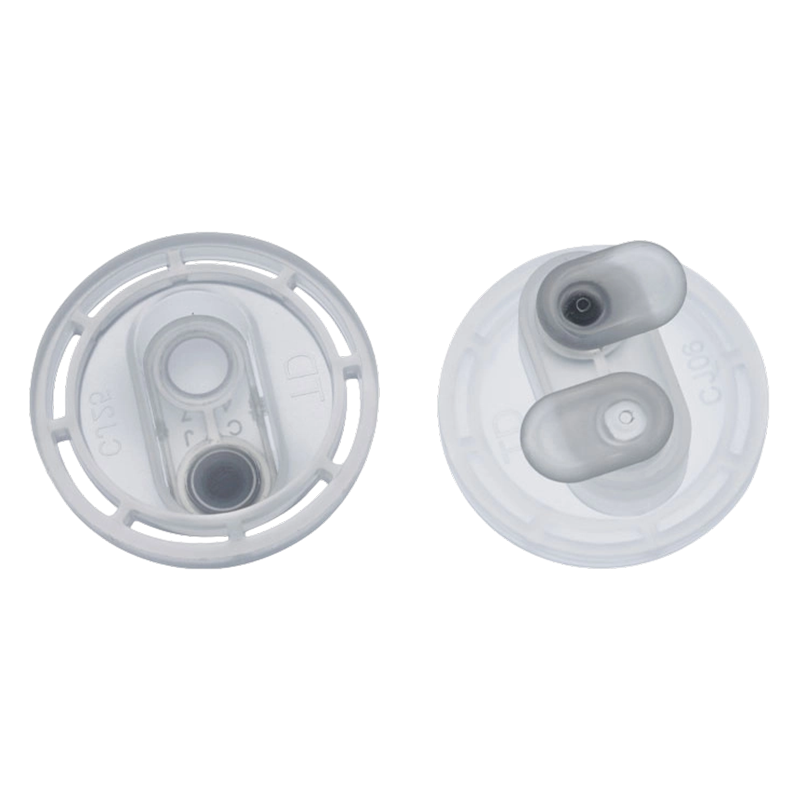
A standardized dual-port polypropylene cap designed for infusion and solution bottles. This integrated solution ensures reliable closure and provides two distinct, self-sealing access points for safe ...
View More -

A secure and low-profile support solution designed to safely hold infusion containers in clinical and care settings. Its flat design ensures stable wall-mounted suspension and easy access for intraven...
View More -

A secure and ergonomic support solution designed to safely hold infusion containers in clinical and care settings. Its racket design with an integrated handle ensures stable, portable suspension and e...
View More -
A precision sealing solution designed for cartridge-based drug delivery systems, such as pre-filled syringes and pen injectors. It ensures sterile integrity and safe, reliable needle access for inject...
View More -
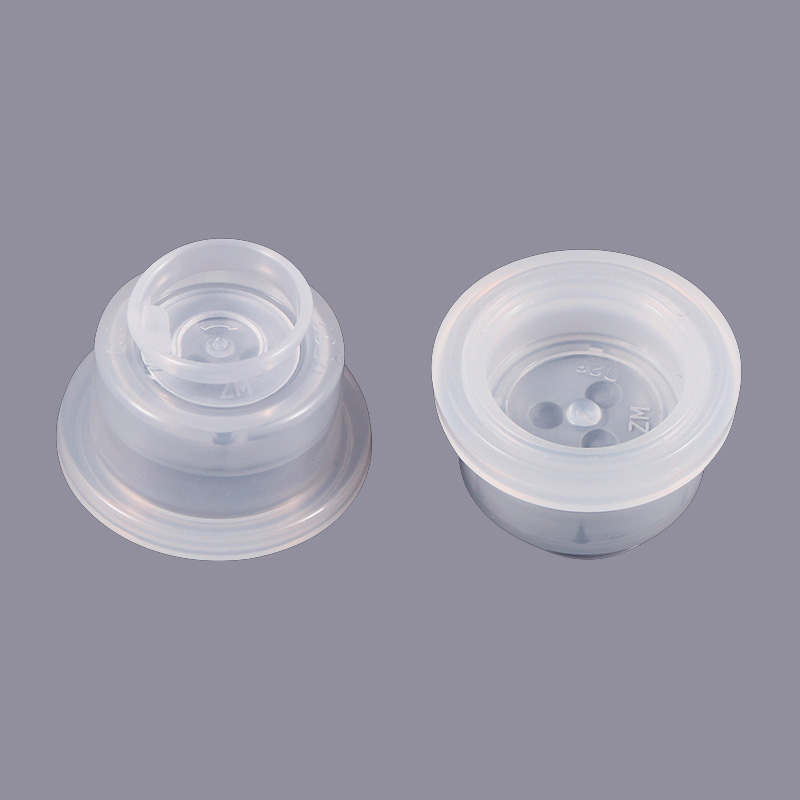
A standardized pull-ring polypropylene cap designed for infusion and solution bottles. This tamper-evident solution ensures reliable closure and provides an integrated pull-ring for safe, tool-free ac...
View More
-
Get In Touch
 +86 511 8813 2922
 +86 139 5290 2286
 lilian@changjianglids.com
 No. 1 Mingzhu Road, Youfang Industrial Park, Yangzhong City, Zhenjiang, Jiangsu, China
The information provided on this website is intended for use only in countries and jurisdictions outside of the People's Republic of China.
No. 1 Mingzhu Road, Youfang Industrial Park, Yangzhong City, Zhenjiang, Jiangsu, China
The information provided on this website is intended for use only in countries and jurisdictions outside of the People's Republic of China. -
Product
Aluminum-Plastic Caps Aluminum Caps Euro PP Caps PP Containers for Contact Lens with Foil Seal Plastic Hanger for Infusion Bottle Plastic Jerry Can -
WhatsApp
Chris

-
WeChat
Lilian

Copyright © 2025 Jiangsu Changjiang Lids Co., Ltd. All Rights Reserved.
OEM Pharmaceutical Packaging Manufacturer
Pharmaceutical Cap Supplier
