
 English
 русский
 简体中文



Home / News / Industry News / Heat Induction Sealing for Pharmaceutical Vials: How Caps and Foil Liners Work
Heat Induction Sealing for Pharmaceutical Vials: How Caps and Foil Liners Work
2026.10.08
Content
- 1 What Heat Induction Sealing Actually Does
- 2 How the Process Works Step by Step
- 3 Foil Liners, Caps, and Container Compatibility
- 4 Where Heat Induction Sealing Matters in Pharmaceutical Packaging
- 5 Common Failure Modes and How to Avoid Them
- 6 Choosing a Sealing System and a Packaging Supplier
- 7 Final Thoughts
A vaccine vial leaves the filling line, travels by truck, and arrives with a thin film of liquid on its shoulder. The cap is tight, but the inner seal never bonded. Heat induction sealing prevents that outcome when the foil liner, cap, and sealing head match the bottle neck. The result is a hermetic barrier that keeps the drug sterile, stops leaks, and shows whether a container has been opened.
What Heat Induction Sealing Actually Does
Heat induction sealing is a contactless process that bonds a foil liner to the rim of a bottle or vial. A sealing head creates an alternating electromagnetic field. The field passes through the plastic cap and heats only the aluminium foil inside the liner. The heat melts a polymer coating on the foil. Pressure from the cap pushes the melted polymer against the container rim. When the polymer cools, it forms an airtight seal that is difficult to peel without visible damage.
Unlike glue or a simple press fit, induction sealing does not rely on adhesive that can fail with moisture or time. It also does not heat the product. That matters for vaccines, antibiotics, and infusion solutions because excess heat can degrade active ingredients. A correctly tuned sealer delivers energy in a narrow window, and the contents stay within their temperature limits.
How the Process Works Step by Step
The sequence is short, but each step affects seal quality.
- The container is filled, and a cap with a foil liner is placed on the neck. The cap must hold the liner flat against the rim.
- The container passes under the induction sealing head. The head emits a high frequency field. The aluminium foil absorbs energy and heats rapidly.
- The polymer coating on the foil reaches its melting range, usually within a fraction of a second to a few seconds.
- The cap is often tightened immediately after sealing while the polymer is still soft, which improves contact.
- The seal cools and sets. A proper seal cannot be judged by looking at the cap. Use a peel test or pressure test.
Variables include line speed, power output, frequency, cap material, liner construction, and neck finish. A setting for a 20 mm oral liquid bottle will not automatically work for a 32 mm infusion bottle. Wider necks usually need more power and time for uniform heating.
Foil Liners, Caps, and Container Compatibility
A heat induction seal is a system, not a single part. The foil liner must match the cap and the bottle. The cap must be transparent to the electromagnetic field, so most induction sealing caps are made of polypropylene or polyethylene. A metal cap cannot be used directly over an induction liner because the metal shell would block the field.
Liner Construction
Most induction liners are multilayer structures. A typical liner includes a paper or foam backing, a wax or polymer layer, an aluminium foil layer, and a heat seal coating. The backing gives the liner stiffness so it sits flat inside the cap. The foil absorbs the electromagnetic energy. The heat seal coating determines the bond strength to the container material, such as high density polyethylene, polypropylene, or glass.
The coating matters. A coating designed for polyethylene may not bond well to glass. A coating that seals too aggressively can be hard for the end user to peel. A coating that seals too weakly may leak during transport. For pharmaceutical packaging, liner suppliers often provide seal strength data and compatibility charts. Those documents should be part of the technical file for the drug product.
Cap and Neck Finish
The cap and bottle neck finish control how evenly the liner contacts the rim. A neck with a dent, flash, or uneven top surface can create a channel where the seal never forms. The cap must also provide enough downward pressure during sealing. If the cap is too loose, the liner may not touch the rim. If the cap is over tightened before sealing, the liner can wrinkle. A common practice is to apply the cap with a controlled torque, seal, and then retorque to a final specification.
For pharmaceutical vials and bottles, aluminium caps and aluminium plastic caps are widely used because they combine mechanical protection with an induction sealing liner inside. Aluminium plastic caps can be produced with different opening features such as bridge type, flower type, or tear off structures. These features affect how the seal is opened and how tamper evidence is presented, not whether induction sealing can be used. The sealing performance still depends on the liner and the neck finish.
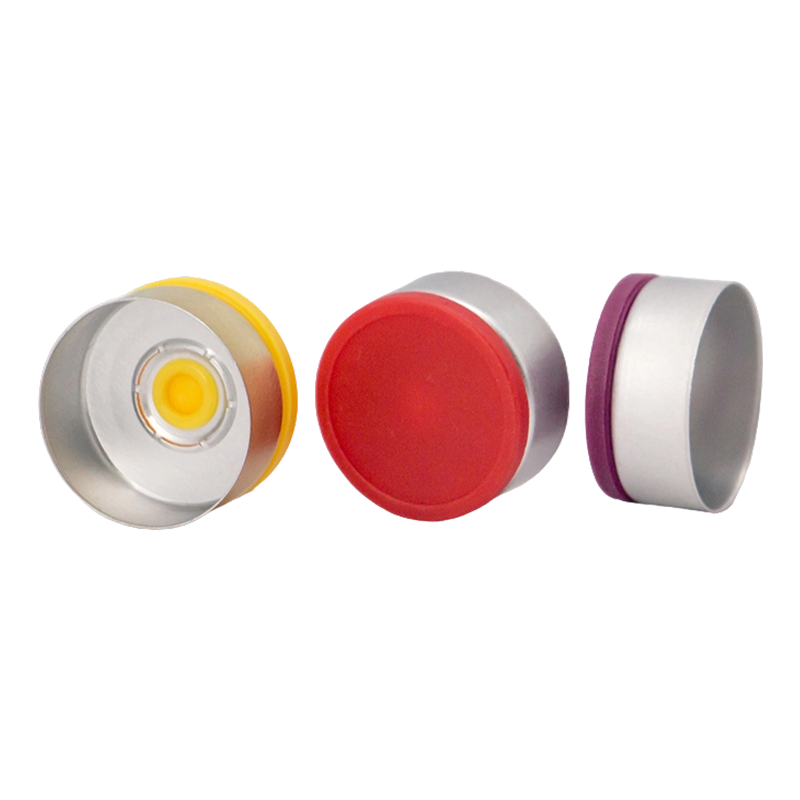 Bridge Type Aluminum-Plastic Cap for Injection Vials, ZB 20mmTamper-evident ZB 20mm cap with low opening force and clean bridge break, suited to antibiotic, vaccine, lyophilized, and diagnostic vial sealing.View Product →
| Container | Typical cap | Sealing consideration |
|---|---|---|
| Injection vial | Aluminium plastic cap with pull ring or tear off | Small neck and high sterility; verify full rim contact. |
| Infusion bottle | Tear off aluminium plastic cap | Large neck and pressure changes; check seal after sterilization. |
| Oral liquid bottle | Aluminium pull ring cap | Patient opening; balance seal strength with easy removal. |
Where Heat Induction Sealing Matters in Pharmaceutical Packaging
Induction sealing is common in three main container groups: injection vials, infusion bottles, and oral liquid bottles. Each group has different risks and sealing requirements.
Injection vials usually have small necks and high sterility requirements. A leak path can allow microorganisms to enter the vial, so the seal must be continuous around the entire rim. The cap often includes an aluminium plastic shell with a pull ring or tear off top. During sealing, the liner bonds to the glass or plastic neck. After sealing, the cap provides a tamper evident bridge that breaks when the user opens the vial.
Infusion bottles are larger and heavier. They may be made of glass or plastic and may hold hundreds of milliliters. The seal must resist pressure changes during sterilization, transport, and hanging. A tear off aluminium plastic cap is often used because it allows the healthcare worker to remove the centre disc and access the stopper without cutting the metal. The induction seal must remain intact under the stopper, because the stopper provides the primary closure and the foil adds an extra barrier.
Oral liquid bottles are often handled by patients at home. The seal must be easy to open but still provide visible tamper evidence. A pull ring aluminium cap is common for syrup and suspension bottles. If the induction seal is weak, the bottle may leak in the pharmacy bag or during shipping. If the seal is too strong, the user may need a tool to open it, which increases the risk of spills.
 Tear Off Aluminum-Plastic Cap ZD 26mm for Infusion BottlesEasy-tear ZD 26mm cap for infusion bottles, with reliable opening and RTU/RTS options for saline, dextrose, nutrition, chemotherapy, and antibiotic infusions.View Product →
 Aluminum Pull-Ring Cap 15mm/16mm for Oral Liquid BottlesSingle-piece pull-ring cap for oral liquid bottles, providing one-step opening, definitive tamper evidence, clean removal, and a leak-resistant seal for syrups and suspensions.View Product →
Common Failure Modes and How to Avoid Them
Most induction sealing defects fall into a few categories. Understanding them helps with troubleshooting and supplier qualification.
- Weak or partial seal: The liner may not have reached the required temperature, or the cap may not have pressed the liner evenly against the rim. Check power, dwell time, and cap torque. Inspect the neck finish for chips or ovality.
- Burned or charred liner: Too much power or too slow a line speed can overheat the foil and degrade the polymer. The seal may look complete but have low peel strength.
- Liner stuck in the cap: The heat seal coating may have bonded to the cap instead of the container. This often points to a liner orientation error or a coating that is not compatible with the container material.
- Leak after sterilization: Steam or heat sterilization can stress the seal. If the container and liner expand at different rates, the bond may open. Pressure test before and after sterilization.
- Inconsistent results across a batch: Variation in cap torque, neck dimensions, or liner lot can cause intermittent failures. Statistical process control on these inputs is more effective than inspecting only finished containers.
Validation is not a one time event. Once the sealing parameters are set, challenge them with worst case conditions. These include the lowest and highest line speeds, the minimum and maximum cap torque, and the oldest and newest liner lots.
Choosing a Sealing System and a Packaging Supplier
When selecting an induction sealing system, start with the container. Measure the neck finish diameter, the material, and the production line speed. Then choose a sealing head that can deliver enough power at that speed. Smaller heads are not always weaker, but they have a smaller coverage area. For wide mouth bottles, a larger head or multiple heads may be needed to avoid cold spots.
The liner and cap should be qualified together. Ask the supplier for seal strength data, recommended torque ranges, and samples for line trials. A good supplier will help with troubleshooting rather than simply selling a box of liners. In pharmaceutical packaging, documentation matters. The liner specification, certificate of analysis, and change control records should be available for audits.
Companies that specialize in pharmaceutical caps often offer aluminium caps, aluminium plastic caps, and Euro PP caps for different bottle types. Aluminium plastic caps are available for injection vials, infusion bottles, and oral liquids, with bridge type, flower type, or tear off designs. These caps work with induction sealing liners, but final seal quality still depends on the liner, the bottle, and the sealing process. Involve the cap supplier early so that neck finish, cap design, and liner selection are aligned.
For more detail on how aluminium plastic caps are constructed and where they are used, see this guide to aluminium plastic caps for vials. If you need help matching a cap and liner to your filling line, contact our team.
Final Thoughts
Heat induction sealing protects the product from the factory until the patient opens it. The seal is only as good as the weakest interface: the liner to the container rim. When the foil, cap, neck finish, and sealing process are aligned, induction sealing delivers a hermetic barrier that is clean, consistent, and easy to validate.
Treat the cap and liner as part of the container closure system, not as an afterthought. Qualify them together, monitor the critical parameters, and recheck the seal after any change. A leak free bottle is the result of a controlled process.
Related products
-
A protective and sterile packaging solution designed for contact lens storage. The polypropylene (PP) container with an integrated foil seal ensures product integrity, moisture retention, and contamin...
View More -
A protective and sterile packaging solution designed for contact lens storage. The polypropylene (PP) container with an integrated foil seal ensures product integrity, moisture retention, and contamin...
View More -
A standardized dual-port polypropylene cap designed for infusion and solution bottles. This integrated solution ensures reliable closure and provides two distinct, self-sealing access points for safe ...
View More -

A secure and low-profile support solution designed to safely hold infusion containers in clinical and care settings. Its flat design ensures stable wall-mounted suspension and easy access for intraven...
View More -

A secure and ergonomic support solution designed to safely hold infusion containers in clinical and care settings. Its racket design with an integrated handle ensures stable, portable suspension and e...
View More -
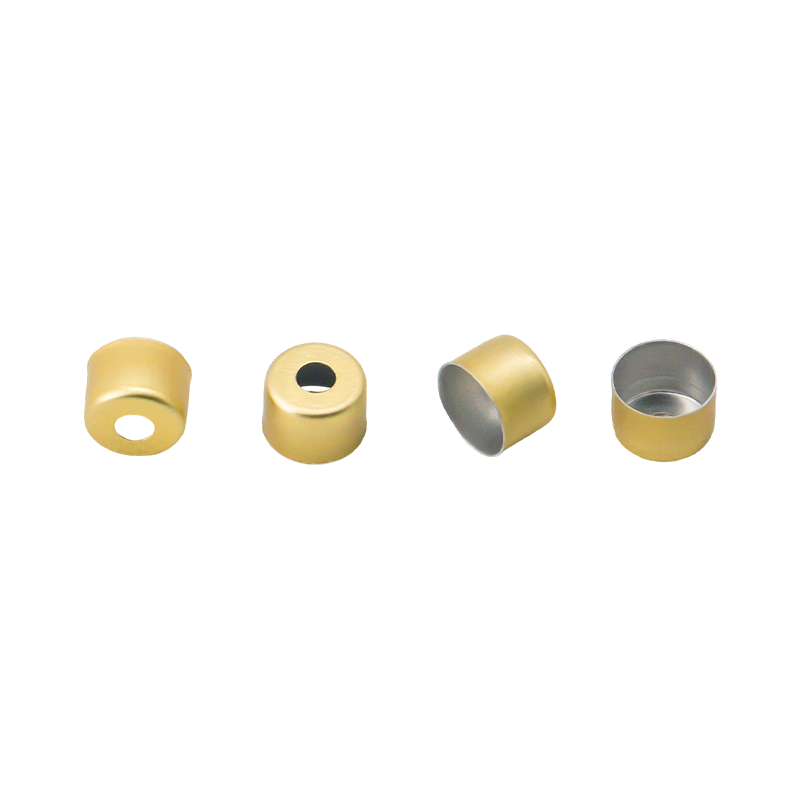
A precision sealing solution designed for cartridge-based drug delivery systems, such as pre-filled syringes and pen injectors. It ensures sterile integrity and safe, reliable needle access for inject...
View More
-
Get In Touch
 +86 511 8813 2922
 +86 139 5290 2286
 lilian@changjianglids.com
 No. 1 Mingzhu Road, Youfang Industrial Park, Yangzhong City, Zhenjiang, Jiangsu, China
The information provided on this website is intended for use only in countries and jurisdictions outside of the People's Republic of China.
-
Product
Aluminum-Plastic Caps Aluminum Caps Euro PP Caps PP Containers for Contact Lens with Foil Seal Plastic Hanger for Infusion Bottle Plastic Jerry Can -
WhatsApp
Chris

-
WeChat
Lilian

Copyright © 2025 Jiangsu Changjiang Lids Co., Ltd. All Rights Reserved.
OEM Pharmaceutical Packaging Manufacturer
Pharmaceutical Cap Supplier
