
 English
 русский
 简体中文



Home / News / Industry News / Medicine Dropper Function: How Drop Dosing Works and What Affects Accuracy
Medicine Dropper Function: How Drop Dosing Works and What Affects Accuracy
2026.10.15
Content
- 1 What the Medicine Dropper Function Covers
- 2 Parts of a Dropper and What Each Part Controls
- 3 How Much Liquid One Drop Holds
- 4 Where Drop by Drop Delivery Is the Right Choice
- 5 Packaging: The Neck Finish and Closure Carry Part of the Function
- 6 Mistakes That Change the Delivered Dose
- 7 How to Verify Dropper Performance Before You Buy
- 8 Frequently Asked Questions
A pediatric antibiotic label reads 2.5 mL. The dropper packed with the bottle delivers roughly 20 drops per millilitre of a water-like liquid, so the caregiver has to count about 50 drops, and every extra drop changes the volume that reaches the child. That small piece of arithmetic explains both what a medicine dropper is designed to do and where its limits sit.
The function of a medicine dropper is to draw a small volume of liquid into a narrow tube by suction and then release it in separate drops, one at a time. It lifts liquid out of the bottle, holds it while the user moves to the patient, releases it in a controlled way, and places it into a small target such as an eye, an ear canal, a nostril or a child's mouth. In practice it is a dispensing tool, not a calibrated measuring instrument, and that distinction decides whether a dose is close enough or simply wrong.
What the Medicine Dropper Function Covers
Every use of a dropper comes down to four tasks:
- Drawing liquid out of the bottle without pouring or spilling it.
- Holding a small volume inside the tube during transfer.
- Releasing the liquid as separate drops at a rate the user controls.
- Placing those drops into a narrow opening without a funnel or an especially steady hand.
All four tasks depend on one mechanism, and it is worth understanding that mechanism, because it explains most dosing complaints.
The suction and release cycle
Squeezing the rubber bulb pushes air out of the tube. When the bulb is released, pressure inside the tube drops, and atmospheric pressure pushes liquid up into the stem. Bulb wall thickness, rubber hardness and age set how much suction is available, so a stiff or hardened bulb draws less liquid and releases drops unevenly.
The drop itself forms at the tip. Liquid collects at the orifice until its weight overcomes the surface tension holding it to the tip, and then it falls away. Because surface tension, viscosity and density differ from one formulation to another, the same dropper can produce noticeably different drop sizes for two different medicines.
Parts of a Dropper and What Each Part Controls
| Component | Function | What changes its performance |
|---|---|---|
| Rubber bulb | Generates suction and release pressure | Wall thickness, rubber hardness and ageing change the suction force; oils and solvents degrade the material over time |
| Glass or plastic stem | Holds the drawn volume between bottle and patient | Bore diameter and length set the maximum volume; glass resists chemical attack while PP or PET is lighter and shatter resistant |
| Tip and orifice | Forms and releases the drop | Orifice diameter and surface finish decide drop size; a chipped, swollen or flashed tip gives larger and irregular drops |
| Closure and collar | Screws the dropper assembly into the bottle neck and seals it | Thread standard, liner material and tightening torque decide whether the bottle leaks or evaporates between doses |
How Much Liquid One Drop Holds
For water and thin aqueous solutions, about 20 drops make 1 mL, so a single drop is roughly 0.05 mL. That figure is a reference point, not a rule. Glycerine, oils, syrups and suspensions produce larger drops, often 10 to 15 drops per mL, and some thick products deliver even fewer. Temperature, dropper angle and the speed at which the bulb is released shift the number as well.
Graduated droppers carry printed marks in millilitres. Those marks are reference lines for filling the tube; they are not a calibrated measurement, because the volume delivered still depends on drop size at the tip and on how completely the tube empties.
| Tool | Typical role | Dose control | Main limitation |
|---|---|---|---|
| Medicine dropper | Oral, ophthalmic, otic and nasal liquids | Control over release, not an exact volume | Drop size varies with the formulation and the tip |
| Graduated oral syringe | Measured oral doses, often pediatric | Direct reading of millilitres | Bulkier to store with the bottle and needs rinsing |
| Dosing spoon or cup | Household oral dosing | Rough volume only | Residual liquid stays on the spoon and spills are common |
| Graduated pipette | Laboratory transfer of small volumes | Higher repeatability than a dropper | Not a consumer dosing device and needs trained handling |
Where Drop by Drop Delivery Is the Right Choice
Droppers suit products that are thin, used in small volumes and applied to a specific spot. Oral liquid medicines for children, eye and ear drops, nasal solutions and small volume reagents are the classic cases. Once a dose passes roughly 1 mL to 2 mL, or once the product is thick enough to cling to the tube walls, a syringe or a cup gives better control.
The dropper is also half of a packaging system. The bottle neck, the dropper assembly and the closure have to work together, because the closure keeps the product sealed and stable between doses and still has to open without shedding particles into the liquid. That is why an oral liquid bottle is usually closed with a component designed for repeated opening, such as an aluminium screw cap with a sealing liner.
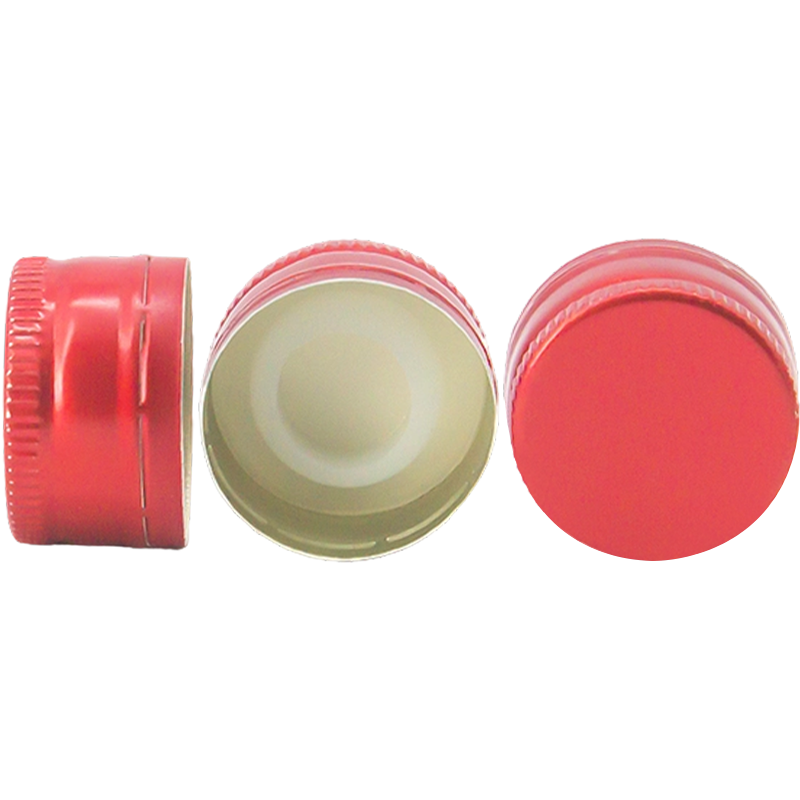 Aluminum Screw Cap for Oral Liquid BottlesSingle-piece aluminum sealing cap with sealing liner and pre-scored skirt offers tamper evidence and resealability for glass or plastic oral liquid bottles.View Product →
Packaging: The Neck Finish and Closure Carry Part of the Function
Dropper bottles are built around a standard neck finish, and the cap that threads onto that neck has three jobs: seal the liquid in, keep the dropper centred, and open repeatedly without deforming the dropper collar. For oral liquids, aluminium screw caps with a sealing liner are common, while tear-off, bridge type and flower type aluminium-plastic caps add visible tamper evidence for products where the first opening must be obvious.
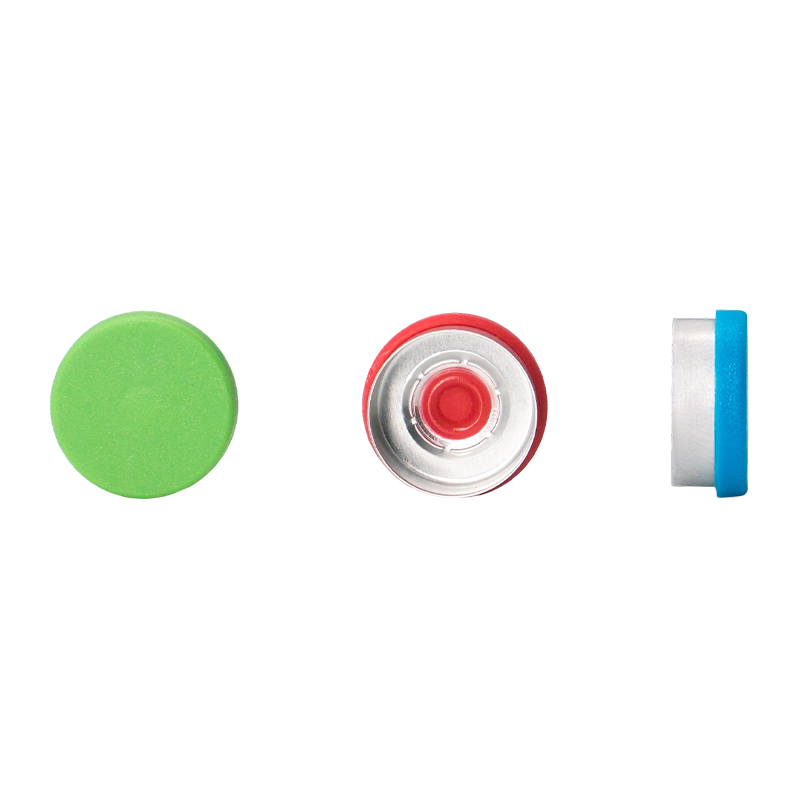 Bridge Type Aluminum-Plastic Cap for Oral LiquidsZB 15 mm cap with low opening force; removing the plastic part breaks the aluminum bridges cleanly for pediatric syrups and oral suspensions.View Product →
Pull ring versions are used where a pharmacist or caregiver opens the bottle many times a day, because the ring gives a defined opening without a tool, and the remaining skirt keeps the cap seated on the neck.
 Aluminum Pull-Ring Cap for Oral Liquid BottlesSingle-piece aluminum cap with integral pull-ring removes completely for definitive tamper evidence, clean pre-scored opening, and leak-resistant sealing.View Product →
Sealing is a manufacturing question rather than a design question. Thread diameter, liner thickness and cap height vary by a few tenths of a millimetre, and that tolerance decides whether a bottle leaks in transport or holds its seal after ten openings. Production in a controlled cleanroom, GMP and ISO9001 documentation, and batch level inspection of cap dimensions are what keep the tolerance stable. Jiangsu Changjiang Lids, for example, produces aluminium and aluminium-plastic caps in a C plus A grade cleanroom, with annual capacity of 3 billion aluminium and aluminium-plastic caps plus 800 million PP caps, and the same closure know how applies across oral liquid, injection and infusion packaging, as outlined in a guide to aluminium cap types for pharmaceutical vials.
Mistakes That Change the Delivered Dose
- Letting the tip touch the mouth, the eye or the bottle rim. Contact transfers contamination, and capillary action can pull liquid back into the tube.
- Counting drops at an angle. Tilting the dropper changes the shape of the drop and the number of drops per millilitre.
- Squeezing the bulb fully for a partial dose. Air pushed into the tube displaces liquid and makes the count unreliable.
- Using one dropper for two products. Residue mixes, and cleaning the inside of a bulb thoroughly is difficult.
- Storing the bottle on its side. Liquid reaches the bulb, softens the rubber and changes the suction force.
- Assuming one drop is the same volume in every product. It is not, even within the same brand and bottle size.
How to Verify Dropper Performance Before You Buy
For a pharmacy, a hospital or a pharmaceutical manufacturer, the checks that matter are practical and repeatable:
- Count drops up to a printed fill line using the actual formulation, not water, and repeat the test at the angle the patient will use.
- Measure the orifice diameter and inspect the tip for burrs, mould flash or swelling that would enlarge the drop.
- Test bulb recovery by squeezing and releasing it ten times, then check that it returns to shape without cracking.
- Verify the closure on a filled bottle: torque, leakage and drop tests after the bottle has been stored on its side.
- Review documentation covering material grade, cleanliness class of the production area and batch traceability.
- Ask for samples taken from a production batch rather than from a hand built prototype.
Steps four and five are the ones most often skipped. A dropper can behave perfectly in the hand and still fail if the cap does not seal, and the failure only appears weeks later as a low fill volume or a leaking carton. Suppliers that run closures in a controlled environment and can hand over the matching documentation shorten that validation stage considerably. If you are specifying dropper bottles for an oral liquid or a small volume diagnostic product, send the neck finish and formulation details so the cap, liner and dropper collar can be matched before the first production run.
Frequently Asked Questions
How many drops are in 1 mL of medicine?
For water-like liquids, about 20 drops. For oils, syrups and suspensions the count is usually lower, sometimes 10 to 15 drops per mL. When a label states the dose in millilitres, use the mark on the supplied dropper or a graduated syringe rather than a drop count.
Can a dropper measure an exact dose?
It delivers a repeatable drop but not a calibrated volume. If a dose must be exact, use a graduated oral syringe. A dropper is appropriate when the label states the dose in drops or when a small variation is acceptable.
Why do some dropper tubes have a line or scale?
The line marks a reference volume for filling the tube, which is more consistent than counting drops. It still depends on the liquid and the tip, so treat it as a guide rather than a laboratory measurement.
To summarise, the medicine dropper function is to draw a small volume by bulb suction and release it in single drops for targeted, small dose delivery. Its accuracy comes from the tip, the liquid and the technique rather than from the tube alone. That is why pharmacies, hospitals and manufacturers who care about dose consistency treat the dropper, the bottle neck and the closure as one system, and test them together with the real formulation.
-
Get In Touch
 +86 511 8813 2922
 +86 139 5290 2286
 lilian@changjianglids.com
 No. 1 Mingzhu Road, Youfang Industrial Park, Yangzhong City, Zhenjiang, Jiangsu, China
The information provided on this website is intended for use only in countries and jurisdictions outside of the People's Republic of China.
-
Product
Aluminum-Plastic Caps Aluminum Caps Euro PP Caps PP Containers for Contact Lens with Foil Seal Plastic Hanger for Infusion Bottle Plastic Jerry Can -
WhatsApp
Chris

-
WeChat
Lilian

Copyright © 2025 Jiangsu Changjiang Lids Co., Ltd. All Rights Reserved.
OEM Pharmaceutical Packaging Manufacturer
Pharmaceutical Cap Supplier
