
 English
 русский
 简体中文



Home / News / Industry News / Pharmaceutical Bottle Packaging: Choosing Caps, Seals and Closure Systems
Pharmaceutical Bottle Packaging: Choosing Caps, Seals and Closure Systems
2026.10.16
Content
- 1 Why the Closure Decides Whether the Bottle Works
- 2 Aluminum, Aluminum-Plastic and PP Closures Compared
- 3 Caps by Bottle Type
- 4 Tolerances and Checks That Keep the Line Running
- 5 Material, Cleanroom and Documentation Requirements
- 6 Four Procurement Risks Worth Screening Early
- 7 What to Put on the Specification Sheet
- 8 Where a Packaging Partner Fits In
Picture a filling line running 300 injection vials a minute. The fill volumes are correct, the stoppers are seated, and then the crimping head touches the first cap and the line stops. The aluminum skirt has split, or the cap is riding too high on the neck. In most cases the bottle was never the problem. The closure was.
A pharmaceutical bottle is only as good as the cap that closes it. Buyers who get this right treat the bottle, the elastomer stopper, the cap and the seal as one container closure system, specified against a single neck drawing, one filling line and one sterilization route. Buyers who get it wrong spend their weeks on incoming inspection, line stoppages and deviation reports. This guide covers the practical side of pharmaceutical bottle packaging: which closure families exist, which bottle each one suits, and what to verify before placing an order.
Why the Closure Decides Whether the Bottle Works
The cap is not a lid. On an injection vial it does three jobs at once. It compresses the elastomer stopper against the neck so the seal stays tight, it holds that compression through autoclaving and transport, and it shows the nurse or pharmacist whether the vial has already been opened. On an infusion bottle the same cap also has to survive a hanging load of several hundred milliliters for hours at a time.
Because of that, cap geometry is written around standard neck finishes. Injection vials commonly use 13 mm or 20 mm necks, while infusion and oral liquid bottles use larger finishes. The cap skirt height, the crimp diameter and the position of the tear tab all have to line up with the crimping head on your filling machine. A cap that measures correctly on a drawing but sits a fraction of a millimeter off inside the crimping head will leak or crack, and no certificate of analysis will change that.
Aluminum, Aluminum-Plastic and PP Closures Compared
| Closure family | Bottle and container types | Common structures | Usually chosen for |
|---|---|---|---|
| Aluminum caps | Injection vials, vaccine vials, infusion bottles, cartridge vials for pen injectors, oral liquid bottles | Pull-ring, tear-off, bridge, middle-hole, screw | An all-metal seal with the highest barrier, good performance in high temperature sterilization, and a low profile on cartridge and pen injector vials |
| Aluminum-plastic caps | Injection vials, infusion bottles, oral liquid bottles | Bridge, flower (ZB), tear-off | A combination of an aluminum shell and a plastic top, giving easier opening, clearer tamper evidence and a printable surface for color coding |
| Euro PP caps | Polypropylene infusion containers | Pull-ring, twin-port | Non-PVC infusion systems where the closure and container share one material family and two access ports are needed |
| Plastic hangers | Infusion bottles | Flat, racket | Hanging and carrying infusion bottles without adding separate metal hardware to the ward |
The pattern is straightforward. Where the product is sterile and the seal must survive high temperature sterilization, aluminum caps dominate, because a formed aluminum shell has no plastic component that can soften or stress crack. Where nurses and pharmacists want a faster, more obviously tamper-evident opening, aluminum-plastic caps combine an aluminum shell with a plastic top. Where the container itself is polypropylene, a matching PP closure keeps the whole system in one material family, which simplifies both extractables work and recycling claims.
Caps by Bottle Type
Injection and vaccine vials
Vials are crimped, so the closure arrives either as a cap plus a separate elastomer stopper or as an assembled cap and stopper ready for the filling line. Tear-off and pull-ring versions are the two workhorses. A pull-ring gives a clean opening without tools, while a tear-off design is often chosen where a lower profile and a tighter, more uniform crimp are needed. Check that the cap suits your stopper hardness, your crimping head and your autoclave cycle rather than only your neck drawing.
 Tamper-Evident Aluminum Tear-Off Caps for Injection VialsA 13 mm and 20 mm tamper-evident aluminum seal for injection vials; its pre-scored pull tab removes completely to expose the stopper.View Product →
Infusion bottles and large volume containers
Infusion closures carry more load. The bottle hangs upside down for hours, and the cap has to hold the stopper in place while the administration set punctures it. Bridge-type and flower-type aluminum-plastic caps are common here, and the choice usually comes down to how the bottle is opened, whether the plastic top stays attached to the aluminum ring for waste handling, and how the closure behaves after steam sterilization.
 Bridge Type Aluminum-Plastic Caps for Infusion BottlesA 32 mm bridge-type closure with low opening force and clean aluminum bridge breakage, suited to large-volume parenteral, nutrition, and chemotherapy infusions.View Product →
Oral liquid bottles
Oral liquids are not sterile in the same way injectables are, but they still carry tamper evidence, child resistance and dosing requirements. Screw caps and pull-ring aluminum caps are the usual choices. The specifications that matter most are thread engagement and the torque range that keeps the seal intact through shipping without making the bottle too hard for an older patient to open.
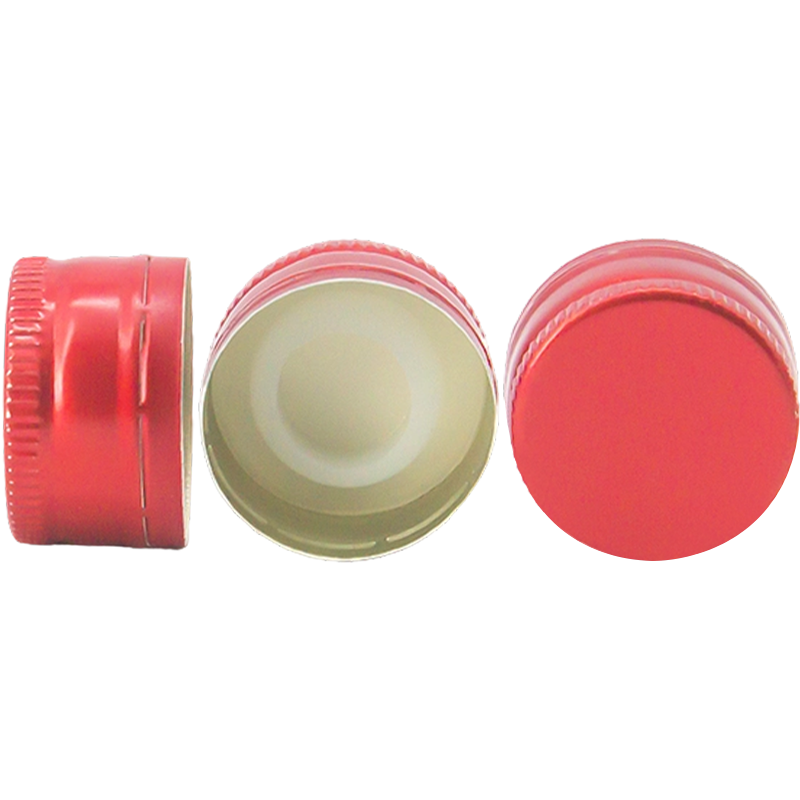 Aluminum Screw Caps for Oral Liquid BottlesA single-piece aluminum screw cap in 15 mm, 25 mm, and 28 mm sizes, offering tamper evidence and resealable leak-resistant closure for oral liquids.View Product →
Tolerances and Checks That Keep the Line Running
- Neck finish match. Confirm the cap was built for your exact neck standard, not a nearby one that looks similar on a drawing.
- Crimp window. Ask for the skirt height and crimp diameter range, then compare it against the settings your crimping head can actually hold across a full shift.
- Stopper compression. Too little compression leaks. Too much cracks the skirt or permanently deforms the stopper, which shows up later as coring during withdrawal.
- Sterilization route. Steam, dry heat, ethylene oxide and irradiation affect materials differently. A closure that passes a dye test before sterilization may not pass after it.
- Seal integrity. Run dye penetration or container closure integrity testing on filled and sterilized samples, not on empty components.
- Opening force. Measure it. A tamper-evident ring that will not release generates complaints, and one that releases too easily defeats its purpose.
- Screw torque. Specify an application torque range and a removal torque range, and test both after a shipping simulation.
Material, Cleanroom and Documentation Requirements
Two thirds of closure failures trace back to something that was never written down. The aluminum alloy and temper, the plastic resin grade, the presence of any recycled content and the surface treatment all belong on the specification, not in an email thread. So does the production environment. Caps that will touch a sterile vial should be produced and packed in a controlled cleanroom, under a quality system built on GMP and ISO 9001, with lot traceability that runs from raw material receipt to the shipped carton.
Documentation is part of the product. Expect a certificate of analysis per lot, a change control commitment with advance notification before any material or tooling change, and retained samples so a complaint three years from now can still be investigated. If a supplier hesitates on any of those points, that hesitation is the answer.
Four Procurement Risks Worth Screening Early
- Drawing fit versus machine fit. A closure can meet every printed dimension and still fail on your line because the crimping head geometry was never shared with the supplier.
- Undisclosed material substitution. A lighter gauge alloy or a different resin grade saves cost quietly and changes seal performance loudly.
- Tamper evidence that only works on the bench. Opening behavior under cold storage, humidity or a glove covered hand is what patients experience.
- Documentation gaps at audit time. Missing certificates, unclear lot traceability and unannounced changes turn a small quality question into a regulatory one.
What to Put on the Specification Sheet
- Bottle type and neck finish standard, with the exact drawing revision.
- Closure family and opening style, for example aluminum pull-ring or bridge-type aluminum-plastic.
- Dimensions and tolerances, including outer diameter, skirt height, crimp diameter and tear tab position.
- Materials, covering alloy and temper for the shell and resin grade for the plastic top.
- Sterilization method and full cycle parameters the closure must survive.
- Required tests and acceptance criteria, from dye penetration to opening force and torque.
- Documentation expectations, including certificates, sample retention and change notification.
- Packing and delivery details, such as carton count, cleanliness level and any desiccant requirement.
Where a Packaging Partner Fits In
Specifications only hold when the supplier can hold them. Jiangsu Changjiang Lids has been producing pharmaceutical caps in Yangzhong, Jiangsu since 2000, working from a 20,000 square meter plant that includes a C plus A class cleanroom and a quality system built on GMP and ISO 9001. Annual capacity reaches 3 billion aluminum and aluminum-plastic caps and 800 million PP caps, and OEM work is part of daily production rather than a side service.
The range covers aluminum caps and aluminum-plastic caps for injection vials, infusion bottles and oral liquid bottles, Euro PP caps for infusion containers, plastic hangers for infusion bottles, and PP containers for contact lens packaging. If you are still weighing families, our industry note explains what an aluminum-plastic cap is and where it outperforms a plain aluminum shell. Once the choice is clear, send us your neck drawing, filling line and sterilization details and we can confirm fit against real production data instead of assumptions.
Pharmaceutical bottle packaging rewards buyers who think in systems. Specify the bottle, the stopper and the cap together, test on filled and sterilized samples, and put every tolerance and document requirement in writing before the first purchase order. The cap is a small part of the bill of materials and a large part of whether your batch reaches the patient intact.
Related products
-
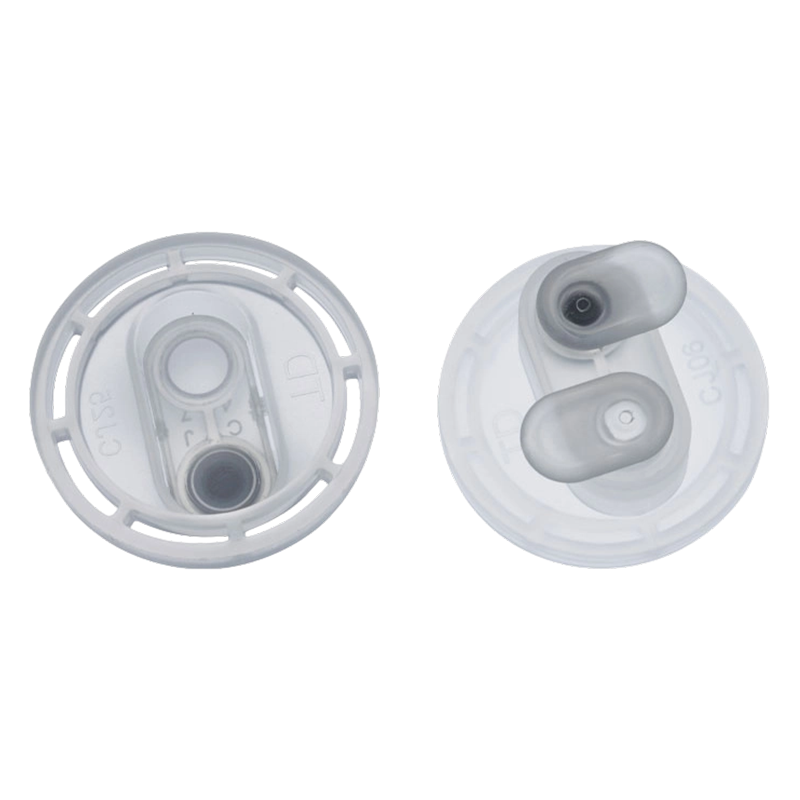
A standardized dual-port polypropylene cap designed for infusion and solution bottles. This integrated solution ensures reliable closure and provides two distinct, self-sealing access points for safe ...
View More -

A secure and low-profile support solution designed to safely hold infusion containers in clinical and care settings. Its flat design ensures stable wall-mounted suspension and easy access for intraven...
View More -

A secure and ergonomic support solution designed to safely hold infusion containers in clinical and care settings. Its racket design with an integrated handle ensures stable, portable suspension and e...
View More -
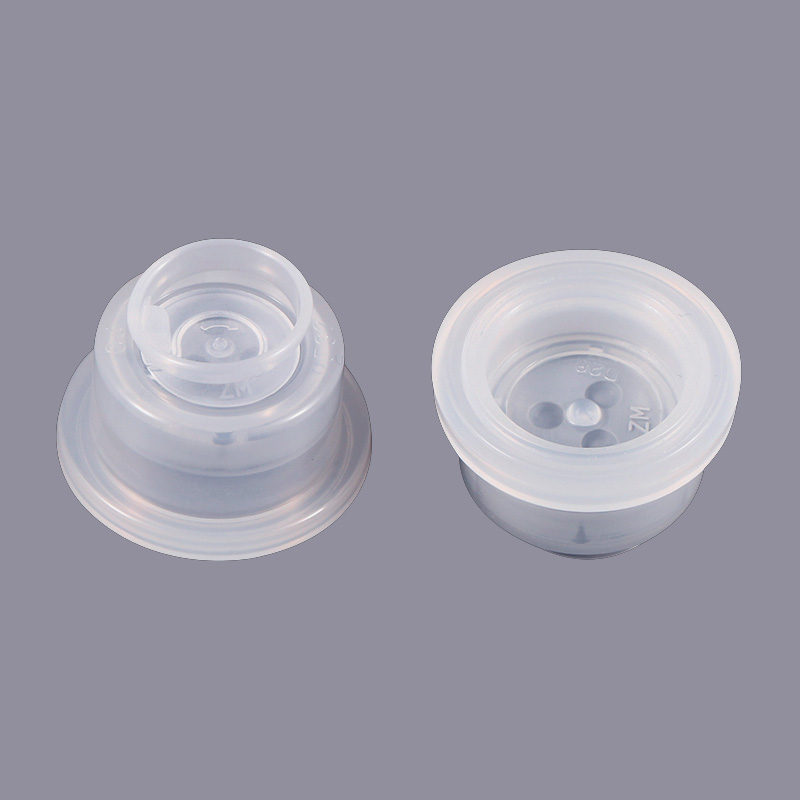
A standardized pull-ring polypropylene cap designed for infusion and solution bottles. This tamper-evident solution ensures reliable closure and provides an integrated pull-ring for safe, tool-free ac...
View More
-
Get In Touch
 +86 511 8813 2922
 +86 139 5290 2286
 lilian@changjianglids.com
 No. 1 Mingzhu Road, Youfang Industrial Park, Yangzhong City, Zhenjiang, Jiangsu, China
The information provided on this website is intended for use only in countries and jurisdictions outside of the People's Republic of China.
-
Product
Aluminum-Plastic Caps Aluminum Caps Euro PP Caps PP Containers for Contact Lens with Foil Seal Plastic Hanger for Infusion Bottle Plastic Jerry Can -
WhatsApp
Chris

-
WeChat
Lilian

Copyright © 2025 Jiangsu Changjiang Lids Co., Ltd. All Rights Reserved.
OEM Pharmaceutical Packaging Manufacturer
Pharmaceutical Cap Supplier
