
 English
 русский
 简体中文



Home / News / Industry News / Stock Child Resistant Closures: Types, Testing, and Sourcing Checklist
Stock Child Resistant Closures: Types, Testing, and Sourcing Checklist
2026.10.30
Content
A contract packer calls on a Friday afternoon. A customer needs 150,000 child resistant closures for a 38 mm liquid bottle, and the finished goods must ship in five weeks. A new tool would take three months before the first sample exists, so the buyer opens a catalog instead. Stock child resistant closures solve the schedule problem quickly. They do not automatically solve the safety problem.
The short version: a stock child resistant closure, or CRC, removes tooling time and tooling cost from a packaging project, but it does not remove qualification. The closure still has to match the bottle neck finish, compress the liner to the depth the molder intended, and be validated as part of a complete package under ISO 8317 or 16 CFR 1700.20. Buyers who treat a catalog item as plug and play usually find the gap at the filling line rather than in the sample room.
The sections below cover how stock CRCs are built, how the main mechanisms behave in practice, what the test standards actually measure, and the checks worth completing before the purchase order is signed.
What stock child resistant closures are, and what they are not
In the closure trade, stock means a mold already exists and the part is listed in a catalog. That usually narrows the choice to a handful of neck finishes, with 20 mm, 24 mm, 28 mm and 38 mm among the most common, thread families such as 400, 410 and 415, and a short list of liner options. Delivery runs from a few days to a few weeks, depending on color and liner availability.
Custom work follows a different schedule. A new tool, sampling and qualification commonly take 10 to 16 weeks, and the buyer pays for the tool. Stock exists to avoid that spend when the bottle is already fixed and the volumes do not justify a dedicated mold.
What stock does not mean is universal. Two bottles both described as 38-400 can differ in the T dimension, which is thread depth, the E dimension, which is root diameter, and the width of the sealing land. A child resistant closure is less forgiving than a plain screw cap here, because the inner cap must travel a defined distance before it disengages from the ratchet on the outer shell. A finish that is a few tenths short can leave the cap spinning without releasing, or releasing far too easily.
Liner choice matters just as much. A PE foam liner, a pulp and foil liner, and an induction seal each need a different amount of compression to hold a liquid without leaking. Over-torque flattens foam and can push a two-piece cap past its designed travel, which makes the pack harder for adults to open while doing nothing to make it harder for a determined child.
How the main child resistant mechanisms work
Almost every CRC in a stock catalog relies on a motion that small hands cannot easily combine: pressing while turning, squeezing two points while turning, or aligning marks before turning. The table below compares the formats most often held in inventory and the issues that surface once they reach a filling line.
| Mechanism | Typical stock format | Adult opening motion | Frequent field problem |
|---|---|---|---|
| Push down and turn | Two piece HDPE, 28 mm to 38 mm | Press the cap down, then rotate counterclockwise | Ratchet teeth wear or strip when the bottle finish is short |
| Squeeze and turn | Outer skirt with two tabs, often one piece PP | Pinch both tabs and turn | Tabs crack in cold storage, or the user pinches only one side |
| Align and turn | Keyed lugs with arrow marks on cap and bottle | Line up the marks, then turn | Misalignment when the cap is replaced loosely after use |
| Key or tool operated | Specialty small volume designs | Insert a key or tool, then turn | Lost keys, and poor fit with retail pharmacy workflows |
Selection usually comes down to the patient group and the filling line rather than the mechanism alone. A push down and turn cap is familiar to most adults but demands grip strength, which is why some pharmacy chains prefer squeeze and turn versions for older patients. A squeeze and turn cap with thin tabs can crack when stored in a cold warehouse. In both cases, tamper evidence should be designed in from the start, either through a drop ring or through induction sealing under the cap.
Testing: what a compliance report covers and what it does not
Two standards dominate the category. ISO 8317 applies to reclosable child resistant packaging and is widely accepted in Europe and much of Asia. 16 CFR 1700.20 is the US protocol used under the Poison Prevention Packaging Act. Both test the whole package, meaning bottle, closure and liner together, and neither certifies a closure in isolation.
The child panel typically involves 50 children aged 42 to 51 months, tested in pairs across two five minute periods. At least 85 percent of the children must fail to open the package during the first period, before any demonstration is given. The adult panel usually involves adults aged 50 to 70, and at least 90 percent must be able to open the package and close it properly within five minutes. That second number is where stock CRCs sometimes struggle, not because they are too easy for children, but because they are too hard for arthritic hands.
A passing report is tied to the exact components tested. If the bottle supplier changes, the liner specification is tightened, or an induction seal is added, the data no longer describes the package on the line. Buyers should ask for a report that names the bottle and liner used in the study, keep that report under change control, and plan a bridging test whenever anything in the system moves.
A sourcing checklist for stock CRC orders
- Neck finish drawing, not just a thread name. Request the T, E and S dimensions from the bottle supplier and send the drawing with the inquiry.
- Liner and sealing method. Confirm whether the pack needs an induction seal, a foam liner or a foil liner, and ask the molder for the recommended application torque range.
- Application torque window. Verify it on the real filling line at production speed, since manual capping hides torque variation.
- Sample evaluation with the actual product. Some liquids swell or soften liner materials, and a cap that held water may fail after two weeks of contact with a syrup.
- Drop, vacuum and leak checks on the filled pack. A closure can pass child testing and still leak in distribution.
- Documentation. Ask for the test report, certificate of analysis and change notification terms before the first shipment.
- Volume and color. Stock often means natural, white or a limited color range, and a custom color can push a stock item back into custom lead time.
Problems that appear after approval
- Torque drift on the capping head, which either loosens the seal or over-compresses the liner until adults struggle to open the pack.
- Mixed components, where caps from one lot and bottles from another are combined without checking the finish dimensions.
- Reclosure wear, where the ratchet loses grip after several open and close cycles, especially on one piece designs with thin tabs.
Where child resistance fits a pharmaceutical packaging program
Not every drug pack needs a CRC. Sealed injectable containers, such as vials closed with aluminum-plastic caps, protect sterility and container closure integrity rather than surviving repeated opening by a patient. Child resistance becomes a design requirement mainly for oral liquids, solid dose bottles and nutraceuticals, where the pack is opened many times and the contents are attractive to a small child.
For oral liquid bottles, the closure is chosen alongside the bottle, liner and filling process. Jiangsu Changjiang Lids Co., Ltd., a pharmaceutical packaging manufacturer working in this field since 2000, produces aluminum screw caps and pull ring caps for oral liquid bottles as part of a wider range that also covers injection vials, infusion bottles and Euro PP caps. The company states that it operates a C+A cleanroom under GMP and ISO 9001 requirements, with annual capacity of 3 billion aluminum and aluminum-plastic caps and 800 million polypropylene caps.
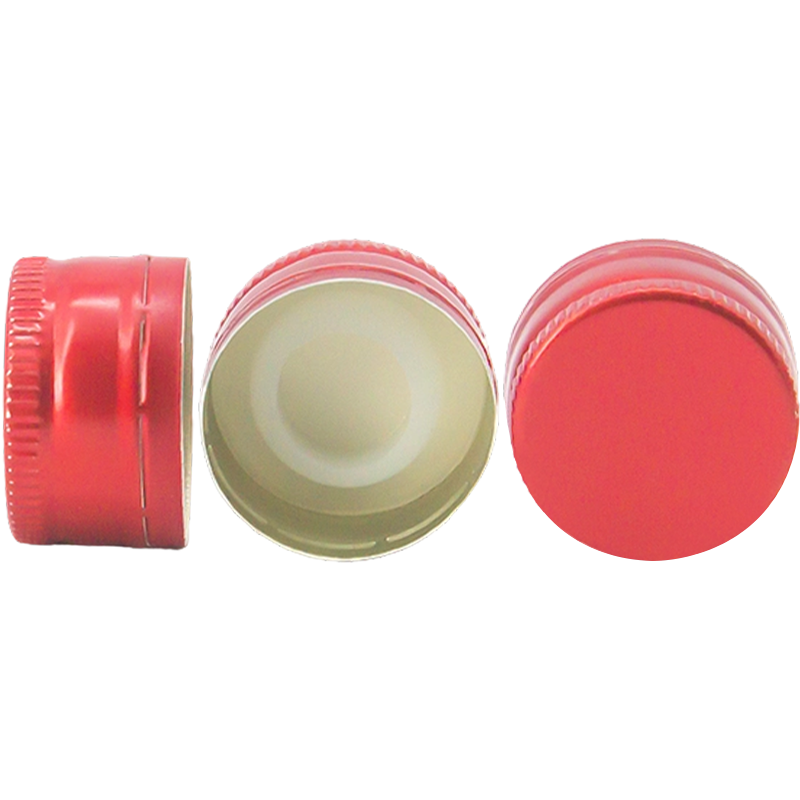 Aluminum Screw Caps for Oral Liquid BottlesSingle-piece aluminum screw cap for oral liquid bottles, offering tamper evidence, resealable threading and sizes from 15 mm to 28 mm.View Product →
For sealed injectables, a tear off aluminum closure is the more relevant reference point, since the priority there is opening convenience and integrity rather than child resistance.
 Aluminum Tear-Off Caps for Injection VialsPre-scored aluminum seal for 13 mm and 20 mm injection vials, allowing complete cap removal and clear tamper evidence while exposing the rubber stopper.View Product →
None of these parts substitute for a tested child resistant system. They are the components that must be fixed before a CRC can be qualified, because any change to the bottle or the sealing surface affects the child test result. Buyers comparing options can send the neck finish drawing and fill volume for a fit check before ordering samples.
Stock child resistant closures are a sound starting point when the schedule is tight and the bottle is already sourced. The decision that protects the project is not which cap looks best in the catalog, but whether the cap, bottle and liner were tested as one system and whether the filling line holds the torque that system assumes. Confirm the neck finish drawing, run samples with the real product, and keep the test report attached to the specification. That sequence turns a fast purchase into a defensible one.
-
Get In Touch
 +86 511 8813 2922
 +86 139 5290 2286
 lilian@changjianglids.com
 No. 1 Mingzhu Road, Youfang Industrial Park, Yangzhong City, Zhenjiang, Jiangsu, China
The information provided on this website is intended for use only in countries and jurisdictions outside of the People's Republic of China.
-
Product
Aluminum-Plastic Caps Aluminum Caps Euro PP Caps PP Containers for Contact Lens with Foil Seal Plastic Hanger for Infusion Bottle Plastic Jerry Can -
WhatsApp
Chris

-
WeChat
Lilian

Copyright © 2025 Jiangsu Changjiang Lids Co., Ltd. All Rights Reserved.
OEM Pharmaceutical Packaging Manufacturer
Pharmaceutical Cap Supplier
