
 English
 русский
 简体中文



Home / News / Industry News / Vaccine Bottle Caps: How to Specify Closures That Seal, Ship and Scale
Vaccine Bottle Caps: How to Specify Closures That Seal, Ship and Scale
2026.11.12
Content
A crimping station running 20 mm glass vials can look perfectly healthy while quietly producing a defect nobody sees until stability testing: a cap that sits square but compresses the stopper unevenly, or a tear-off tab that sheds a fragment into the filling line. By the time rejects appear, the root cause is usually a specification gap agreed months earlier, not a machine that suddenly went wrong. The practical conclusion is straightforward. Buy vaccine bottle caps as a matched system together with the vial neck finish, the elastomer stopper and the capping equipment, and confirm that match with dimensional data and container closure integrity results rather than with a catalogue photo.
The closure is often the last component specified and the first one blamed. What follows covers the points that decide whether a cap protects the product, runs cleanly on the line and survives regulatory review.
What Vaccine Bottles Demand From a Closure
A vaccine bottle is normally a moulded or tubular glass vial, sized from 2R to 100R, closed by a rubber stopper that is held in compression by an aluminium or aluminium-plastic cap. The cap does two jobs at once. It keeps the stopper compressed so the seal holds through transport, freezing and thawing, and it gives the fill line or the clinic a controlled way to open the vial without generating particles.
Three families of failure matter most in practice. The first is loss of container closure integrity, which shows up as dye ingress or a drifting vacuum decay signal. The second is particle generation, typically from tearing or from poor lacquer adhesion. The third is line stoppage, caused by caps that nest, jam in the feeder bowl or crimp to an inconsistent height. Good caps are designed against all three, not just the first.
Neck finish standards do most of the upfront work here. A 20 mm crown finish remains the reference point for most vaccine presentations, with 13 mm and 32 mm formats used for smaller or larger doses. Aluminium caps for injection vials are commonly specified against ISO 8362-3, while two-piece aluminium-plastic caps follow ISO 8362-6. If a supplier cannot state which standard a cap is dimensioned to, the conversation is not yet at a technical level.
Four Cap Styles and Where Each One Fits
The style choice is driven by how the vial will be opened and by how much handling the cap must survive before that moment. A single-dose vaccine opened once at a clinic has different requirements from a multi-dose presentation where the same closure may be re-entered many times. For a wider comparison of construction details, this complete guide to aluminium caps for pharmaceutical vials walks through the same options from a manufacturing angle.
 Aluminum Tear-Off Caps for Injection VialsPre-scored tear-off line and pull tab enable clean full removal, exposing the stopper for needle insertion; 13 mm and 20 mm sizes suit vaccine and biologic vials.View Product →
| Cap style | How it opens | Typical use | Points to watch |
|---|---|---|---|
| Tear-off aluminium cap | Skirt and top removed in one pull | Single-dose vials, high-speed lines | Tab strength, particle shedding, lacquer coverage |
| Pull-ring aluminium cap | Ring pulled to lift a central disc | Vials opened repeatedly in a clinic setting | Ring accessibility, disc retention, re-seal behaviour |
| Bridge-type aluminium cap | Central section removed after a bridge is broken | Formats needing a defined opening path | Bridge geometry, tooling alignment, crimp consistency |
| Aluminium-plastic cap | Plastic button flipped, aluminium centre exposed | Two-piece systems with coloured identification | Button retention, colour coding control, two-part assembly tolerance |
The table shows why a single "best" cap does not exist. A tear-off cap that performs beautifully on a 300 vial per minute line may frustrate a nurse opening a vial with gloved hands, while a pull-ring cap that is comfortable in the clinic can demand tighter feeder settings in production.
Fit, Tolerances and Crimping Behaviour
Most closure complaints arrive as a crimping problem, but the cause is usually dimensional stack-up. Crimp height, crimp diameter and skirt geometry must match both the vial finish and the capper tooling, and the useful tolerances are measured in tenths of a millimetre. A cap produced at the low end of its range on a vial at the high end of its range can look acceptable and still leak.
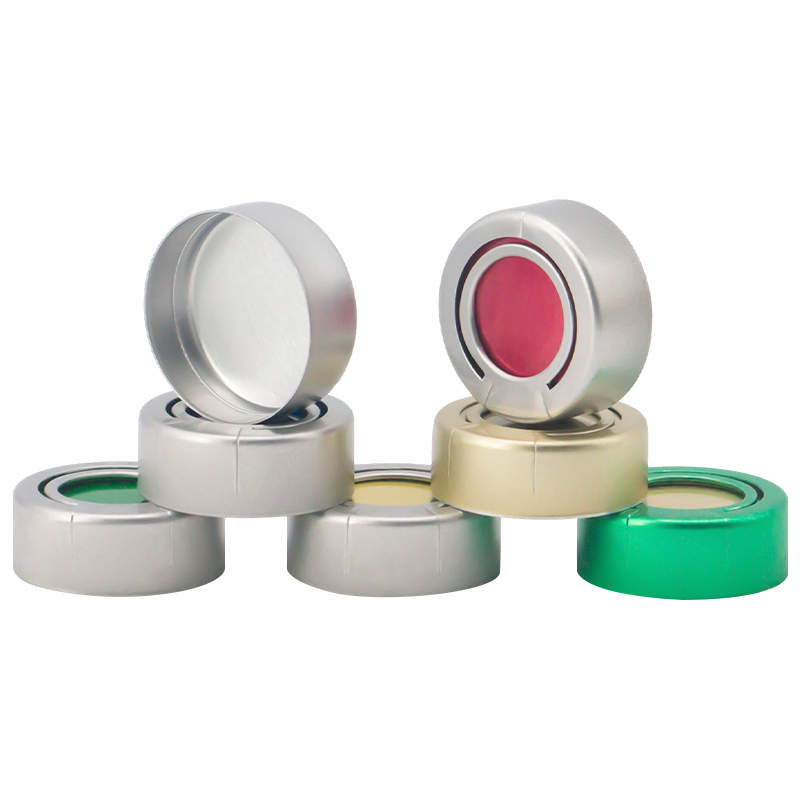 Aluminum Pull-Ring Caps for Injection VialsIntegrated pull-ring enables tool-free, one-piece removal that exposes the stopper for hygienic needle access; 13 mm and 20 mm tamper-evident seals suit vaccines and biologics.View Product →
Three details deserve questions during sampling. First, ask for the crimp drawing and check it against your own tooling rather than against a generic 20 mm reference. Second, ask how the aluminium is annealed, because temper affects how the skirt folds and whether it springs back after crimping. Third, ask how the cap behaves after a freeze-thaw cycle, which is relevant for any vaccine requiring cold chain storage. A cap that seals at room temperature but relaxes at minus 20 degrees Celsius is a stability study waiting to fail.
Run the trial the way production runs. Feed the caps through the actual feeder bowl, at the actual line speed, with the actual stoppers, and inspect crimp height at the start, middle and end of the run. Short trials on laboratory cappers hide exactly the problems that appear at scale.
Material, Cleanroom and Documentation Checks
The invisible half of cap quality is the environment and the paperwork. Caps destined for sterile injectables should be produced, cleaned and packed under a documented cleanliness regime, with the production area grade stated in writing. Suppliers working to GMP and ISO 9001 frameworks, and operating a C+A grade cleanroom for the final stages, can usually provide the batch records, particulate data and material certificates that a pharmaceutical buyer needs during qualification.
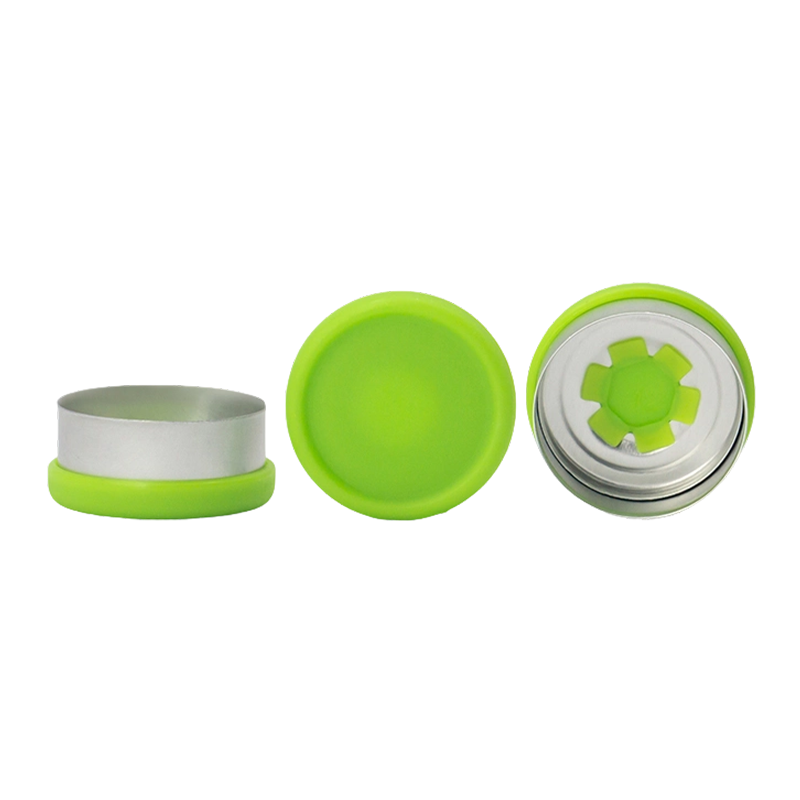 Tear-Off Aluminum-Plastic Caps for Injection VialsFor buyers comparing opening, cleanliness and scale, this 20 mm easy-tear closure suits antibiotic, vaccine, biologic, lyophilized and diagnostic vials in RTU/RTS formats.View Product →
Capacity matters too, but for a different reason. A supplier able to produce aluminium and aluminium-plastic caps in the hundreds of millions per year, and polypropylene caps at a similar scale, is more likely to hold a stable process across large orders and to absorb demand spikes without switching lines. Ask for the annual output figure and the number of production lines behind it, then ask how changeover between cap sizes is controlled.
Documentation should travel with the shipment: material grade, dimensions against the agreed drawing, lot number, production date, cleanliness class and any inspection results. If a supplier treats these as an extra request rather than a standard package, expect the same response during an audit.
A Practical Sourcing Checklist
Use this sequence when qualifying a new vaccine bottle cap, whether the vial is a 2R single-dose format or a larger multi-dose presentation.
- Confirm the vial neck finish and the stopper drawing, and share both with the cap supplier before quoting.
- Request the cap drawing with nominal dimensions and tolerances, and check it against your capper tooling.
- Ask which standard the cap is dimensioned to, such as ISO 8362-3 or ISO 8362-6, and request the declaration.
- Confirm material temper, lacquer or coating specification and the intended opening style.
- Request cleanliness class, particulate data and material certificates for the production batch.
- Run a line trial at production speed and measure crimp height and diameter across the run.
- Complete container closure integrity testing on filled vials, including a freeze-thaw condition if relevant.
- Agree the packaging format, lot traceability and the documentation pack that ships with each lot.
Failure Modes Worth Designing Out
Experience on filling lines points to a short list of recurring issues. Each one is cheaper to prevent at specification stage than to correct after a batch is rejected.
- Loose or tilted caps after crimping, usually traced to tooling wear or a cap dimension at the edge of tolerance.
- Fragments or lacquer flakes in the vial, often linked to tab geometry or poor coating adhesion.
- Leakage detected only after stability testing, frequently caused by insufficient stopper compression.
- Caps jammed in the feeder bowl, which usually reflects burrs, nesting geometry or inconsistent skirt diameter.
- Colour variation between lots on aluminium-plastic caps, a cosmetic issue that becomes a labelling risk in hospitals.
- Missing or incomplete documentation at goods receipt, which delays release even when the product itself is fine.
Vaccine bottle caps are small, inexpensive relative to the product they protect, and easy to treat as a commodity. They are not. The closure is the component that keeps a sterile barrier intact from the filling line to the point of use, and its performance depends on a chain of decisions about vial finish, stopper compression, aluminium temper, opening style and cleanliness. Get those decisions documented before the first purchase order, and the crimping station stops being a source of surprises.
If you are specifying caps for a new vaccine presentation, or replacing a closure that has started generating rejects, contact our team with your vial drawing and line details so the cap specification can be matched to your process from the start.
Related products
-
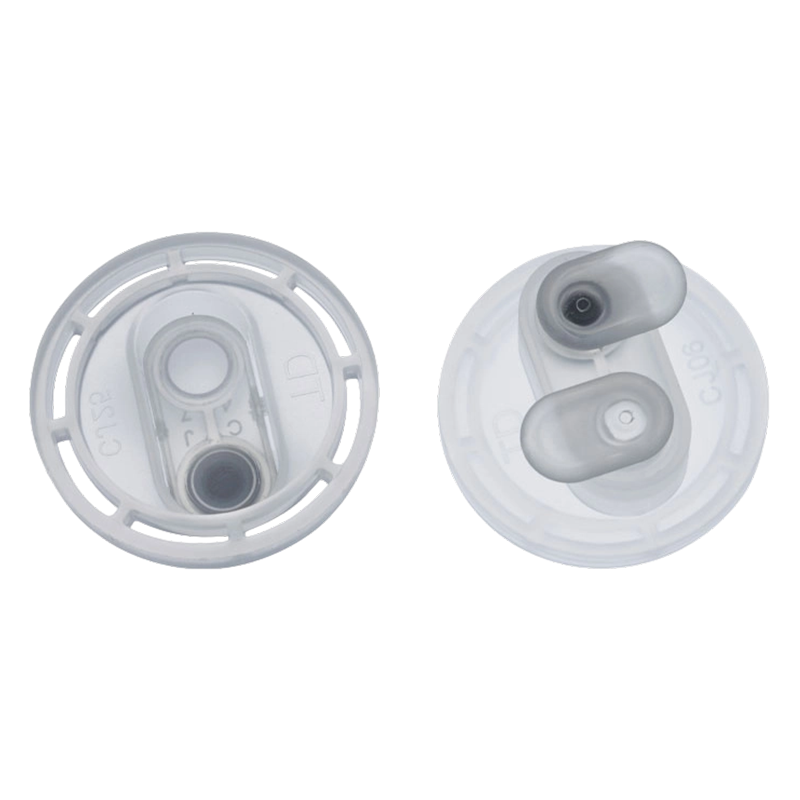
A standardized dual-port polypropylene cap designed for infusion and solution bottles. This integrated solution ensures reliable closure and provides two distinct, self-sealing access points for safe ...
View More -
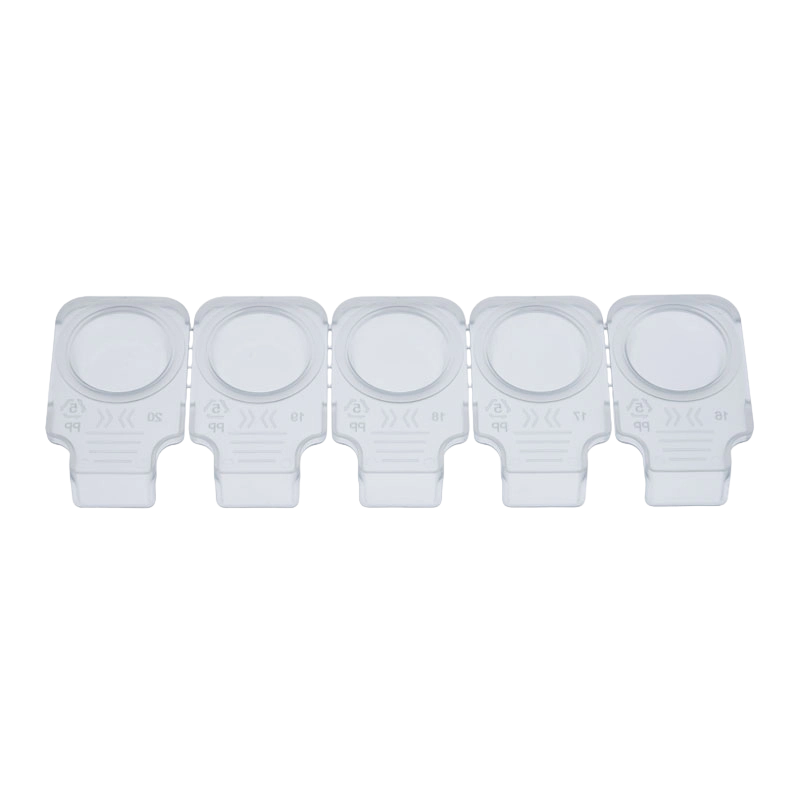
A protective and sterile packaging solution designed for contact lens storage. The polypropylene (PP) container with an integrated foil seal ensures product integrity, moisture retention, and contamin...
View More -
A protective and sterile packaging solution designed for contact lens storage. The polypropylene (PP) container with an integrated foil seal ensures product integrity, moisture retention, and contamin...
View More -

A secure and low-profile support solution designed to safely hold infusion containers in clinical and care settings. Its flat design ensures stable wall-mounted suspension and easy access for intraven...
View More -

A secure and ergonomic support solution designed to safely hold infusion containers in clinical and care settings. Its racket design with an integrated handle ensures stable, portable suspension and e...
View More -
A precision sealing solution designed for cartridge-based drug delivery systems, such as pre-filled syringes and pen injectors. It ensures sterile integrity and safe, reliable needle access for inject...
View More
-
Get In Touch
 +86 511 8813 2922
 +86 139 5290 2286
 lilian@changjianglids.com
 No. 1 Mingzhu Road, Youfang Industrial Park, Yangzhong City, Zhenjiang, Jiangsu, China
The information provided on this website is intended for use only in countries and jurisdictions outside of the People's Republic of China.
-
Product
Aluminum-Plastic Caps Aluminum Caps Euro PP Caps PP Containers for Contact Lens with Foil Seal Plastic Hanger for Infusion Bottle Plastic Jerry Can -
WhatsApp
Chris

-
WeChat
Lilian

Copyright © 2025 Jiangsu Changjiang Lids Co., Ltd. All Rights Reserved.
OEM Pharmaceutical Packaging Manufacturer
Pharmaceutical Cap Supplier
