
 English
 русский


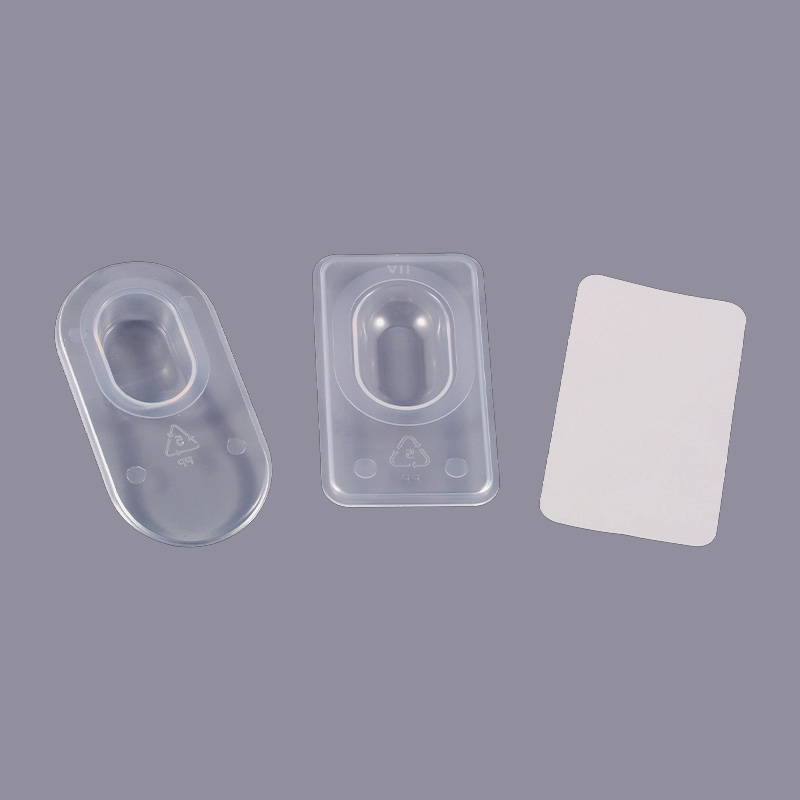
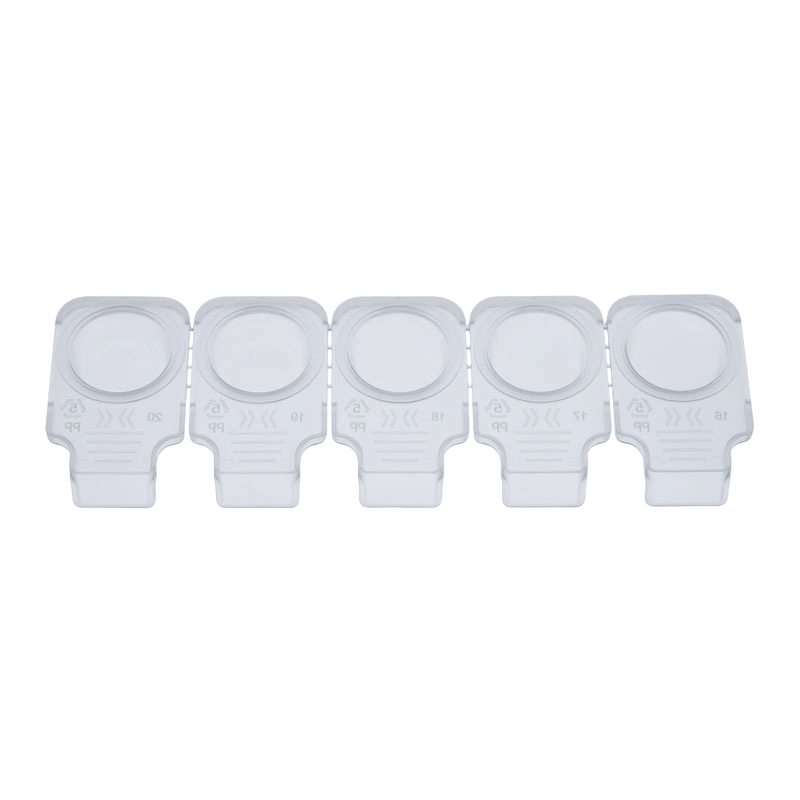
PP containers for contact lens with foil seal are single-use, sterile packaging units designed to store and protect soft contact lenses from manufacture through to end-user application. Constructed from pharmaceutical-grade polypropylene (PP), each container features a precision-formed bowl that holds the lens submerged in a buffered saline or care solution, sealed by a heat-bonded aluminum foil lid. The foil seal provides a hermetic barrier against microbial ingress, moisture exchange, and UV degradation, preserving lens sterility and optical clarity throughout the product's shelf life.
These containers serve as primary pharmaceutical packaging — the component in direct contact with the medical device — and are therefore subject to rigorous regulatory controls equivalent to those applied to pharmaceutical primary packaging materials. Key performance requirements include chemical inertness toward lens polymers and packaging solutions, dimensional consistency for automated filling lines, peel-force uniformity of the foil seal, and full traceability under GMP and ISO 15223 guidelines.
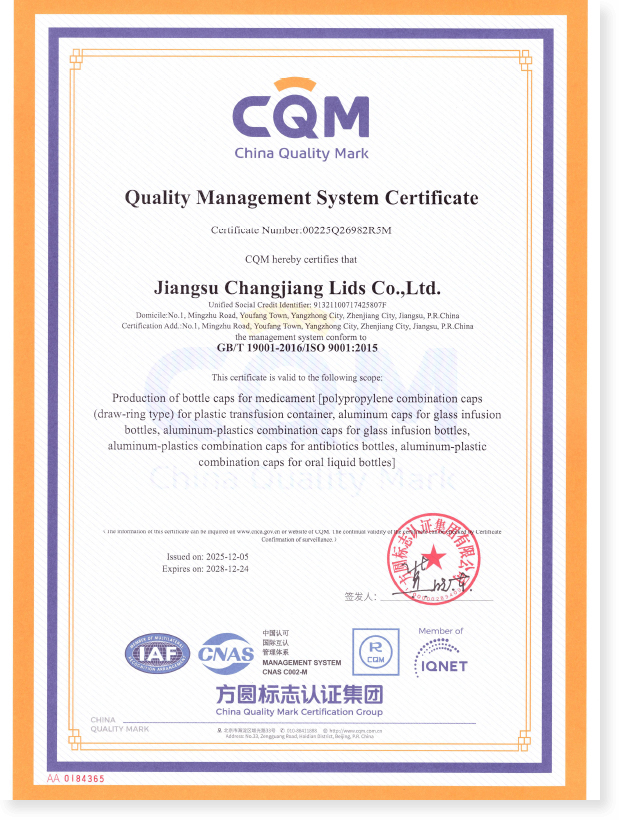
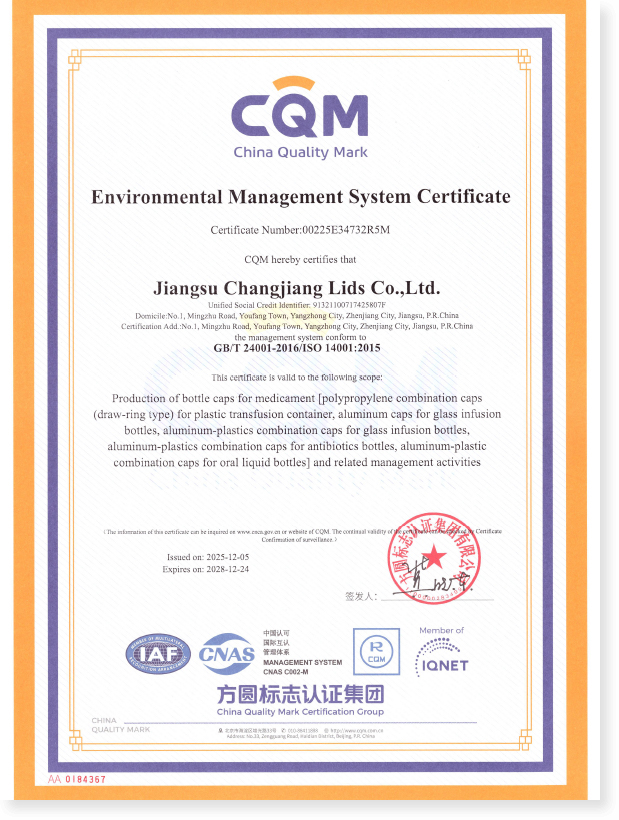
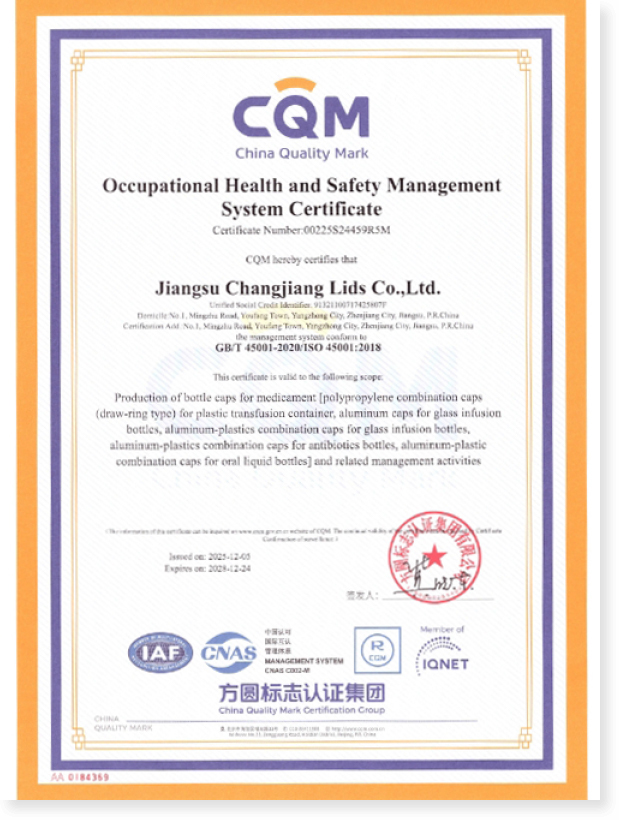
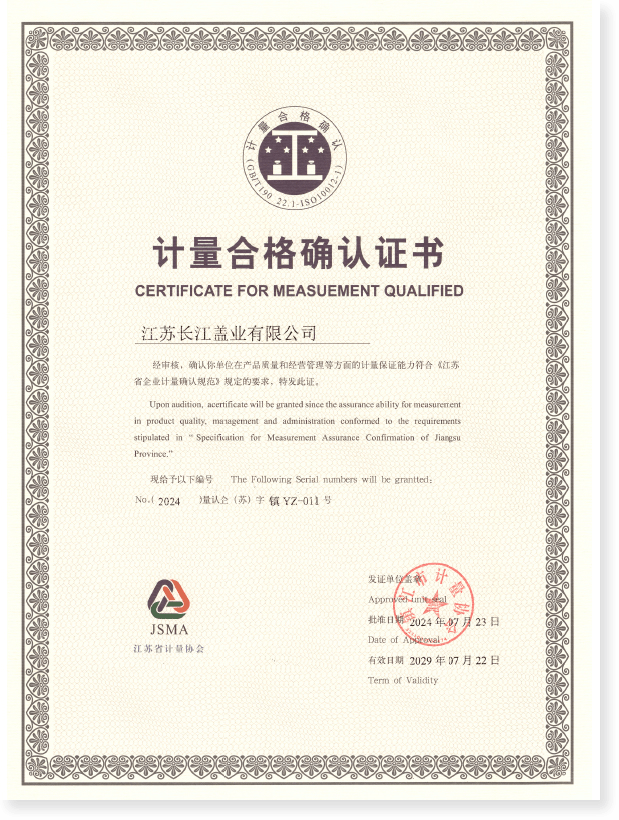
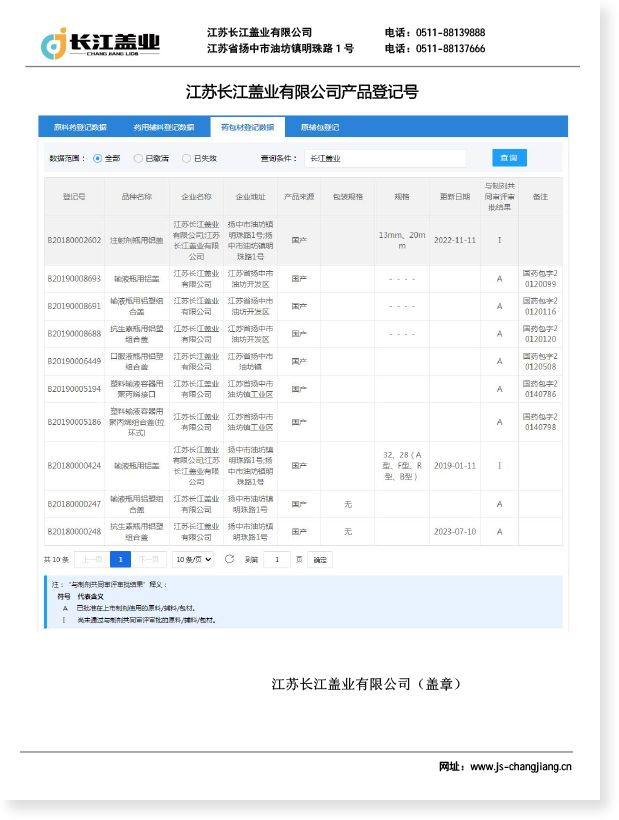
Jiangsu Changjiang Lids Co., Ltd. has specialized in precision pharmaceutical packaging since 2000, producing PP containers for contact lens with foil seal within certified C+A level cleanrooms that meet both GMP and ISO 9001 quality system requirements — delivering consistent sterility assurance at scale.
Core Functions and Performance Parameters
The primary functions of a contact lens blister container can be grouped into four categories: sterility maintenance, lens protection, solution retention, and consumer convenience. Each function is supported by specific material and engineering choices.
| Performance Area | Key Parameter | Typical Specification | Test Method Reference |
|---|---|---|---|
| Sterility Barrier | Seal integrity (burst strength) | ≥ 150 kPa | ASTM F2054 / ISO 11607 |
| Peel Performance | Foil peel force | 5–15 N (peelable, no delamination) | ASTM F88 |
| Chemical Inertness | Extractables / leachables | Below USP <661> thresholds | USP <661> / ISO 10993 |
| Dimensional Accuracy | Bowl diameter tolerance | ± 0.05 mm | In-process CMM inspection |
| Solution Retention | Leakage under vacuum | Zero leakage at −40 kPa / 30 min | ASTM D4991 |
| Shelf Life | Accelerated aging stability | ≥ 36 months (real-time validated) | ASTM F1980 / ISO 11607-1 |
How the Foil Seal Works: Sealing Mechanism and Sterility Assurance
The foil seal is the most critical component in the entire PP container for contact lens with foil seal system. Understanding its working principle helps clarify why material selection, sealing parameters, and quality inspection all converge on this single interface.
Heat-Seal Bonding Principle
The aluminum foil lid is laminated with a heat-seal lacquer layer on its inner surface. During production, a heated sealing die presses the foil against the polypropylene flange of the container at a controlled temperature (typically 140–180 °C), pressure (200–400 kPa), and dwell time (0.3–1.0 s). The lacquer layer melts and fuses with the PP substrate, forming a cohesive bond upon cooling. The resulting seal is strong enough to maintain sterility under distribution stresses yet peelable enough for the end user to open with one-handed finger pressure — a balance achieved through lacquer formulation and sealing process validation.
Barrier Properties of the Aluminum Foil
Aluminum foil of 20–25 µm thickness provides near-absolute barrier performance against oxygen (OTR < 0.01 cm³/m²·day), water vapor (WVTR < 0.01 g/m²·day), and microorganisms. This barrier is essential for maintaining the pH and tonicity of the saline solution, preventing oxidative degradation of lens polymers (especially silicone hydrogels), and ensuring a sterility assurance level (SAL) of 10⁻⁶ or better over the stated shelf life.
Cleanroom Production Environment
Changjiang Lids manufactures these containers in C+A level cleanrooms, where ISO Class 7 (background) and ISO Class 5 (critical zones) conditions are maintained. Particulate counts, microbial monitoring, and environmental controls are recorded continuously to support batch release documentation, enabling lens manufacturers to satisfy regulatory expectations in the EU (MDR 2017/745), US (21 CFR Part 820), and China (GB standards for medical devices).
Product Variants and Specifications Comparison
Contact lens containers are available in several configurations to match different lens types, solution volumes, and filling line requirements. The table below compares the most common variants.
| Feature | Standard Blister (Daily) | Deep-Bowl Blister (Toric / Multifocal) | Flat-Tab Blister (Cosmetic Lens) |
|---|---|---|---|
| Bowl Depth | 4–5 mm | 6–8 mm | 3–4 mm |
| Solution Volume | 0.4–0.7 mL | 0.7–1.2 mL | 0.3–0.5 mL |
| Lens Diameter Range | 13.8–14.2 mm | 14.0–14.5 mm | 14.0–14.5 mm |
| Foil Thickness | 20 µm | 25 µm | 20 µm |
| Typical Pack Format | 30 / 90 pcs per carton | 6 / 30 pcs per carton | 10 / 30 pcs per carton |
| Printing on Foil | Standard (power, BC, DIA) | Extended (axis, cylinder) | Custom color / logo |
| Automation Compatibility | High-speed lines (> 3,000 pcs/hr) | Medium-speed lines | Medium/high-speed lines |
PP vs. Alternative Materials: Why Polypropylene?
The choice of polypropylene for contact lens containers is not arbitrary. The table below compares PP against alternative plastics that have been evaluated for this application.
| Property | Polypropylene (PP) | Polyethylene (PE) | PVC | COP / COC |
|---|---|---|---|---|
| Chemical Inertness | Excellent | Good | Moderate (plasticizer migration risk) | Excellent |
| Autoclave / Gamma Sterilization | Yes (up to 121 °C) | Limited (< 80 °C) | No | Yes |
| Transparency | Semi-transparent (milky) | Opaque / translucent | Clear | Optically clear |
| Regulatory Status | USP Class VI, ISO 10993 | USP Class VI | Restrictions in EU / Asia | USP Class VI, ISO 10993 |
| Heat-Seal Compatibility | Excellent | Good | Good | Requires special lacquer |
| Relative Material Cost | Low | Low | Low–Medium | High |
| Industry Adoption | Dominant standard | Rare | Being phased out | Premium / specialty |
Polypropylene's combination of thermal stability, chemical inertness, proven heat-seal compatibility, and cost efficiency has made it the dominant standard for PP containers for contact lens with foil seal across all major global markets.
Application Cases: Who Uses These Containers and How
Daily Disposable Lens Manufacturers
The daily disposable segment accounts for the largest share of contact lens blister demand globally. High-volume manufacturers require containers with tight dimensional tolerances to run at 3,000–5,000 units per hour on automated filling and sealing lines. Bowl geometry must ensure the lens remains centered and undeformed during autoclaving, which typically occurs after filling and sealing.
Toric and Multifocal Specialty Lenses
Toric lenses for astigmatism correction have a specific rotational orientation that must be preserved during packaging. Deep-bowl containers with anti-rotation features on the inner bowl surface prevent lens flipping and maintain the laser mark alignment required for quality inspection. These containers hold a larger solution volume (0.7–1.2 mL) to ensure the lens remains fully hydrated.
Cosmetic and Color Contact Lenses
Color lens brands increasingly use custom-printed foil lids as a brand differentiation tool. High-definition flexographic or gravure printing on the foil surface allows full-color graphics without any risk of ink migration into the saline solution, provided the print is applied to the outer surface of the foil laminate. Changjiang Lids supports custom foil printing specifications in coordination with lens brand owners.
Contract Lens Packaging Organizations (CLPOs)
Third-party packaging organizations sourcing blister containers for multiple lens brand clients require extensive documentation packages: material certificates of analysis (CoA), cleanroom classification records, sterilization compatibility data, and regulatory dossier support files. As a GMP- and ISO 9001-certified supplier, Changjiang Lids provides full traceability documentation with every shipment.
Quality Control Process: From Raw Material to Finished Container
The production of PP containers for contact lens with foil seal involves multiple quality checkpoints across the entire manufacturing chain. The following outlines the standard quality control workflow applied at Changjiang Lids.
- Incoming Material Inspection: Pharmaceutical-grade PP resin is tested for melt flow index, density, and heavy metal content. Aluminum foil rolls are verified for thickness, peel lacquer adhesion, and freedom from pinholes.
- Injection Molding Process Control: Cavity pressure sensors and mold temperature controllers maintain dimensional consistency. First-article and in-process samples are measured on CMM equipment to verify bowl geometry within ± 0.05 mm tolerance.
- Cleanroom Environmental Monitoring: Continuous particle counting and scheduled microbial settle-plate sampling in C+A level cleanrooms per GMP Annex 1 requirements.
- Seal Integrity Testing: Statistical sampling of finished sealed units for burst pressure and peel force against validated specifications. Dye-penetration and vacuum decay tests are applied as supplementary methods.
- Visual and Particulate Inspection: 100% automated vision inspection for flash, warpage, seal voids, and contamination, supplemented by manual AQL sampling per ISO 2859-1.
- Batch Release and Documentation: Full CoA issued per batch, including environmental records, dimensional data, seal test results, and material traceability codes, supporting client regulatory submissions.
Storage, Handling, and Shelf Life Guidelines
Proper storage and handling of empty containers prior to filling is critical to preserving their cleanliness and sealing surface integrity.
| Parameter | Recommended Condition | Reason |
|---|---|---|
| Temperature | 15–30 °C | Prevents PP embrittlement and foil lacquer degradation |
| Relative Humidity | 30–65% RH | Minimizes static charge build-up and microbial growth |
| Light Exposure | Away from direct UV / sunlight | UV causes PP photo-oxidation and foil lacquer yellowing |
| Storage Format | Sealed inner bags inside outer cartons | Maintains particulate-free condition until point of use |
| Shelf Life of Empty Containers | 24 months from manufacture date | Based on validated stability data for PP and foil lacquer |
| Stacking Limit | Max 10 carton layers | Prevents bowl deformation under compressive load |
Regulatory Compliance Overview
Contact lens blister packaging is classified as a medical device accessory or primary packaging for a medical device in most major markets. Suppliers and lens manufacturers must both hold relevant certifications. The table below summarizes key regulatory frameworks.
| Market | Applicable Regulation / Standard | Key Requirement |
|---|---|---|
| European Union | MDR 2017/745, ISO 11607, EN ISO 10993 | Technical file, biocompatibility, sterile barrier validation |
| United States | 21 CFR Part 820 (QSR), ASTM F88 / F2054 | Design controls, packaging validation, 510(k) support |
| China | YY/T 0681, GB/T 19633, NMPA guidelines | Registration dossier, sterile packaging standard, cleanroom GMP |
| International | ISO 9001:2015, ISO 11607-1/-2 | Quality management, sterile barrier system validation |
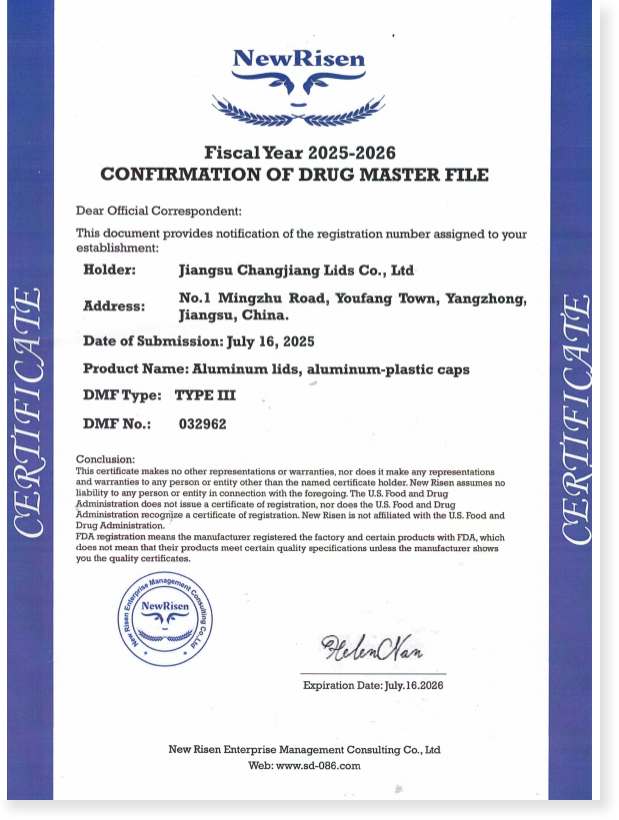
Changjiang Lids operates under ISO 9001:2015 certification and applies GMP principles aligned with pharmaceutical and medical device packaging standards, enabling clients to reference Changjiang Lids' quality documentation directly in their regulatory submissions across these markets.
Frequently Asked Questions (FAQ)
Q1: What sterilization methods are compatible with PP containers for contact lens with foil seal?
The most common sterilization method for filled and sealed contact lens blister units is moist-heat sterilization (autoclave) at 121 °C for 15–30 minutes. Polypropylene maintains dimensional and mechanical integrity under these conditions without deformation, and the aluminum foil seal provides the necessary barrier before and after the sterilization cycle. Gamma irradiation is also applicable but requires PP resin grades with radiation stabilizers to prevent discoloration and embrittlement. Ethylene oxide (EtO) sterilization is rarely used due to residue concerns in direct-contact packaging.
Q2: Can the foil lid be printed with prescription parameters or branding?
Yes. The outer surface of the aluminum foil is printable using flexographic, gravure, or inkjet processes. Lens parameters (power, base curve, diameter, lot number, expiry date) are typically laser-coded or pre-printed in black ink. Full-color brand graphics are applied during the foil laminate manufacturing stage, ensuring no ink contact with the lens or saline solution. Artwork and print specification support are available from Changjiang Lids' technical team upon request.
Q3: How is the peel force of the foil seal validated?
Peel force is measured per ASTM F88 by peeling the foil from the PP flange at a 90° or 180° angle at a controlled speed of 300 mm/min. The validated specification range is typically 5–15 N: sufficient to maintain seal integrity under distribution vibration and temperature cycling, yet low enough for one-handed consumer opening without tearing the PP bowl. Seal validation protocols include a minimum of three production runs across the full equipment parameter range.
Q4: What is the minimum order quantity (MOQ) and lead time?
MOQ and lead time vary by container specification and whether tooling is already available. Standard configurations with existing mold tooling typically have MOQs starting from 500,000 units with lead times of 4–6 weeks. Custom designs requiring new tooling have longer lead times of 8–14 weeks including tooling fabrication and first-article qualification. Contact the Changjiang Lids sales team for project-specific quotations.
Q5: Are these containers compatible with silicone hydrogel lenses?
Yes. Pharmaceutical-grade PP is chemically inert toward silicone hydrogel polymers (such as lotrafilcon, comfilcon, and senofilcon materials) and the buffered phosphate saline solutions used to package them. Extractables and leachables testing per ISO 10993-12 and USP <661> confirms that there is no reactive migration from the PP container into the solution at levels above safety thresholds during the validated shelf life period.
Q6: What documentation does Changjiang Lids provide with each shipment?
Each shipment is accompanied by a Certificate of Analysis (CoA) covering dimensional inspection results, seal integrity test data, raw material traceability codes, cleanroom environmental monitoring records for the production batch, and conformance statements against agreed specifications. Additional documents — including material safety data sheets (MSDS), resin certificates, and regulatory support files — are available on request.
Q7: How does the bowl geometry affect lens centration and hydration?
The inner bowl surface is designed with a curved, concave profile that matches the approximate sagittal depth of a typical soft contact lens. This geometry ensures the lens rests concave-side-up in full contact with the saline solution, preventing localized dehydration and maintaining the lens's optical geometry. Correct centration within the bowl is also important for automated vision inspection systems that capture lens images through the semi-transparent PP base for quality verification prior to sealing.